%20in%20Precision%20Medicine%20Market.png&w=256&q=75)
AI in Precision Medicine Market Summary
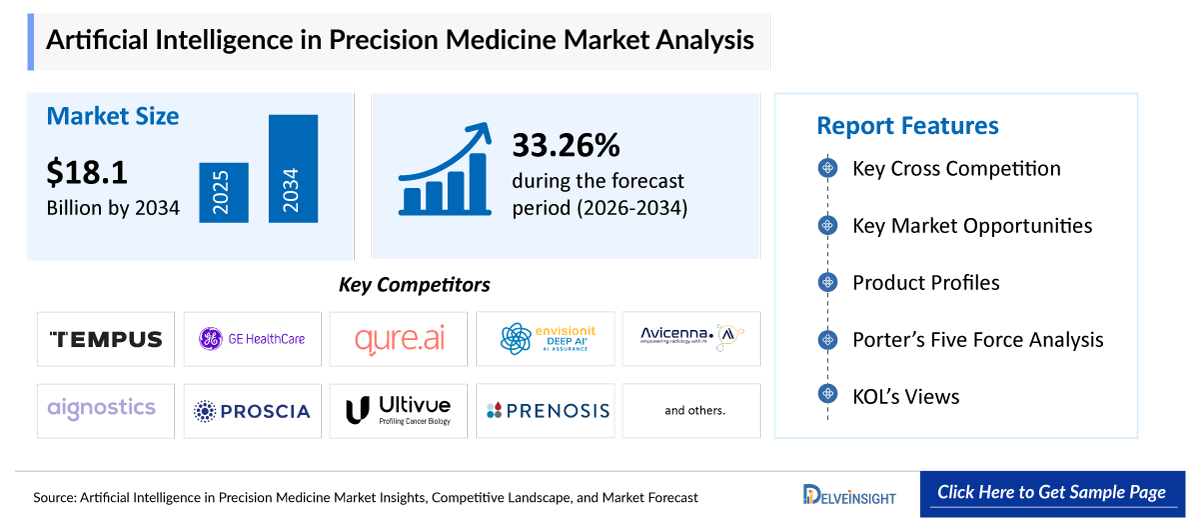
- The global artificial intelligence in precision medicines market size is expected to increase from USD 1,371.70 million in 2025 to USD 18,071.56 million by 2034, reflecting strong and sustained growth.
- The global artificial intelligence in precision medicines market is growing at a CAGR of 33.26% during the forecast period from 2026 to 2034.
- The rising prevalence of chronic and genetic diseases is significantly increasing the need for more accurate, early, and individualized treatment approaches, which is driving the adoption of artificial intelligence (AI) in precision medicine. At the same time, the growing demand for personalized therapies and precision diagnostics is encouraging healthcare providers and researchers to leverage AI for analyzing complex genomic, clinical, and real-world data to tailor treatments for individual patients. Additionally, increasing global product development activities, particularly in drug discovery, biomarker identification, and companion diagnostics, are further accelerating the integration of AI technologies. Collectively, these factors are boosting the AI in the precision medicine market by enhancing efficiency, reducing development timelines, and improving clinical outcomes.
- The leading companies operating in the artificial intelligence in precision medicines market include TEMPUS, GE HealthCare, Qure.ai, Envisionit Deep AI (Pty) Ltd., Avicenna.AI, Aignostics, Inc., Proscia Inc., Ultivue, Inc., Prenosis, Inc., IBEX, Cleerly, Inc., Paige AI, Inc., Densitas® Inc., Photocure ASA, iCAD, Inc., Eko Health, Inc., Owkin, Inc., Massive Bio, Deep Bio Inc., Atomwise Inc., and others.
- North America is expected to dominate the artificial intelligence in precision medicine market due to the rising instances of chronic disorders, including cancer, lifestyle diseases like diabetes, and infectious diseases, among others. Additionally, the strong R&D efforts focused on AI-based precision medicine, a well-established healthcare infrastructure, and continuous technological advancements in product development and regulatory approvals.
- In the product segment of the artificial intelligence in precision medicines market, the hardware/software category is estimated to account for the largest market share in 2025.
Request for unlocking the report of the @ Artificial Intelligence in Precision Medicine Market Insights
Artificial Intelligence in Precision Medicine Market Size and Forecasts
|
Report Metrics |
Details |
|
2025 Market Size |
USD 1,371.70 million |
|
2034 Projected Market Size |
USD 18,071.56 million |
|
Growth Rate (2026-2034) |
33.26% CAGR |
|
Largest Market |
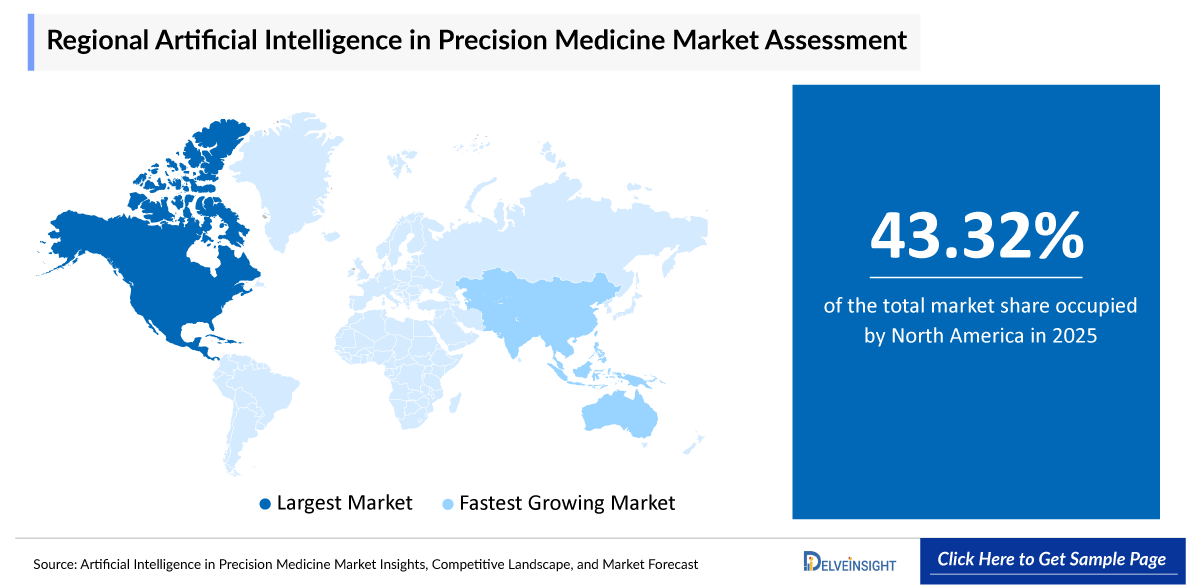
North America |
|
Fastest Growing Market |
Asia-Pacific |
|
Market Structure |
Moderately Concentrated |
Factors Contributing to the Growth of Artificial Intelligence in Precision Medicine Market
- The rising cases of chronic & genetic diseases leading to a surge in artificial intelligence in precision medicine: The rising cases of chronic and genetic diseases are driving the surge in artificial intelligence in precision medicine by enabling more accurate diagnosis, personalized treatment planning, and predictive healthcare. AI algorithms can analyze vast genomic, clinical, and lifestyle datasets to identify disease patterns, genetic mutations, and potential therapeutic targets, allowing clinicians to tailor treatments to individual patient profiles. As chronic and hereditary conditions such as cancer, diabetes, and cardiovascular disorders continue to rise globally, healthcare systems are increasingly relying on AI-powered precision medicine solutions to improve patient outcomes, enhance drug efficacy, and reduce treatment costs.
- Increasing demand for personalized medicines and precision diagnostics: The growing demand for personalized medicines and precision diagnostics is significantly boosting the market for AI in precision medicine. AI technologies enable the analysis of complex genomic, clinical, and molecular data to develop individualized treatment plans and diagnostic tools. This helps healthcare providers predict disease progression, choose the most effective therapies, and minimize adverse effects. As patients and clinicians increasingly prefer targeted, data-driven healthcare solutions, AI-driven precision medicine is becoming essential for improving treatment accuracy and optimizing clinical outcomes.
- Growing product development activities worldwide: Growing product development activities worldwide are propelling the market for AI in precision medicine. Companies and research institutions are increasingly investing in developing advanced AI algorithms, diagnostic tools, and drug discovery platforms to enhance personalized healthcare solutions. These innovations enable faster data analysis, improved biomarker identification, and more effective treatment customization. As global efforts toward AI-based precision medicine expand, the continuous introduction of new technologies and collaborations is driving market growth and accelerating the adoption of AI in clinical practice.
Artificial Intelligence in Precision Medicine Market Report Segmentation
This artificial intelligence in precision medicines market report offers a comprehensive overview of the global artificial intelligence in precision medicines market, highlighting key trends, growth drivers, challenges, and opportunities. It covers detailed market segmentation by Product Type (Hardware/Software and Services), Technology (Deep Learning, Natural Language Processing, and Machine Learning), Application (Drug Discovery & Development, and Disease Diagnostics), Therapeutic Area (Oncology, Cardiology, Neurology, Infectious Disease, Immunology, and Others), and geography. The report provides valuable insights into the competitive landscape, regulatory environment, and market dynamics across major markets, including North America, Europe, and Asia-Pacific. Featuring in-depth profiles of leading industry players and recent product innovations, this report equips businesses with essential data to identify market potential, develop strategic plans, and capitalize on emerging opportunities in the rapidly growing artificial intelligence in precision medicines market.
Artificial Intelligence (AI) in precision medicine refers to the use of advanced algorithms and machine learning techniques to analyze large and complex biological, clinical, and genetic datasets, enabling the development of personalized treatment and diagnostic approaches. It helps identify disease patterns, predict treatment responses, and optimize therapies tailored to individual patients, improving accuracy and outcomes in healthcare.
The artificial intelligence in precision medicine market is witnessing substantial growth, driven by the rising global prevalence of chronic and genetic diseases, which have amplified the demand for personalized treatment solutions. This momentum is further propelled by the increasing need for precision diagnostics and tailored therapeutics that leverage AI’s capability to analyze complex biological data. Technological advancements in AI-powered platforms, combined with innovative product development, are enhancing the accuracy and speed of precision interventions. Additionally, a surge in research and development activities, alongside strategic product launches by key AI in Precision Medicine companies, is accelerating market expansion. These converging factors are expected to significantly fuel the growth of AI in Precision Medicine market during the forecast period from 2026 to 2034.
Get More Insights into the Report @ Artificial Intelligence in Precision Medicine Market Trends
What are the latest artificial intelligence in precision medicines market dynamics and trends?
The global market for artificial intelligence in precision medicine has witnessed significant growth in recent years. This expansion is driven primarily by the increasing prevalence of chronic and genetic disorders, including cancer, diabetes, cardiovascular diseases, Alzheimer’s disease, Parkinson’s disease, and hemophilia. In addition, strategic collaborations and partnerships among pharmaceutical, biotechnology, and medical device companies are accelerating the adoption of AI-powered solutions in precision medicines and patient care.
Cancer Driving Market Demand
According to the World Health Organization (2025) and the International Agency for Research on Cancer (IARC), new cancer cases are projected to reach 21.3 million in 2025, increasing to 35.3 million by 2050. Cancer requires highly personalized diagnostics and treatment strategies. AI enables the analysis of large genomic and clinical datasets to detect cancer-specific mutations, predict tumor progression, and recommend targeted therapies. Additionally, AI supports early detection through imaging and biomarker discovery, improving patient outcomes. The growing global cancer burden and the shift toward personalized oncology are driving rapid adoption of AI in clinical practice.
Impact of Diabetes
Globally, approximately 589 million adults (20–79 years) were living with diabetes, according to the International Diabetes Federation (2025). AI plays a critical role in diabetes management by analyzing genetic, metabolic, and lifestyle data to predict disease progression and personalize treatment plans. Smart sensors and wearable devices enable continuous monitoring, optimizing insulin therapy and glucose control. As diabetes prevalence rises, AI integration improves early diagnosis, enhances patient outcomes, and reduces healthcare costs, further boosting market growth.
Alzheimer’s and Precision Neurology
Alzheimer’s disease is another major driver of the AI precision medicine market. The Alzheimer’s Association (2025) reported over 7 million Americans living with Alzheimer’s, expected to rise to nearly 13 million by 2050. AI facilitates early diagnosis, risk prediction, and personalized treatment planning by analyzing genetic markers, neuroimaging data, and clinical profiles. These capabilities support tailored interventions that can slow disease progression, improve outcomes, and meet the growing demand for precision neurology solutions.
Personalized Medicine and Diagnostics
The increasing demand for personalized medicines and precision diagnostics is further fueling market growth. Data from the Personalized Medicine Coalition (2024) showed that the U.S. FDA approved 16 new personalized treatments for rare diseases in 2023, up from six in 2022. AI enables healthcare providers to integrate complex datasets, such as genomics and electronic health records, to predict disease risks, identify mutations, and tailor interventions, supporting the global trend toward individualized care.
R&D and Innovation
Ongoing research and development (R&D) and innovative product launches are also driving market expansion. For example, in June 2024, Tempus AI, Inc. received FDA 510(k) clearance for its Tempus ECG-AF, an AI-powered tool designed to identify patients at elevated risk of atrial fibrillation/flutter, enabling earlier and more precise interventions.
The combination of rising chronic and genetic disease prevalence, growing demand for personalized medicine, increased industry collaborations, and continuous AI innovations positions AI in precision medicine market for substantial growth over the forecast period from 2026 to 2034.
However, despite its strong growth potential, artificial intelligence in precision medicine market is challenged by several key barriers. Concerns around data privacy and security, along with regulatory complexities and the need for thorough clinical validation, may limit market expansion during the forecast period.
Artificial Intelligence in Precision Medicine Market Segment Analysis
Artificial Intelligence in Precision Medicine Market by Product Type (Hardware/Software and Services), Technology (Deep Learning, Natural Language Processing, and Machine Learning), Application (Drug Discovery & Development, and Disease Diagnostics), Therapeutic Area (Oncology, Cardiology, Neurology, Infectious Disease, Immunology, and Others), and Geography (North America, Europe, Asia-Pacific, and Rest of the World)
By Product Type: Hardware/Software in Precision Medicines Category is Projected to Register the Fastest Growth
In the product type segment of the artificial intelligence in precision medicines market, the hardware/software category is projected to grow at the fastest CAGR of 33.45% during the forecast period from 2026 to 2034. This category includes advanced computational platforms, AI-enabled diagnostic software, data analytics tools, cloud-based processing systems, and specialized hardware such as high-performance GPUs and servers designed to handle massive biomedical datasets. AI software platforms are integral for analyzing complex genomic, proteomic, and clinical data, enabling predictive modeling, biomarker discovery, and personalized treatment recommendations. Hardware innovations, on the other hand, provide the computational power and storage capacity necessary to process these large datasets in real-time, ensuring faster and more accurate insights. The growing adoption of electronic health records (EHRs), wearable devices, and remote monitoring tools further complements this segment by generating vast amounts of patient-specific data that AI software can analyze to deliver individualized treatment plans. Additionally, continuous investment by leading technology and healthcare companies in the development of AI-enabled imaging systems, diagnostic tools, and clinical decision support software is enhancing the accuracy and efficiency of precision medicine solutions.
Several key AI in Precision Medicine manufacturers are actively contributing to market expansion through innovative AI software launches focused on precision medicine. For example, in March 2023, Qritive introduced QAi Prostate, an advanced AI tool specifically designed for prostate cancer diagnosis. Leveraging sophisticated machine learning algorithms, QAi Prostate analyzes whole slide images of prostate core needle biopsies with high precision. It identifies regions indicative of prostatic adenocarcinoma and classifies them into benign or malignant categories. This technology significantly improves diagnostic speed and accuracy, supporting more informed clinical decisions and improved patient outcomes.
Similarly, in November 2024, Aiforia and Paige announced a strategic partnership aimed at advancing Artificial Intelligence (AI) integration in pathology laboratories. Through this collaboration, both companies plan to jointly develop cutting-edge AI tools for precision diagnostics and scientific discovery, further accelerating the development and deployment of precision medicines.
Thus, the factors mentioned above are expected to boost the overall market of artificial intelligence in precision medicine.
By Technology: Machine Learning Category Dominates the Market
Within the technology segment of the artificial intelligence in precision medicine market, the machine learning category is anticipated to dominate, accounting for around 61.35% of the market share in 2025. Machine learning enables AI systems to analyze vast and complex biomedical datasets, including genomic, proteomic, clinical, and imaging data, to identify patterns, predict disease progression, and recommend personalized treatment strategies. Unlike traditional algorithms, ML models improve their predictive accuracy over time as they are exposed to more data, making them particularly valuable in precision medicine for applications such as early disease detection, biomarker discovery, drug response prediction, and risk stratification. Additionally, machine learning supports the development of AI-powered diagnostic tools, predictive analytics platforms, and clinical decision support systems, enhancing healthcare providers’ ability to deliver individualized and evidence-based care. With the increasing prevalence of chronic and genetic diseases, rising adoption of digital health technologies, and the need for rapid, data-driven insights in drug development and patient management, the machine learning category is poised to significantly boost the overall AI in the precision medicine market, driving innovation and adoption across healthcare and biotechnology sectors. Furthermore, ML-driven predictive analytics help forecast adverse events, optimize dosing regimens, and identify potential biomarkers, accelerating the drug development process. For instance, in September 2025, Eli Lilly launched TuneLab, a new AI and ML platform that provides smaller biotech companies access to advanced drug discovery models trained on a vast dataset accumulated through years of Lilly’s research, costing over $1 billion.
Thus, the factors mentioned above are expected to boost the overall market of the machine learning category, thereby escalating the overall market of AI in precision medicine.
By Application: Drug Discovery & Development Category Dominates the Market
In the application segment of the artificial intelligence in precision medicine market, the drug discovery & development category is projected to dominate, accounting for around 72.75% of the market share in 2025. AI technologies are revolutionizing the way new drugs are discovered and brought to market by analyzing vast datasets, including genomic, proteomic, and clinical information, to identify potential therapeutic targets and predict drug efficacy. Machine learning algorithms can model complex biological processes, optimize molecular structures, and simulate drug interactions, significantly reducing the time and cost associated with traditional drug development. Additionally, AI supports biomarker identification, patient stratification, and clinical trial design, enabling more precise and personalized treatment approaches. With pharmaceutical and biotechnology companies increasingly leveraging AI to accelerate the development of targeted therapies, particularly in oncology, rare diseases, and chronic conditions, the drug discovery and development application is driving significant growth in the AI in precision medicine market.
By Therapeutic Area: Oncology Category Dominates the Market
In the therapeutic area segment of the artificial intelligence in precision medicine market, the oncology category is emerging as a major growth driver, significantly boosting overall market adoption. The rising global incidence of cancer and the increasing complexity of oncology, which often involves genomics, biomarker analysis, imaging, and longitudinal patient data, have created a strong demand for AI-powered solutions. AI tools help streamline patient recruitment by analyzing genetic profiles, disease subtypes, and prior treatment histories to identify suitable candidates more efficiently. They also support adaptive trial designs, predictive analytics, and real-time monitoring, enabling researchers to optimize dosing regimens, forecast treatment responses, and detect adverse events early. Additionally, AI facilitates the management and integration of vast datasets from multiple trial sites, improving data quality, reducing variability, and accelerating decision-making. Pharmaceutical and biotechnology companies are increasingly leveraging AI in oncology to develop personalized therapies and targeted treatments faster and more cost-effectively. As a result, the oncology therapeutic area continues to drive the adoption of AI in precision medicines, contributing significantly to the growth of the global AI in precision medicines market.
Artificial Intelligence in Precision Medicine Market Regional Analysis
North America Artificial Intelligence in Precision Medicine Market Trends
North America is expected to account for the highest proportion of 43.32% of the artificial intelligence in precision medicines market in 2025, out of all regions. This dominance is driven by several key factors, including the rising instances of chronic disorders, such as cancer, lifestyle diseases like diabetes, and infectious diseases, among others. Additionally, the strong R&D efforts focused on AI-based precision medicine, a well-established healthcare infrastructure, and continuous technological advancements in product development and regulatory approvals.
According to the International Agency for Research on Cancer (IARC), in 2025, the estimated new cases of cancer in North America are projected to reach 28,50,879 cases, and the projections were further estimated to increase to 3,979,416 cases by 2050. Artificial Intelligence (AI) cancer precision medicine is emerging as a vital tool, aiming to optimize therapeutic outcomes and reduce treatment-related side effects by tailoring care to individual patients’ genetic and clinical profiles.
Furthermore, the Centers for Disease Control and Prevention (2024) reported that there were an estimated 31,800 new cases of HIV infection in the United States. Hence, the continued emergence of complex health conditions, such as HIV, underscores the need for more precise, proactive, and individualized care strategies. This is driving the adoption of Artificial Intelligence (AI) in precision medicine, as it enables earlier detection, risk assessment, and personalized treatment planning. By leveraging patient data and predictive analytics, AI helps clinicians make more informed decisions and improve outcomes, especially for conditions that require lifelong management.
Moreover, leading AI in Precision Medicine companies in the region are investing heavily in R&D to introduce advanced AI-based precision medicine tools. For example, in April 2024, Prenosis announced FDA De Novo marketing authorization for its Sepsis ImmunoScore™, an AI/machine learning software designed to guide precision diagnosis and risk prediction for sepsis.
Similarly, in February 2025, Ibex Medical Analytics received FDA 510(k) clearance for Ibex Prostate Detect, an in vitro diagnostic device that uses AI to generate heatmaps to identify small or rare prostatic cancers. This tool acts as a diagnostic safety net, helping pathologists deliver more accurate cancer diagnoses.
Thus, the factors mentioned above are expected to boost the overall market of artificial intelligence in precision medicine across the region during the forecast period.
Europe Artificial Intelligence in Precision Medicine Market Trends
The artificial intelligence in the precision medicines market in Europe is experiencing robust growth, driven by several key factors. The region is witnessing increased adoption of AI-powered tools in healthcare, including genomics, diagnostics, and clinical decision support systems, enabling more personalized and effective patient care. European governments and institutions are actively promoting AI integration through initiatives aimed at fostering innovation, developing advanced computational infrastructure, and encouraging collaborations between biotech, pharmaceutical, and technology companies. Leading industry players are expanding their AI-enabled applications to enhance diagnostic capabilities, optimize drug development, and improve treatment outcomes. With continuous innovation and growing demand for precision medicine solutions, Europe is emerging as a key hub for AI-driven advancements in healthcare. Furthermore, the European Health Data Space Regulation (EHDS), effective from March 2025, established a common framework for the use and exchange of electronic health data across the EU. This regulation facilitated AI in medicine by ensuring access to diverse and high-quality health data, promoting accuracy, robustness, and fairness across different populations while ensuring compliance with data protection and ethical standards.
Asia-Pacific Artificial Intelligence in Precision Medicine Market Trends
The Asia Pacific region is emerging as a significant growth driver for artificial intelligence in precision medicine market, fueled by rapid technological adoption, a growing pharmaceutical and biotechnology industry, and increasing investment in healthcare infrastructure. Countries such as China, Japan, India, South Korea, and Australia are witnessing a surge in precision medicines due to the rising prevalence of chronic diseases, government incentives, and an expanding patient pool, which provides ample opportunities for AI implementation. Additionally, several governments in the region are actively supporting digital health initiatives and providing funding for R&D, which encourages the integration of AI in drug development and clinical research. Asia Pacific also benefits from lower operational costs and faster regulatory approvals compared to Western markets, attracting global pharmaceutical and biotech companies to conduct trials in the region. The growing focus on precision medicine, personalized therapies, and advanced drug development further accelerates the adoption of AI technologies. Collectively, these factors position Asia Pacific as a key growth engine for the AI in precision medicines market, driving both regional and global expansion.
Who are the major players in the artificial intelligence in precision medicine market?
- The following are the leading companies in the artificial intelligence in precision medicine market. These companies collectively hold the largest market share and dictate industry trends.
- TEMPUS
- GE HealthCare
- Qure.ai
- Envisionit Deep AI (Pty) Ltd.
- Avicenna.AI
- Aignostics, Inc.
- Proscia Inc.
- Ultivue, Inc.
- Prenosis, Inc.
- IBEX, Cleerly, Inc.
- Paige AI, Inc.
- Densitas® Inc.
- Photocure ASA
- iCAD, Inc.
- Eko Health, Inc.
- Owkin, Inc.
- Massive Bio
- Deep Bio Inc.
- Atomwise Inc., and others
How is the competitive landscape shaping the artificial intelligence in precision medicines market?
The competitive landscape of the artificial intelligence in precision medicine market is characterized by a dynamic mix of established technology giants, specialized healthcare AI startups, and pharmaceutical companies, resulting in a moderately concentrated market. These entities are actively engaged in developing advanced machine learning algorithms, AI-powered genomic analysis tools, and predictive analytics platforms to enhance personalized treatment strategies. This collaborative environment fosters innovation and accelerates the integration of AI into precision medicine.
Market concentration within this sector remains moderate. While leading firms such as IBM, Microsoft, Google Health, NVIDIA, Tempus Labs, and BenevolentAI hold significant shares, the presence of numerous startups and mid-sized companies ensures a competitive and diverse market landscape. This diversity encourages continuous innovation and the development of specialized solutions tailored to various aspects of precision medicine, including oncology, cardiology, and neurology. Strategic collaborations and partnerships are prevalent, with companies forming alliances to leverage complementary expertise and resources. These collaborations often focus on areas like AI-driven drug discovery, personalized diagnostics, and the development of AI-integrated medical devices. Such partnerships not only enhance the capabilities of individual companies but also contribute to the overall advancement of AI applications in precision medicine. Overall, the competitive landscape of AI in precision medicine market is dynamic and evolving, driven by technological advancements, strategic collaborations, and a shared commitment to improving patient outcomes through personalized healthcare solutions.
Recent Developmental Activities in Artificial Intelligence in Precision Medicine Market
- In April 2025, Illumina Inc. and Tempus AI, Inc. partnered to accelerate the clinical adoption of next-generation sequencing tests. By combining Illumina's advanced AI technologies with Tempus's extensive multimodal data platform, the collaboration aims to train genomic algorithms and speed up the use of molecular testing in patient care.
- In June 2024, Avicenna.AI, a leading medical imaging AI company, received 510(k) clearance from the US Food and Drug Administration (FDA) for CINA-VCF, an AI-powered triage and notification tool designed to detect unsuspected vertebral compression fractures (VCFs) in patients undergoing chest or abdomen CT scans.
- In March 2024, Bayer and Aignostics entered into a collaboration to advance next-generation precision oncology. Together, they will co-develop a novel target identification platform that utilizes multimodal patient data and cutting-edge AI/ML algorithms to enhance cancer treatment precision.
- In June 2023, Illumina Inc., a global leader in DNA sequencing and array-based technologies, launched PrimateAI-3D, a cutting-edge AI algorithm capable of predicting disease-causing genetic mutations with unprecedented accuracy. This advancement enhances the ability to detect genetic risks earlier and contributes to more personalized treatment strategies.
|
Report Metrics |
Details |
|
Study Period |
2023 to 2034 |
|
Base Year |
2025 |
|
Forecast Period |
2026 to 2034 |
|
Artificial Intelligence in Precision Medicine Market CAGR |
33.26% |
|
Key Companies in the Artificial Intelligence in Precision Medicine Market |
TEMPUS, GE HealthCare, Qure.ai, Envisionit Deep AI (Pty) Ltd., Avicenna.AI, Aignostics, Inc., Proscia Inc., Ultivue, Inc., Prenosis, Inc., IBEX, Cleerly, Inc., Paige AI, Inc., Densitas® Inc., Photocure ASA, iCAD, Inc., Eko Health, Inc., Owkin, Inc., Massive Bio, Deep Bio Inc., Atomwise Inc., and others. |
|
Artificial Intelligence in Precision Medicine Market Segments |
by Product Type, by Technology, by Application, by Therapeutic Area, and by Geography |
|
Artificial Intelligence in Precision Medicine Regional Scope |
North America, Europe, Asia Pacific, Middle East, Africa, and South America |
|
Artificial Intelligence in Precision Medicine Country Scope |
U.S., Canada, Mexico, Germany, United Kingdom, France, Italy, Spain, China, Japan, India, Australia, South Korea, and key Countries |
Artificial Intelligence in Precision Medicine Market Segmentation
- Artificial Intelligence in Precision Medicine by Product Type Exposure
- Hardware\Software
- Services
- Artificial Intelligence in Precision Medicine Technology Exposure
- Deep Learning
- Natural Language Processing
- Machine Learning
- Artificial Intelligence in Precision Medicine Application Exposure
- Drug Discovery & Development
- Disease Diagnostics
- Ambulance Therapeutic Area Exposure
- Oncology
- Cardiology
- Neurology
- Infectious Disease
- Immunology
- Others
Artificial Intelligence in Precision Medicine Geography Exposure
- North America Artificial Intelligence in Precision Medicine Market
- United States Artificial Intelligence in Precision Medicine Market
- Canada Artificial Intelligence in Precision Medicine Market
- Mexico Artificial Intelligence in Precision Medicine Market
- Europe Artificial Intelligence in Precision Medicine Market
- United Kingdom Artificial Intelligence in Precision Medicine Market
- Germany Artificial Intelligence in Precision Medicine Market
- France Artificial Intelligence in Precision Medicine Market
- Italy Artificial Intelligence in Precision Medicine Market
- Spain Artificial Intelligence in Precision Medicine Market
- Rest of Europe Artificial Intelligence in Precision Medicine Market
- Asia-Pacific Artificial Intelligence in Precision Medicine Market
- China Artificial Intelligence in Precision Medicine Market
- Japan Artificial Intelligence in Precision Medicine Market
- India Artificial Intelligence in Precision Medicine Market
- Australia Artificial Intelligence in Precision Medicine Market
- South Korea Artificial Intelligence in Precision Medicine Market
- Rest of Asia-Pacific Artificial Intelligence in Precision Medicine Market
- Rest of the World Artificial Intelligence in Precision Medicine Market
- South America Artificial Intelligence in Precision Medicine Market
- Middle East Artificial Intelligence in Precision Medicine Market
- Africa Artificial Intelligence in Precision Medicine Market
Artificial Intelligence in Precision Medicine Market Recent Industry Trends and Milestones (2022-2026):
|
Category |
Key Developments |
|
Artificial Intelligence in Precision Medicine Product Approval |
Avicenna.AI received 510(k) clearance from the US Food and Drug Administration (FDA) for CINA-VCF, Ibex Medical Analytics received FDA 510(k) clearance for Ibex Prostate Detect, and Prenosis announced FDA De Novo marketing authorization for its Sepsis ImmunoScore™, an AI/machine learning software. |
|
Artificial Intelligence in Precision Medicine Product Launch |
Qritive introduced QAi Prostate, an advanced AI tool specifically designed for prostate cancer diagnosis. |
|
Artificial Intelligence in Precision Medicine Partnership |
Aiforia and Paige announced a strategic partnership aimed at advancing Artificial Intelligence (AI) integration in pathology laboratories. Illumina Inc. and Tempus AI, Inc. have partnered to accelerate the clinical adoption of next-generation sequencing tests. |
|
Company Strategy |
TEMPUS: Building the AI/Data Infrastructure for Precision Medicine, ConcertAI: Optimizing Trial Design and Execution with Real-World Data (RWD) and Generative AI, Certara: Specialized AI Platform for Life Sciences R&D |
|
Emerging Technology |
Machine Learning (ML) and Deep Learning, Natural Language Processing (NLP), Robotic Process Automation (RPA), Computer Vision, Blockchain Integration |
Impact Analysis
AI-Powered Innovations and Applications:
AI-Powered Innovations and Applications in Precision Medicine are transforming healthcare by enabling highly personalized, data-driven approaches to diagnosis, treatment, and drug development. Machine learning algorithms and deep learning models are increasingly used to analyze complex genomic, proteomic, and clinical datasets, allowing clinicians to identify disease-specific biomarkers, predict patient responses to therapies, and tailor treatment plans accordingly. AI is also being applied in drug discovery and development, where it accelerates target identification, optimizes molecular design, and simulates drug interactions to reduce development time and cost. In diagnostics, AI-powered imaging tools improve the detection of cancers, neurological disorders, and cardiovascular diseases by identifying patterns invisible to the human eye. Additionally, predictive analytics and patient monitoring platforms leverage AI to forecast disease progression, optimize treatment regimens, and enable early intervention. Other applications include clinical trial optimization, where AI helps identify suitable patient cohorts and designs adaptive trials, and digital pathology, which automates tissue analysis for more precise and consistent results. Overall, AI innovations are enhancing efficiency, accuracy, and personalization in healthcare, driving the rapid growth and adoption of precision medicine globally.
U.S. Tariff Impact Analysis on Artificial Intelligence in Precision Medicine Market:
U.S. tariffs are significantly influencing the AI in precision medicine market, particularly by raising the costs of imported medical devices, robotics, and semiconductor components that are critical for AI infrastructure and precision diagnostics. These increased expenses affect both manufacturing and operational budgets, creating challenges in maintaining affordable pricing and timely availability of advanced technologies. Companies such as AstraZeneca and Johnson & Johnson are proactively responding by investing in domestic production facilities and optimizing their supply chains to reduce dependency on imports and mitigate tariff-related impacts. At the same time, the integration of AI technologies is helping healthcare and pharmaceutical companies enhance operational efficiency, streamline drug development, and improve resource utilization. By leveraging AI for predictive analytics, process optimization, and precision diagnostics, firms can offset some of the financial pressures imposed by tariffs, ensuring continued innovation and growth in the precision medicine sector. Overall, while tariffs present a short-term challenge, strategic adaptations and AI-driven efficiencies are enabling the market to remain resilient and continue advancing personalized healthcare solutions.
How This Analysis Helps Clients
- Cost Management: By understanding the tariff landscape, clients can anticipate cost increases and adjust pricing strategies accordingly, ensuring profitability.
- Supply Chain Optimization: Clients can identify alternative sourcing options and diversify their supply chains to reduce dependency on high-tariff regions, enhancing resilience.
- Regulatory Navigation: Expert guidance on navigating the evolving regulatory environment helps clients maintain compliance and avoid potential legal challenges.
- Strategic Planning: Insights into tariff impacts enable clients to make informed decisions about manufacturing locations, partnerships, and market entry strategies.
Startup Funding & Investment Trends:
|
Company Name |
Total Funding |
Main Products |
Stage of Development |
Core Technology |
|
Mirador Therapeutics |
$400 million |
Pre-Series A |
Mirador360™ platform |
AI-enabled genetics-driven precision immunology for inflammatory diseases |
Key takeaways from the artificial intelligence in precision medicines market report study
- Market size analysis for the current artificial intelligence in precision medicines market size (2025), and market forecast for 8 years (2026 to 2034)
- Top key product/technology developments, mergers, acquisitions, partnerships, and joint ventures happened over the last 3 years.
- Key companies dominating the artificial intelligence in precision medicine market.
- Various opportunities available for the other competitors in the artificial intelligence in precision medicines market space.
- What are the top-performing segments in 2025? How these segments will perform in 2034?
- Which are the top-performing regions and countries in the current artificial intelligence in precision medicines market scenario?
- Which are the regions and countries where companies should have concentrated on opportunities for artificial intelligence in precision medicines market growth in the future?