
Chronic Kidney Disease Market Summary
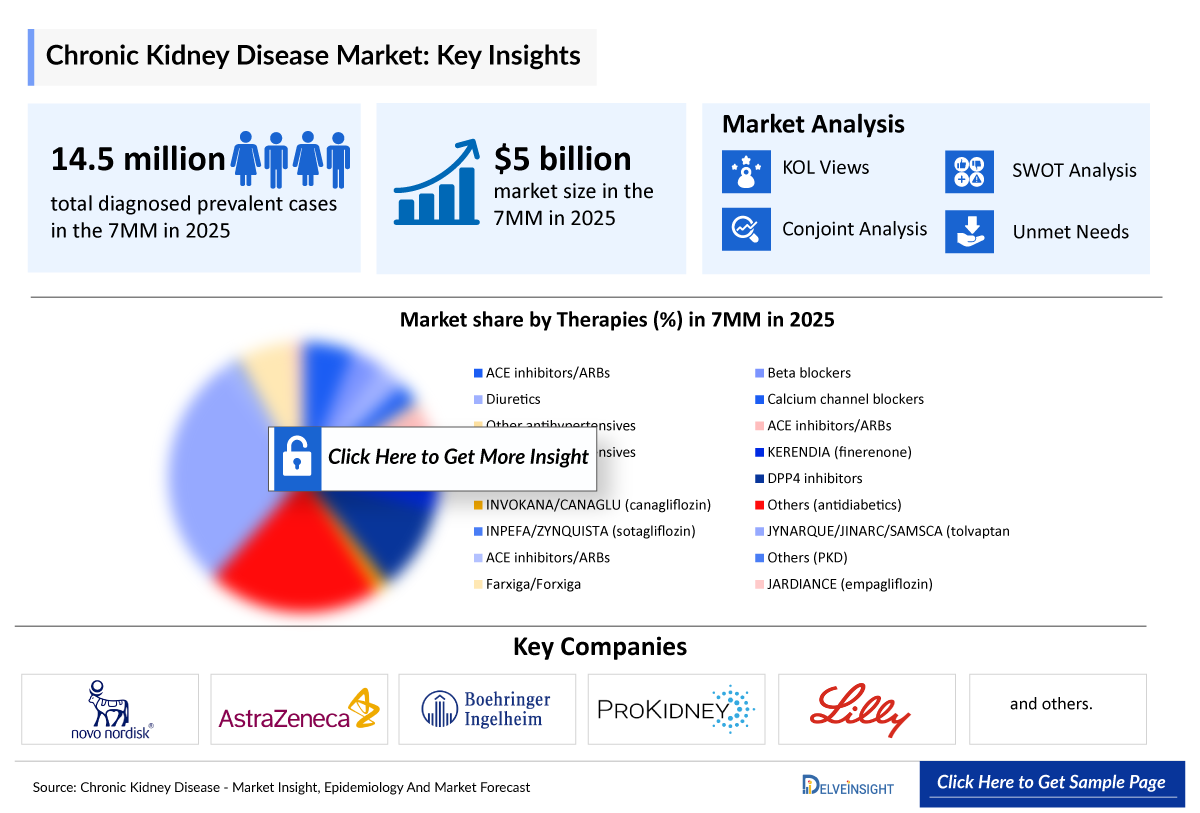
- The Chronic Kidney Disease Market Size in the 7MM was approximately USD 5 billion in 2025 and is further expected to increase by 2036.
- The leading Chronic Kidney Disease Companies include ProKidney, Reata Pharmaceuticals, Inc., Novo Nordisk A/S, Boehringer Ingelheim, Eli Lilly and Company, KBP Biosciences, Kibow Pharma, Cincor Pharma, AstraZeneca, Allena Pharmaceuticals, DiaMedica Therapeutics Inc., Lexicon Pharmaceuticals, Sanofi, and others.
Chronic Kidney Disease Market and Epidemiology Insights
- As per DelveInsight analysis, in 2025, there were approximately 82.5 million prevalent and nearly 14.5 million diagnosed prevalent cases of Chronic Kidney Disease in the 7MM.
- The current Chronic Kidney Disease Therapeutics Market includes erythropoietin-stimulating agents (ESA), angiotensin-converting enzyme inhibitors, angiotensin receptor blockers (ACE-I and ARBs), antidiabetics, secondary hyperparathyroidism treatment (SHPT), and urate-lowering therapies, making up a market size of USD 5,479 million in the 7MM in 2023. The market size is expected to increase with the projected launch of emerging therapies during the forecast period (2026–2036).
- Chronic Kidney Disease is a progressive, heterogeneous condition characterized by a gradual decline in kidney function, typically defined by reduced glomerular filtration rate (GFR) and/or markers of kidney damage.
- As per DelveInsight analysis, in 2025, there were approximately 82.5 million prevalent and nearly 14.5 million total diagnosed prevalent cases of Chronic Kidney Disease in the 7MM. These cases are projected to increase further during the forecast period (2026-2036), due to the increasing geriatric population.
- In the US, more than 1 in 7 adults (14%) aged 18 or older (37 million people) were estimated to have Chronic Kidney Disease.
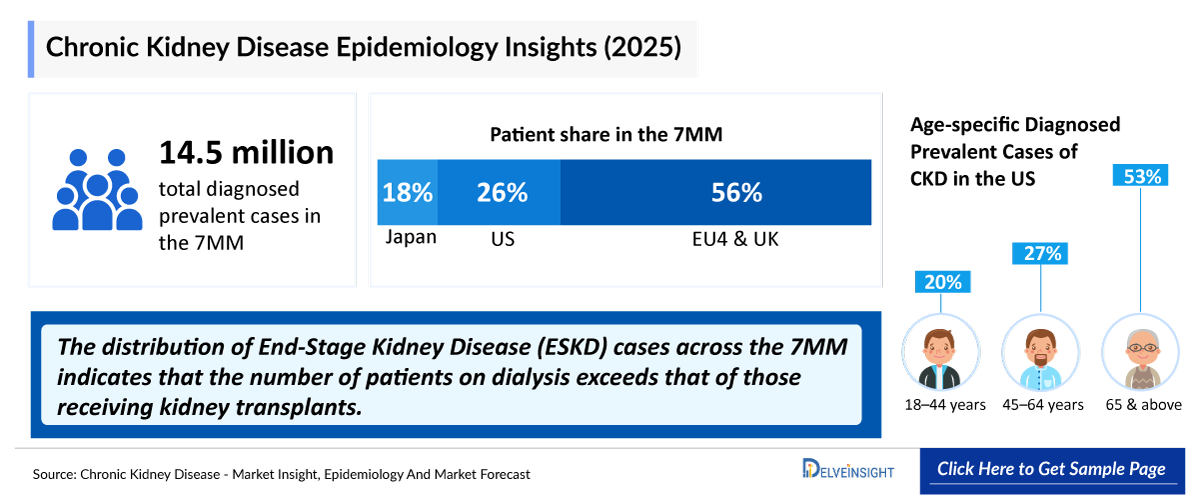
- Chronic Kidney Disease Prevalence increases substantially with age, with the highest burden in adults aged 65 and above.
- Type 2 Diabetes drives 40% of all US Chronic Kidney Disease cases, with 23 million Americans suffering from comorbid Hypertension and Chronic Kidney Disease.
- Improved diagnostic sensitivity in blood and urine tests, specifically through GFR measurement, cystatin C use, and albuminuria detection, has facilitated earlier and more accurate identification of Chronic Kidney Disease. This advancement enables timely interventions, effectively mitigating disease progression and associated complications.
- Treatment of Chronic Kidney Disease is aimed at slowing progression to kidney failure while reducing cardiovascular risk and managing complications such as anemia and mineral bone disease.
- SGLT2 inhibitors, non-steroidal MRAs, and emerging aldosterone synthase inhibitor combinations are replacing single-agent RAS blockade due to superior renal and cardiovascular outcomes.
- The approved therapies in the Chronic Kidney Disease Therapeutics Market include Empagliflozin (JARDIANCE) (Boehringer Ingelheim and Eli Lilly), finerenone (KERENDIA) (Bayer), Dapagliflozin (FARXIGA/FORXIGA) (AstraZeneca), and others.
- The pharmaceutical companies active in the emerging pipeline include AstraZeneca (zibotentan/dapagliflozin), Boehringer Ingelheim (vicadrostat + empagliflozin), Mineralys Therapeutics (lorundrostat), ProKidney (rilparencel), and others.
- Despite approval of SGLT2 inhibitors, non-steroidal MRAs, and RAS blockade, a substantial proportion of Chronic Kidney Disease patients continue to progress to kidney failure, and the disease remains markedly underdiagnosed, underscoring the need for therapies that more effectively halt progression and for improved early detection and diagnosis strategies.
Request for unlocking the sample page of the "Chronic Kidney Disease Treatment Market"
Request for Unlocking the Sample Page of the "Chronic Kidney Disease Treatment Market"
Key Factors Driving the Chronic Kidney Disease Market
-
Rising Disease Prevalence and Earlier Screening
Chronic Kidney Disease diagnosis is increasing due to greater screening in high-risk populations, particularly patients with diabetes, hypertension, and cardiovascular disease, alongside routine EGFR and UACR testing. Earlier detection expands the treated patient pool at earlier disease stages, especially in developed markets. This directly increases long-term therapy demand.
-
Shift Toward Combination Cardiorenal Therapy
SGLT2 inhibitors, non-steroidal MRAs, and emerging aldosterone synthase inhibitor combinations are replacing single-agent RAS blockade due to superior renal and cardiovascular outcomes. These agents address complementary pathways of disease progression, making multi-drug regimens increasingly standard rather than exceptional. This is the main revenue driver of the market.
-
Diversifying Late-Stage Pipeline
New mechanisms such as endothelin receptor antagonism, aldosterone synthase inhibition, APOL1 inhibition, and cell-based therapy are expanding treatment choices beyond the SGLT2i/MRA backbone. Companies are increasingly focusing on differentiated, precision, and disease-modifying assets. This increases competition and market expansion.
DelveInsight's "Chronic Kidney Disease Market Insights, Epidemiology and Market Forecast – 2036" report delivers an in-depth understanding of Chronic Kidney Disease, historical and forecasted epidemiology, as well as the Chronic Kidney Disease market trends in the United States, EU4 (Germany, Spain, Italy, and France) and the United Kingdom, and Japan.
The Chronic Kidney Disease Treatment Market Report delivers a comprehensive analysis of the current treatment landscape, including standards of care, clinical practices, and evolving therapeutic algorithms. It evaluates Chronic Kidney Disease patient burden trends, revenue & market share dynamics, peak patient share & therapy uptake analysis, and provides an in-depth Chronic Kidney Disease Market Size assessment and growth rate projections (Historical & Forecast 2022–2036) across global regions. The report highlights key unmet medical needs in Chronic Kidney Disease and maps the competitive and clinical landscape to uncover high-value opportunities, providing a clear outlook on future market growth potential.
Scope of the Chronic Kidney Disease Market | |
| Study Period | 2022–2036 |
| Historical Year | 2022–2025 |
| Forecast Period | 2026–2036 |
| Base Year | 2025 |
| Geographies Covered |
|
| Chronic Kidney Disease Market CAGR (Forecast period) | XX% (2026–2036) |
| Chronic Kidney Disease Epidemiology Segmentation Analysis |
Patient Burden Assessment
|
| Chronic Kidney Disease Companies |
|
| Chronic Kidney Disease Therapies |
|
| Chronic Kidney Disease Market |
Segmented by
|
| Analysis |
|
Chronic Kidney Disease Understanding
Chronic Kidney Disease Overview
Chronic Kidney Disease is a progressive, heterogeneous condition characterized by a gradual decline in kidney function, typically defined by reduced glomerular filtration rate (GFR) and/or markers of kidney damage. It is commonly driven by underlying diabetes, hypertension, and cardiovascular disease, though genetic drivers such as APOL1 high-risk variants and glomerular diseases also contribute to a meaningful subset of cases. The disease follows a heterogeneous course, ranging from stable, early-stage disease to rapid progression toward kidney failure requiring dialysis or transplantation. Early diagnosis is critical because much of the structural kidney damage that accumulates is irreversible.
Chronic Kidney Disease Diagnosis
Diagnosis of Chronic Kidney Disease is primarily based on estimated GFR and UACR, staged according to KDIGO criteria that combine both measures to assess severity and progression risk. Additional workup, including imaging, serologic testing, and in select cases genetic testing (e.g., for APOL1 variants) or kidney biopsy, helps identify the underlying etiology and exclude other causes of kidney dysfunction. Because early-stage Chronic Kidney Disease is often asymptomatic, diagnosis frequently relies on early screening in at-risk populations rather than symptom-driven presentation.
Further details are provided in the report...
Current Chronic Kidney Disease Treatment Landscape
Treatment of Chronic Kidney Disease aims to slow progression to kidney failure while reducing cardiovascular risk and managing complications such as anemia and mineral bone disease. Management typically follows a stepwise, additive approach, starting with RAS blockade (ACE Inhibitors/ARBs) and lifestyle modification, and progressing to SGLT2 inhibitors such as empagliflozin (JARDIANCE) and dapagliflozin (FARXIGA/FORXIGA) as foundational background therapy across most Chronic Kidney Disease etiologies.
In patients with Chronic Kidney Disease associated with type 2 diabetes and residual albuminuria, the non-steroidal MRA finerenone (KERENDIA) is increasingly added on top of SGLT2 inhibition to reduce cardiorenal risk further. Emerging combination approaches, including endothelin receptor antagonist/SGLT2 inhibitor and aldosterone synthase inhibitor/SGLT2 inhibitor regimens, are being layered onto this foundation to target residual risk, while genetically targeted and cell-based therapies are being developed for specific high-risk subpopulations.
Further details related to country-based variations are provided in the report...
Chronic Kidney Disease Unmet Needs
The section “unmet needs of Chronic Kidney Disease” outlines the critical gaps between the current state of patient care, diagnosis, and the ideal & effective management of the disease. It highlights the obstacles experienced by patients, clinicians, and researchers and identifies potential solutions for future progress.
- Current therapies only delay progression and cannot halt or reverse Chronic Kidney Disease.
- The asymptomatic progression of Chronic Kidney Disease often results in late-stage diagnosis.
- Persistent residual cardiorenal risk despite combination SGLT2 inhibitor and MRA therapy
- Lack of accessible, precision therapies for genetically driven Chronic Kidney Disease subtypes such as APOL1-mediated kidney disease, and others….
Note: Comprehensive unmet needs insights in Chronic Kidney Disease and their strategic implications are provided in the full report...
Chronic Kidney Disease Epidemiology Insights in the 7MM
The Chronic Kidney Disease epidemiology section provides insights about the historical and current Chronic Kidney Disease patient pool and forecasted trends for the seven major countries. It helps to recognize the causes of current and forecasted trends by exploring numerous studies and views of key opinion leaders. This part of the Chronic Kidney Disease market report also provides the diagnosed patient pool and their trends along with assumptions undertaken.
Key Findings from Chronic Kidney Disease Epidemiological Analysis and Forecast
- As per DelveInsight analysis, in 2025, there were approximately 82.5 million prevalent and nearly 14.5 million total diagnosed prevalent cases of Chronic Kidney Disease in the 7MM. These cases are projected to increase further during the forecast period (2026-2036), due to the increasing geriatric population.
- In 2025, the US accounted for the highest number of diagnosed prevalent cases of Chronic Kidney Disease among the 7MM, representing approximately 26% of the total, with around 3.8 million cases. This figure is anticipated to rise by 2036.
- In 2025, Germany recorded the highest number of diagnosed prevalent Chronic Kidney Disease cases among EU4 and the UK, followed by the UK and in contrast, Italy reported the lowest.
- Among the US diagnosed prevalent population in 2025, Stage III accounted for the highest number of cases, at approximately 1.8 million, followed by Stage V, then Stage II and Stage IV in comparable numbers, with Stage I representing the smallest share.
- In the US, hyperparathyroidism was the most common, affecting nearly 1.4 million patients, followed by anemia, with metabolic acidosis the least prevalent of the three in 2025.
- As per DelveInsight analysis, the gender distribution of the disease in the US indicates a female predominance, with approximately 2.1 million cases among females and 1.7 million cases among males in 2025.
Chronic Kidney Disease Epidemiology Segmentation
- Chronic Kidney Disease Total Prevalent Cases
- Chronic Kidney Disease Total Diagnosed Prevalent Cases
- Chronic Kidney Disease Gender-specific Diagnosed Prevalent Cases
- Chronic Kidney Disease Age-specific Diagnosed Prevalent Cases
- Chronic Kidney Disease Severity-specific Diagnosed Prevalent Cases
- Chronic Kidney Disease Complication-specific Diagnosed Prevalent Cases
- Chronic Kidney Disease Etiology-specific Diagnosed Prevalent Cases
- Chronic Kidney Disease Total Treated Cases
Chronic Kidney Disease Market Recent Breakthroughs and Developments
- In March 2026, Maze Therapeutics announced positive topline data from the Phase II HORIZON trial of MZE829, demonstrating the first clinical Proof-of-concept in patients with broad APOL1-Mediated Kidney Disease (AMKD).
- In January 2026, Mineralys Therapeutics reported a corporate update that highlighted recent and upcoming clinical and regulatory milestones for Lorundrostat in Chronic Kidney Disease and related conditions.
- In November 2025, Mineralys Therapeutics reported the presentation of data for Lorundrostat in Chronic Kidney Disease and hypertension at ASN Kidney Week 2025 organized by the American Society of Nephrology.
- In January 2026, Mineralys Therapeutics reported a corporate update that highlighted recent and upcoming clinical and regulatory milestones for Lorundrostat in Chronic Kidney Disease and related conditions.
- In Sept 2025, eGenesis received FDA clearance for its Investigational New Drug (IND) application to start clinical trials of EGEN-2784, a genetically engineered porcine kidney, for treating end-stage kidney disease (ESKD). The Phase 1/2/3 study will evaluate safety and efficacy in dialysis-dependent patients aged 50 and older on the transplant waitlist.
- In March 2025, the FDA expanded the approval of Furoscix to include the treatment of edema in patients with chronic kidney disease, including nephrotic syndrome.
- In March 2025, the FDA approved an expanded indication for furosemide injection (Furoscix; scPharmaceuticals, Inc.) to treat edema in adult patients with chronic kidney disease (Chronic Kidney Disease), including nephrotic syndrome. The expanded treatment is expected to be available by April 2025. This approval follows the FDA's acceptance of the supplemental new drug application in July 2024.
- In January 2025, the FDA approved a new indication for semaglutide to reduce the risk of worsening kidney disease, kidney failure, and cardiovascular death in adults with type 2 diabetes and chronic kidney disease, according to Novo Nordisk.
- On November 11, 2024, Unicycive Therapeutics (Nasdaq: UNCY) announced that the U.S. FDA has accepted its New Drug Application (NDA) for Oxylanthanum Carbonate (OLC), with a PDUFA target action date of June 28, 2025. If approved, OLC could significantly improve treatment for hyperphosphatemia in Chronic Kidney Disease patients on dialysis.
Chronic Kidney Disease Drug Analysis & Competitive Landscape
The Chronic Kidney Disease drug chapter provides a detailed, market-focused review of the emerging pipeline across Phase III/II Chronic Kidney Disease clinical trials. It covers the mechanism of action, clinical trial data, regulatory approvals, patents, collaborations, and strategic partnerships for each therapy, along with their advantages, limitations, and recent developments. This section offers critical insights into the Chronic Kidney Disease treatment landscape, supporting market assessment, competitive analysis, and growth forecasting for the Chronic Kidney Disease therapeutics market.
Chronic Kidney Disease Approved Therapies
-
Empagliflozin (JARDIANCE): Boehringer Ingelheim and Eli Lilly
JARDIANCE (empagliflozin), developed by Boehringer Ingelheim and Eli Lilly, is an oral sodium–glucose cotransporter 2 inhibitor approved by the US FDA for adults with Chronic Kidney Disease. It inhibits SGLT2 in the proximal renal tubules, reducing glucose and sodium reabsorption and improving renal hemodynamics.
In July 2023, Boehringer Ingelheim reported that the European Commission approved empagliflozin, in September 2023, it was approved by the US FDA, and in February 2024, the Ministry of Health, Labour and Welfare (MHLW) reported the approval.
-
Finerenone (KERENDIA): Bayer
Finerenone (KERENDIA) is a nonsteroidal, mineralocorticoid receptor antagonist. It is labeled for the treatment of Chronic Kidney Disease in adults with type 2 diabetes mellitus to reduce the risk of sustained renal function decline, end-stage renal disease, cardiovascular death, nonfatal myocardial infarction, and hospitalization for heart failure.
In patients with Chronic Kidney Disease and type 2 diabetes, treatment with finerenone resulted in lower risks of Chronic Kidney Disease progression and cardiovascular events than placebo. It was approved for by the US FDA in July 2021, followed by the European Commission in February 2022, and Japan's MHLW in March 2022.
Competitive Landscape of CKD Marketed/Approved Therapies | ||||||
|
Drug/Therapy |
Company |
Indication |
Molecule Type |
MoA |
RoA |
Marketed Region |
|
Empagliflozin (JARDIANCE) |
Boehringer Ingelheim and Eli Lilly |
CKD |
Small molecule |
Sodium–glucose cotransporter 2 inhibitor |
Oral |
US: 2023 EU: 2023 JP: 2024 |
|
Finerenone (KERENDIA) |
Bayer |
CKD |
Small molecule |
Mineralocorticoid receptor antagonist |
Oral |
US: 2021 EU: 2022 JP: 2022 |
|
Dapagliflozin (FARXIGA/ FORXIGA) |
AstraZeneca |
CKD |
Small molecule |
SGLT2 inhibitor |
Oral |
US: 2021 EU: 2021 JP: 2021 |
Note: Detailed marketed therapies assessment will be provided in the final report...
Chronic Kidney Disease Emerging Therapies
-
Zibotentan/Dapagliflozin: AstraZeneca
Zibotentan/Dapagliflozin, developed by AstraZeneca, is an investigational oral combination therapy being evaluated for adults with Chronic Kidney Disease. It combines zibotentan, an endothelin receptor antagonist, with dapagliflozin, an SGLT2 inhibitor, aiming to improve kidney outcomes by targeting complementary pathways involved in Chronic Kidney Disease progression.
Building on positive Phase IIb ZENITH-Chronic Kidney Disease results showing up to a 52.5% reduction in urine protein markers, patient recruitment for the Phase III ZENITH High Proteinuria trial wrapped up in late 2024, with final study results expected in 2027.
-
Vicadrostat + Empagliflozin: Boehringer Ingelheim
Vicadrostat + Empagliflozin, developed by Boehringer Ingelheim, is an investigational combination therapy being evaluated for adults with Chronic Kidney Disease. The combined use of vicadrostat with empagliflozin has already shown promising results in a Phase II trial in Chronic Kidney Disease in 2023, with full data demonstrating a significant reduction of excessive levels of protein in the urine (albuminuria) by up to 39.5% vs placebo. The combination of vicadrostat and empagliflozin could offer new hope for people living with Chronic Kidney Disease.
Competitive Landscape of CKD Pipeline Drugs | ||||||
|
Drug Name |
Company |
Highest Phase |
Indication |
RoA |
MoA |
Anticipated Launch in the US |
|
Zibotentan/ Dapagliflozin |
AstraZeneca |
III |
CKD |
Oral |
Endothelin receptor antagonist/ SGLT2 inhibitor |
Information is available in the full report |
|
Vicadrostat (BI 690517) + Empagliflozin |
Boehringer Ingelheim |
III |
CKD |
Oral |
Aldosterone synthase inhibitor/SGLT2 inhibitor |
Information is available in the full report |
|
Rilparencel |
ProKidney |
III |
CKD |
Cell therapy |
Stabilizes eGFR decline |
Information is available in the full report |
|
Lorundrostat |
Mineralys Therapeutics |
II |
CKD |
Oral |
Aldosterone synthase inhibitor |
Information is available in the full report |
|
Note: Launch insights are provisional and may change with future report updates or the occurrence of major key catalysts. | ||||||
Note: Detailed emerging therapies assessment will be provided in the final report...
Chronic Kidney Disease Market Outlook
Chronic Kidney Disease management has shifted from blood-pressure and glycemic control alone toward therapies targeting nephron loss directly hemodynamic stress, aldosterone excess, endothelin-mediated vasoconstriction, fibrosis, and genetically driven podocyte injury. SGLT2 inhibitors empagliflozin (JARDIANCE) and dapagliflozin (FARXIGA/FORXIGA), validated by EMPA-KIDNEY and DAPA-Chronic Kidney Disease respectively, now anchor standard of care with broad payer acceptance, while finerenone (KERENDIA) has carved a complementary niche addressing residual albuminuria in diabetic Chronic Kidney Disease; this multi-pathway stacking is increasingly becoming the de facto standard across the 7MM.
A diversified late-stage Chronic Kidney Disease Pipeline spanning endothelin receptor antagonists, aldosterone synthase inhibitors (lorundrostat), APOL1 inhibitors (MZE829), and cell therapy (rilparencel) is set to reshape competition, each targeting mechanisms complementary to the SGLT2i/MRA backbone. The market growth will be driven by rising diagnosed prevalence, earlier UACR/eGFR-based screening, and expanding combination use, with competitive intensity favoring players that demonstrate durable renal-outcome benefit, clean safety (fluid retention, hyperkalemia), and differentiated positioning as the paradigm shifts toward multi-pathway, disease-modifying strategies.
Key findings from Chronic Kidney Disease Market Forecast
- SGLT2 inhibitors (empagliflozin, dapagliflozin) and finerenone are expected to remain the volume backbone of the market, with continued uptake as combination standard of care.
- Endothelin and aldosterone-pathway combinations (zibotentan/dapagliflozin, vicadrostat/empagliflozin, lorundrostat) are expected to drive the next wave of add-on growth, contingent on outcomes-trial and fluid-retention/hyperkalemia safety data.
- Rilparencel and MZE829 represent potential disease-modifying and precision-genetic opportunities, respectively, that could command premium positioning in advanced and APOL1-driven Chronic Kidney Disease if pivotal data remain positive.
- DISC-0974 could open a new anemia-specific revenue segment within the broader Chronic Kidney Disease market, largely uncontested by current SGLT2i/MRA-focused competitors.
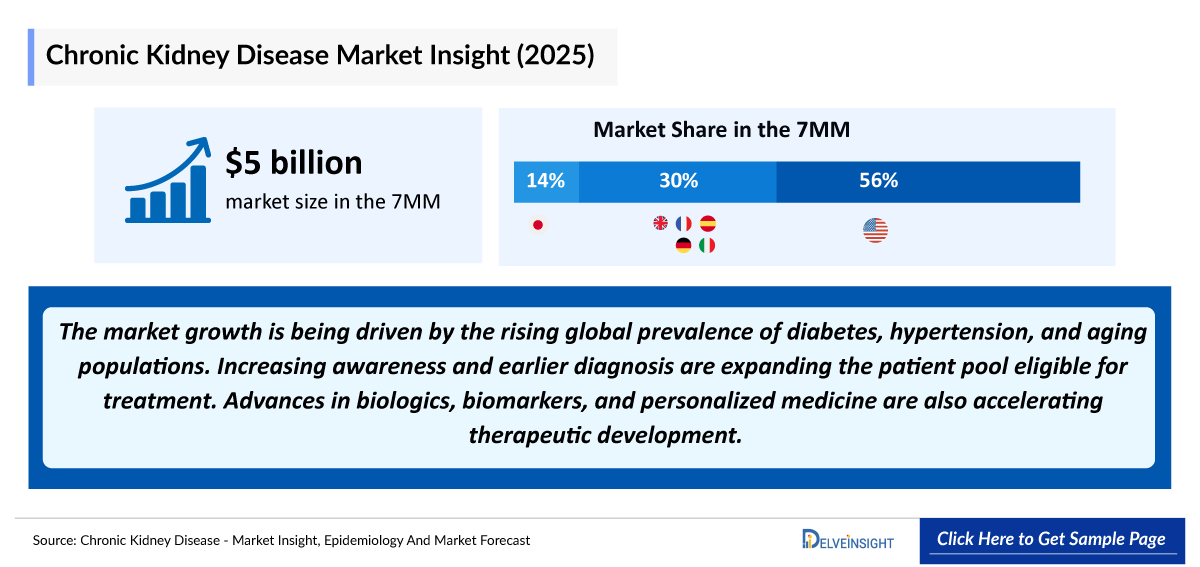
- The Chronic Kidney Disease Treatment Market Size in the 7MM was approximately USD 5 billion in 2025, which is further expected to increase by 2036.
- The US accounts for the largest Chronic Kidney Disease Treatment Market Size i.e., nearly USD 2.9 Billion, in comparison to EU4 (Germany, Italy, France, and Spain) and the UK, and Japan.
- Among EU4 and the UK, Germany had the highest Chronic Kidney Disease Market Size at approximately USD 480 million in 2025, followed by the UK with around USD 335 million in the same year.
- The Chronic Kidney Disease Market Size in Japan was valued at approximately USD 665 million, capturing about 13% of the market size in 2025, which is expected to change by 2036.
Further details will be provided in the report...
Chronic Kidney Disease Companies
- Bristol Myers Squibb
- UBC
- AbbVie
- Johnson & Johnson
- Sun Pharmaceutical Industries
- Affibody Medical
- Takeda Pharmaceuticals
- AltruBio
- Merck Sharp & Dohme, and others
Chronic Kideny Disease Drug Class/Insights into Leading Emerging and Marketed Therapies (2022–2036 Forecast)
The Chronic Kidney Disease Therapeutics Market (2022–2036) forecast is increasingly shifting toward mechanistically complementary, combination-based regimens that target hemodynamic, hormonal, and genetic drivers of nephron loss, layered on top of a well-established SGLT2 inhibitor backbone.
SGLT2 inhibitors: This class includes empagliflozin (JARDIANCE) and dapagliflozin (FARXIGA/FORXIGA), which reduce intraglomerular pressure and glucose/sodium reabsorption in the proximal tubule, thereby slowing eGFR decline and reducing cardiovascular risk regardless of diabetes status.
- Aldosterone synthase inhibitor/SGLT2 inhibitor: Vicadrostat + empagliflozin, selectively inhibit CYP11B2-mediated aldosterone production to address the residual cardiorenal risk driven by aldosterone excess that persists despite SGLT2 inhibition and RAS blockade. By combining aldosterone synthase inhibition with an SGLT2 inhibitor, these regimens aim to deliver additive reductions in albuminuria and blood pressure while managing the hyperkalemia risk historically associated with mineralocorticoid receptor pathway agents, positioning this class as a leading next-generation add-on to standard of care.
- APOL1 Inhibitors: MZE829 is designed to address APOL1-mediated kidney disease (AMKD), a genetically defined and historically underserved subset of Chronic Kidney Disease. It directly targets the underlying genetic driver of podocyte injury rather than downstream hemodynamic effects, with the potential for meaningful proteinuria reduction.
Overall, innovation in Chronic Kidney Disease is increasingly centered on combination strategies layered onto the SGLT2 inhibitor foundation, alongside genetically targeted and cell-based approaches. While SGLT2 inhibitors and non-steroidal MRAs currently dominate the marketed landscape, emerging aldosterone synthase inhibitor combinations and APOL1-targeted therapies are expected to diversify treatment options, address residual and genetically driven risk, and support sustained market growth across the 7MM through 2036.
Chronic Kidney Disease Drug Uptake
This section focuses on the uptake rate of potential Chronic Kidney Disease drugs expected to be launched in the market during the forecast period (2026–2036). The analysis covers the Chronic Kidney Disease drug’s uptake, performance at peak, factors affecting performance during prime years of growth, patient uptake by therapy, and anticipated sales generated by each drug.
Detailed insights of emerging therapies' drug uptake are included in the report...
Chronic Kidney Disease Market Access and Reimbursement of Approved Therapies
Reimbursement is a crucial factor that affects the drug’s access to the market. Often, the decision to reimburse comes down to the price of the drug relative to the benefit it produces in treated patients. To reduce the healthcare burden of these high-cost therapies, many payment models are being considered by payers and other industry insiders.
The United States
US Reimbursement of Therapies Approved for Chronic Kidney Disease | |
|
Drug/Therapy |
Access Program |
|
Empagliflozin (JARDIANCE) |
JARDIANCE Savings Card |
|
dapagliflozin (FARXIGA/FORXIGA) |
FARXIGA SavingsRx Card |
The report further provides detailed insights on the country-wise accessibility and reimbursement scenarios, cost-effectiveness scenario of approved therapies, programs making accessibility easier and out-of-pocket costs more affordable, insights on patients insured under federal or state government prescription drug programs, etc.
NOTE: Further Details are provided in the final report...
Chronic Kidney Disease Therapies Price Scenario & Trends
Pricing and analogue assessment of Chronic Kidney Disease therapies highlights evolving price dynamics structures. This section summarizes the cost of approved treatments, closest and most appropriate analogue selection for emerging therapies, and understanding of how pricing influences market access, adherence, and long-term uptake.
Industry Experts and Physician Views for Chronic Kidney Disease
To keep up with Chronic Kidney Disease market trends, we take Key Opinion Leaders (KOLs) and Subject Matter Experts (SMEs) opinions working in the domain through primary research to fill the data gaps and validate our secondary research. Industry experts were contacted for insights on Chronic Kidney Disease emerging therapies, evolving treatment landscape, patient adherence to conventional therapies, therapy switching trends, drug adoption and uptake, accessibility challenges, and epidemiology and real-world prescription patterns in Chronic Kidney Disease, including MD, PhD, Instructor, Postdoctoral Researcher, Professor, Researcher, and others.
DelveInsight’s analysts connected with 15+ KOLs to gather insights at the country level. Centers such as Rochester, University Hospital Erlangen, Kings College Hospital, etc. were contacted. Their opinions help understand and validate current and emerging Chronic Kidney Disease therapies, highlight unmet medical needs, provide epidemiological context, and support strategic decisions for market access, therapy adoption, and pipeline prioritization in Chronic Kidney Disease.
|
Region |
Key Opinion Leaders (KOLs) and Subject Matter Experts (SMEs) |
|
United States |
“Over 5 million cases of CKD are diagnosed in the US, with Stage 3 being the most prevalent. SGLT2 inhibitors like canagliflozin, dapagliflozin, and empagliflozin play a key role in preventing CKD progression and reducing the need for dialysis.” |
|
Spain |
“Many patients remain undiagnosed and inadequately treated, with underutilization of nephroprotective therapies. This exacerbates the associated cardiovascular risks. There is a pressing need for standardized care protocols and improved patient management strategies to enhance outcomes and reduce the burden of this growing public health issue in Spain.” |
Chronic Kidney Disease Report Qualitative Analysis: SWOT and Conjoint Analysis
We perform qualitative and Chronic Kidney Disease Therapeutics Market Intelligence analysis using various approaches, such as SWOT analysis and conjoint analysis. In the SWOT analysis of Chronic Kidney Disease, strengths, weaknesses, opportunities, and threats in terms of disease diagnosis, patient awareness, patient burden, competitive landscape, cost-effectiveness, and geographical accessibility of therapies are provided.
Conjoint analysis analyzes Chronic Kidney Disease Emerging Therapies based on relevant attributes such as safety, efficacy, frequency of administration, route of administration, and order of entry. Scoring is given based on these parameters to analyze the effectiveness of therapy.
The team of analysts analyzes promising Chronic Kidney Disease emerging therapies based on relevant attributes such as safety, efficacy, frequency of administration, route of administration, and order of entry. In efficacy, the trial’s primary and secondary outcome measures are evaluated, whereas the therapies’ safety is evaluated, wherein acceptability, tolerability, and adverse events are majorly observed.
In addition, the scoring is also based on the route of administration, order of entry, probability of success, and the addressable patient pool for each therapy. According to these parameters, the final weightage score and the ranking of the emerging therapies are decided.
Scope of the Chronic Kidney Disease Market Report
- The Chronic Kidney Disease Therapeutics Market Report covers a segment of key events, an executive summary, and a descriptive overview, explaining their causes, signs and symptoms, pathogenesis, and currently available treatments.
- Comprehensive insight has been provided into the epidemiology segments and forecasts, the future growth potential of the diagnosis rate, and disease progression along treatment guidelines.
- Additionally, an all-inclusive account of both the current and emerging treatments, along with the elaborative profiles of late-stage and prominent therapies, will have an impact on the current treatment landscape.
- A detailed review of the Chronic Kidney Disease Therapeutics Market, historical and forecasted Chronic Kidney Disease Market Size, Chronic Kidney Disease Market Share by therapies, detailed assumptions, and the rationale behind our approach is included in the report, covering the 7MM drug outreach.
- The Chronic Kidney Disease Therapeutics Market Report provides an edge while developing business strategies by understanding trends through SWOT analysis and expert insights/KOL views, patient journey, and treatment preferences that help in shaping and driving the 7MM Chronic Kidney Disease Drugs Market.
Chronic Kidney Disease Market Report Insights
- Chronic Kidney Disease Patient Population Forecast
- Chronic Kidney Disease Therapeutics Market Size
- Chronic Kidney Disease Pipeline Analysis
- Chronic Kidney Disease Market Size and Trends
- Chronic Kidney Disease Market Opportunity (Current and forecasted)
Chronic Kidney Disease Market Report Key Strengths
- Chronic Kidney Disease Epidemiology-based (Epi-based) Bottom-up Forecasting
- Artificial Intelligence (AI)-Enabled Market Research Report
- 11-Year Forecast
- Chronic Kidney Disease Market Outlook (North America, Europe, Asia-Pacific)
- Chronic Kidney Disease Patient Burden Trends (By Geography)
- Chronic Kidney Disease Treatment Addressable Market (TAM)
- Chronic Kidney Disease Competitive Landscape
- Chronic Kidney Disease Major Companies Insights
- Chronic Kidney Disease Price Trends and Analogue Assessment
- Chronic Kidney Disease Therapies Drug Adoption/Uptake
- Chronic Kidney Disease Therapies Peak Patient Share Analysis
Chronic Kidney Disease Market Report Assessment
- Chronic Kidney Disease Current Treatment Practices
- Chronic Kidney Disease Unmet Needs
- Chronic Kidney Disease Clinical Development Analysis
- Chronic Kidney Disease Emerging Drugs Product Profiles
- Chronic Kidney Disease Market Attractiveness
- Chronic Kidney Disease Qualitative Analysis (SWOT and conjoint analysis)
- Chronic Kidney Disease Market Drivers
- Chronic Kidney Disease Market Barriers
Key Questions Answered in the Chronic Kidney Disease Market Report
Chronic Kidney Disease Market Insights
- What was the Chronic Kidney Disease market size, the CKD Market Size by therapies, CKD Drugs Market Share (%) distribution in 2025, and what would it look like by 2036? What are the contributing factors for this growth?
- What are the anticipated pricing variations among different geographies for the emerging therapies in the future?
- What can be the future treatment paradigm of Chronic Kidney Disease?
- What are the disease risks, burdens, and unmet needs of Chronic Kidney Disease? What will be the growth opportunities across the 7MM concerning the Chronic Kidney Disease patient population?
- Who is the major future competitor in the market, and how will the competitors affect their market share?
- What are the current options for the treatment of Chronic Kidney Disease? What are the current guidelines for treating Chronic Kidney Disease in the US, Europe, and Japan?
Reasons to Buy Chronic Kidney Disease Market Forecast Report
- The Chronic Kidney Disease Therapeutics Market Report will help in developing business strategies by understanding the latest trends and changing treatment dynamics driving the Chronic Kidney Disease Drugs Market.
- Bottom-up forecasting builds from the affected population to product forecasts, delivering a robust, data-driven approach ideal for new therapies and novel classes.
- Insights on patient burden/disease, Chronic Kidney Disease Incidence, evolution in diagnosis, and factors contributing to the change in the epidemiology of the disease during the forecast years.
- Understand the existing market opportunities in varying geographies and the growth potential over the coming years.
- Identifying strong upcoming players in the Chronic Kidney Disease Drugs Market will help devise strategies to help get ahead of competitors.
- Detailed analysis and ranking of class-wise potential Chronic Kidney Disease Emerging Therapies under the conjoint analysis section to provide visibility around leading classes.
- To understand KOLs’ perspectives on the accessibility, acceptability, and compliance-related challenges of existing treatment to overcome barriers in the future.
- Detailed insights on the unmet needs of the existing Chronic Kidney Disease Drugs Market so that the upcoming players can strengthen their development and launch strategy.
- This Artificial Intelligence (AI) enabled report summarize and simplify complex datasets with in the report into clear, actionable insights for stakeholders, investors, and healthcare providers, enabling faster, data driven decisions.
Stay updated with us for Recent Articles:-
- Promising Data from the First Dedicated Kidney Outcomes Trial with GLP-1 Receptor Agonist, Semaglutide, in Patients with Type 2 Diabetes and Chronic Kidney Disease
- Ardelyx Overcomes Hurdles to Secure FDA Approval for Xphozah in Chronic Kidney Disease Treatment
- Evolving Therapeutics in Chronic Kidney Disease (Chronic Kidney Disease) Treatment Market
- Chronic Kidney Disease: Complex Debilitating Condition
- Chronic Kidney Disease Market: Infographics
- New DelveInsight Blogs
.png&w=256&q=75)
-market.png&w=256&q=75)