
Chronic Refractory Gout Market
- The Chronic Refractory Gout market size was valued ~USD 1,393 million in the 7MM in 2023. The market size is expected to increase with the projected launch of emerging therapies during the forecast period (2024–2034).
- In 2023, the market size of Chronic Refractory Gout was highest in the US among the 7MM, accounting for approximately USD 1,221 million which is further expected to increase by 2034.
- In 2023, the prevalence of Chronic Refractory Gout was highest in the US among the 7MM, accounting for nearly 201 thousand cases which is further expected to increase by 2034.
- The current market is of USD 1,393 million in the 7MM in 2023. The market size is expected to increase with the projected launch of emerging therapies during the forecast period (2024–2034).
- Chronic Refractory Gout market growth is driven by rising gout prevalence, advanced therapies, and increased awareness. However, high treatment costs, limited specialist availability, and regulatory challenges hinder progress. Reimbursement varies, affecting access to biologics. Significant unmet needs include more effective, affordable treatments and better access to specialist care, highlighting ongoing challenges in managing CRG effectively.
- The market size of CRG in Japan was USD 40 million in 2023, which is expected to rise at a CAGR of 9.1% by 2034.
- In August 2024, AR882 received the FDA’s fast-track designation for gout.
DelveInsight’s “Chronic Refractory Gout Market Insights, Epidemiology, and Market Forecast – 2034” report delivers an in-depth understanding of the Chronic Refractory Gout, historical and forecasted epidemiology as well as the Chronic Refractory Gout therapeutics market trends in the United States, EU4 (Germany, France, Italy, Spain), the United Kingdom, and Japan.
The Chronic Refractory Gout market report provides current treatment practices, emerging drugs, and market share of the individual therapies, current and forecasted 7MM Chronic Refractory Gout market size from 2020 to 2034. The Report also covers current Chronic Refractory Gout treatment practice, market drivers, market barriers, SWOT analysis, reimbursement and market access, and unmet medical needs to curate the best of the opportunities and assess the underlying potential of the market.
Key Factors Driving the Chronic Refractory Gout Market
Rising Disease Burden
In 2024, over 10 million individuals in the US were diagnosed with gout, highlighting a significant burden of this chronic inflammatory condition across the population.
Trend Toward Precision Medicine
The trend toward precision medicine opens avenues for developing targeted treatments, allowing for more effective and personalized interventions in CRG management.
New Mechanisms and Biologics
Development of pegylated or recombinant uricases, anti-inflammatory biologics, and next-gen small molecules (e.g., novel urate transport or synthesis inhibitors) provides options for true refractory cases.
Launch of Expected CRG Drugs
Some of the drugs in the pipeline include SEL-212 (Selecta Biosciences), ABP-671 (Atom Bioscience), AR882 (Arthrosi Therapeutics) and others.
Chronic Refractory Gout Treatment Market
Chronic Refractory Gout Overview
Chronic Refractory Gout is a severe and persistent form of gout that does not adequately respond to conventional treatments. Gout is a type of inflammatory arthritis characterized by the accumulation of uric acid crystals in the joints, leading to acute episodes of pain and swelling. In its chronic refractory form, the condition persists despite aggressive management strategies, resulting in ongoing symptoms and potential joint damage.
Chronic Refractory Gout Diagnosis
Diagnosing CRG involves a multi-step approach. Clinical assessment includes reviewing symptoms like persistent joint pain and swelling alongside the patient’s medical history. Laboratory tests measure serum uric acid levels, though these may be normal in refractory cases. Synovial fluid analysis identifies monosodium urate crystals under a microscope, confirming the diagnosis. Imaging techniques such as X-rays or ultrasound detect joint damage and crystal deposits, helping to evaluate disease progression and complications.
Differential diagnoses for CRG include rheumatoid arthritis, which causes symmetric joint inflammation; osteoarthritis, marked by cartilage breakdown and joint stiffness; pseudogout, characterized by calcium pyrophosphate crystals and affects different joints; and infectious arthritis, which mimics gout but is accompanied by systemic symptoms like fever and chills. Proper diagnosis is crucial to distinguish these conditions and guide effective treatment.
Further details related to diagnosis are provided in the report…
Chronic Refractory Gout Treatment
The treatment and management of CRG involve both acute and chronic strategies. For acute management, Nonsteroidal Anti-inflammatory Drugs (NSAIDs) are commonly used to alleviate pain and inflammation, while colchicine can effectively address gout attacks but may lead to gastrointestinal side effects. Corticosteroids, administered orally or via injection, help manage severe inflammation.
Chronic management focuses on long-term strategies to prevent future complications. Urate-lowering therapies such as allopurinol or febuxostat are used to reduce uric acid levels, with alternative medications like pegloticase considered if initial treatments are ineffective. Additionally, managing comorbid conditions like hypertension and diabetes can enhance overall treatment outcomes. For patients with CRG, ongoing treatment, patient education, and regular follow-ups are essential. Collaboration with specialists, such as rheumatologists and nephrologists, may be needed to provide comprehensive care and optimize management.
Further details related to treatment are provided in the report…
Chronic Refractory Gout Epidemiology

As the market is derived using a patient-based model, the Chronic Refractory Gout epidemiology chapter in the report provides historical as well as forecasted epidemiology segmented by Diagnosed Prevalent Cases of Gout, Diagnosed Prevalent Cases of Chronic Gout, Diagnosed Prevalent Cases of Chronic Refractory Gout, in the 7MM covering, the United States, EU4 countries (Germany, France, Italy, and Spain), the United Kingdom, and Japan from 2020 to 2034.
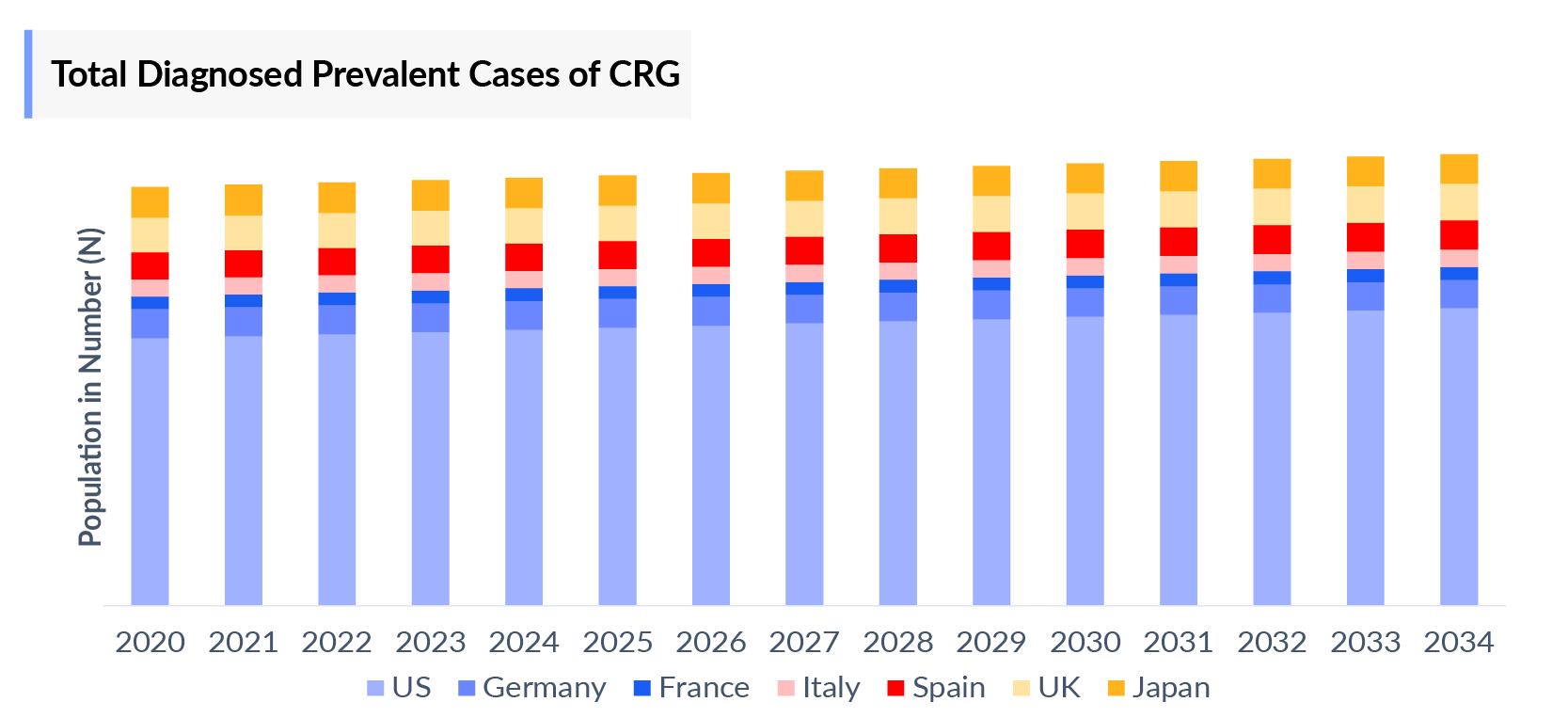
- In the assessment done by DelveInsight, the estimated total diagnosed prevalent cases of Chronic Refractory Gout in the 7MM were nearly 410 thousand in 2023.
- The highest total diagnosed prevalent cases of Chronic Refractory Gout were accounted by the US in 2023 (201 thousand), which are expected to show a rise in the future.
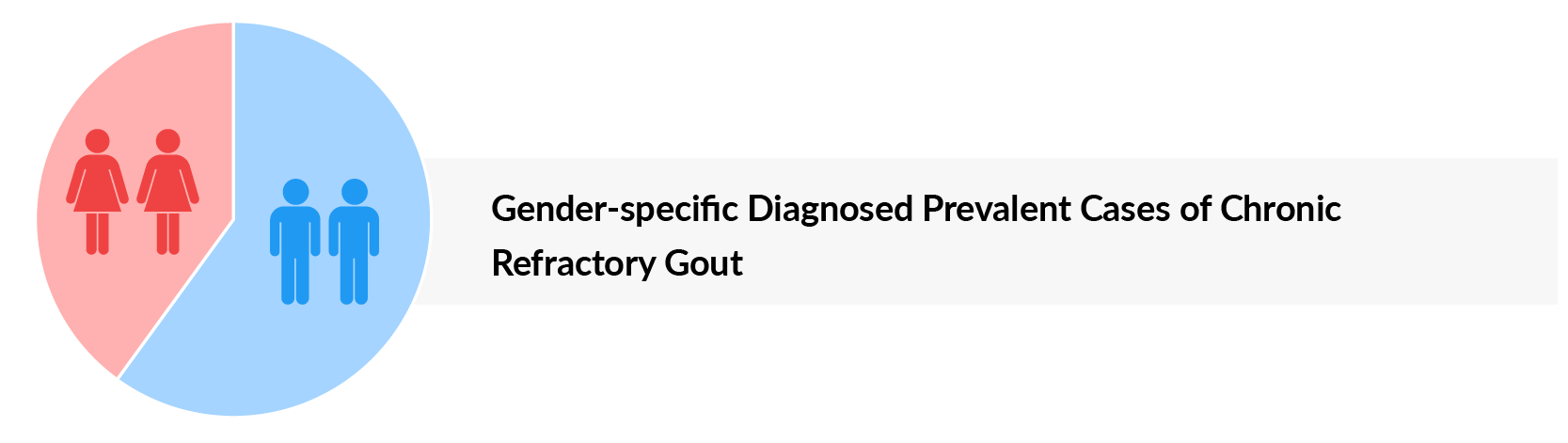
- Among the European countries, the United Kingdom had the highest diagnosed prevalent cases of Chronic Refractory Gout with ~50 thousand cases, followed by Germany, which had diagnosed prevalent population of ~43 thousand in 2023. On the other hand, Italy had the lowest prevalent population (17 thousand cases).
- Japan had nearly 43 thousand total diagnosed prevalent cases of Chronic Refractory Gout in 2023, accounting for approximately 11% in 7MM.
Stay ahead with insights on Chronic Refractory Gout prevalence and patient population projections.
Chronic Refractory Gout Drug Chapters
The drug chapter segment of the Chronic Refractory Gout report encloses a detailed analysis of Chronic Refractory Gout off-label drugs and late-stage (Phase-III and Phase-II) pipeline drugs. It also helps to understand the Chronic Refractory Gout clinical trial details, expressive pharmacological action, agreements and collaborations, approval and patent details, advantages and disadvantages of each included drug, and the latest news and press releases.
Chronic Refractory Gout Marketed Drugs
KRYSTEXXA (Pegloticase): Amgen
KRYSTEXXA (pegloticase) is prescribed for adult patients with chronic gout who have not responded to standard treatments. This condition, known as gout refractory to conventional therapy, occurs in individuals who are unable to achieve normal serum uric acid levels and continue to experience inadequate symptom control despite using xanthine oxidase inhibitors at the highest appropriate dose. Additionally, KRYSTEXXA is indicated for patients who cannot use these inhibitors due to contraindications. Pegloticase offers an alternative treatment option for those who have exhausted other therapeutic avenues, providing a means to manage chronic gout symptoms more effectively when traditional therapies prove insufficient.
Emerging Chronic Refractory Gout Drugs
SEL-212: Cartesian Therapeutics/Swedish Orphan Biovitrum (Sobi)
SEL-212 is a novel investigational combination medicine designed to reduce serum urate levels in people with CRG, potentially reducing harmful tissue urate deposits which, when left untreated, can lead to debilitating gout flares and joint deformity. SEL-212 consists of pegadricase, Selecta’s proprietary pegylated uricase, co-administered with Immunomodulator (ImmTOR), and designed to mitigate the formation of Antidrug Antibodies (ADAs). ADAs develop due to unwanted immune responses to biological medicines, reducing their efficacy and tolerability. This remains an issue across multiple therapeutic modalities and disease states, including CRGs.
AR882: Arthrosi Therapeutics
AR882, a novel and selective URAT1 inhibitor developed by Arthrosi Therapeutics, has shown promising results in recent clinical trials for the treatment of gout and tophaceous gout. AR882 is responsible for the majority of reabsorption of filtered uric acid from the renal tubular lumen. By inhibiting URAT1, AR882 increases uric acid urinary excretion and thereby lowers serum uric acid (sUA). Preclinically, AR882 has demonstrated an inhibitory effect on uric acid uptake and good tolerability in pharmacology, pharmacokinetics, and toxicology studies.
|
Drug |
MoA |
RoA |
Company |
Logo |
Phase |
|
SEL-212 |
Urate oxidase replacements |
IV |
Cartesian Therapeutics/Swedish Orphan Biovitrum (Sobi) |
|
III |
|
AR882 |
Selective inhibitor of Uric Acid Transporter 1 (URAT1) |
Oral |
Arthrosi Therapeutics |
III | |
|
XXX |
Urate transporter inhibitors |
XXX |
XXX |
II |
Stay ahead with key updates on Chronic Refractory Gout treatments. Access the 2025 pipeline report for exclusive insights!
Chronic Refractory Gout Market Outlook
Chronic Refractory Gout is a severe form of gout characterized by persistent symptoms and frequent flare-ups despite standard treatments. The treatment of CRG presents significant challenges, requiring a multifaceted approach that often includes both pharmacological and non-pharmacological strategies.
The primary goal in managing CRG is to reduce serum urate levels and prevent flare-ups. Xanthine oxidase inhibitors, such as allopurinol and febuxostat, are typically first-line treatments for lowering uric acid levels. However, in patients with CRG, these medications may be insufficient or poorly tolerated. For these patients, uricosuric agents like probenecid may be used to enhance uric acid excretion, although their effectiveness can be limited in those with renal impairment.
In cases where these traditional therapies fail, biologic agents such as pegloticase, a recombinant uricase enzyme, have emerged as an option. Pegloticase works by converting uric acid into allantoin, a more soluble substance that is easily excreted by the kidneys. This treatment is particularly effective in reducing urate levels and resolving tophi, but it carries a risk of infusion reactions and the development of anti-drug antibodies, which can reduce its efficacy over time.
Management of CRG also includes lifestyle modifications, such as dietary changes and weight management, which are crucial for reducing urate levels and minimizing flare-ups. Patients are advised to limit intake of purine-rich foods, alcohol, and fructose, while increasing hydration and consuming dairy products, which have been shown to lower urate levels.
Despite advancements in treatment, CRG remains a complex condition with significant unmet needs. The development of new therapies that can effectively target the underlying causes of gout and provide long-term relief is critical to improving outcomes for patients with this debilitating condition.
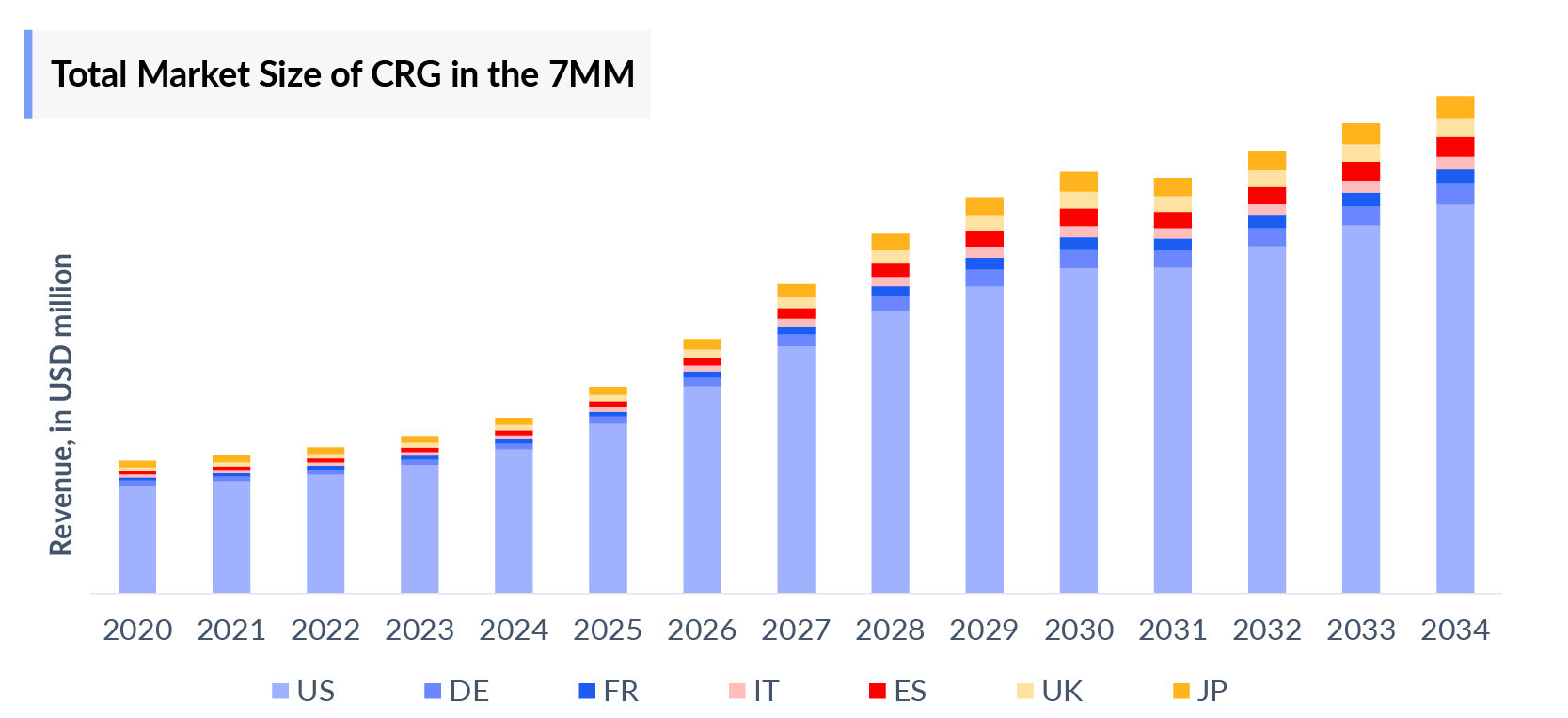
- The market size of Chronic Refractory Gout in the 7MM was ~USD 1,393 million in 2023, which is further anticipated to increase during the forecast period.
- The United States accounted for the highest market size of Chronic Refractory Gout approximately 88% of the total market size in 7MM in 2023, in comparison to the other major markets i.e., EU4 countries (Germany, France, Italy, and Spain), the United Kingdom, and Japan.
- Among the EU countries, United Kingdom had the highest market size with nearly USD 41 million each in 2023, while France and Italy had the lowest market size for Chronic Refractory Gout with USD ~14 million in 2023.
- The market size for Chronic Refractory Gout in Japan was only about 3% of the total 7MM in 2023.
- With the expected launch of upcoming therapies, such as SEL-212, AR882, and SAP-001, among others, the total market size of Chronic Refractory Gout is expected to show change in the upcoming years.
Chronic Refractory Gout Drugs Uptake
This section focuses on the uptake rate of potential drugs expected to launch in the market during 2020–2034. For example, AR882 in the US is expected to be launched by 2026 with a peak share of 9%. AR882 is anticipated to take 8 years to peak with a slow-medium uptake.
Further detailed analysis of emerging therapies drug uptake in the report…
Chronic Refractory Gout Pipeline Development Activities
The report provides insights into different Chronic Refractory Gout clinical trials within Phase III, Phase II, and Phase I stage. It also analyzes key players involved in developing targeted therapeutics.
Pipeline Development Activities
The report covers information on collaborations, acquisitions and mergers, licensing, and patent details for Chronic Refractory Gout emerging therapies.
KOL Views
To keep up with current market trends, we take KOLs and SMEs’ opinions working in the domain through primary research to fill the data gaps and validate the secondary research. Industry Experts were contacted for insights on Chronic Refractory Gout evolving treatment landscape, patient reliance on conventional therapies, patient therapy switching acceptability, and drug uptake along with challenges related to accessibility, including KOL from Rutgers Robert Wood Johnson Medical School, New Brunswick, NJ, AMPEL BioSolutions, LLC, Charlottesville, Virginia, US; Department of Clinical and Experimental Medicine and Pharmacology, University of Messina, Italy; Renal Division, Medical Center–University of Freiburg, Freiburg, Germany; Service de rhumatologie, université de Lille, GH de l’institut catholique de Lille, France; University of Genoa, Genova, Italy; University of Barcelona, Spain and Research Institute for Primary Care and Health Sciences, Keele University, UK; and others.
Delveinsight’s analysts connected with 50+ KOLs to gather insights; however, interviews were conducted with 15+ KOLs in the 7MM. Their opinion helps understand and validate current and emerging therapies, treatment patterns, or Chronic Refractory Gout market trends. This will support the clients in potential upcoming novel treatments by identifying the overall scenario of the market and the unmet needs.
Qualitative Analysis
We perform Qualitative and market Intelligence analysis using various approaches, such as SWOT and Conjoint Analysis. In the SWOT analysis, strengths, weaknesses, opportunities, and threats in terms of disease diagnosis, patient awareness, patient burden, competitive landscape, cost-effectiveness, and geographical accessibility of therapies are provided. These pointers are based on the Analyst’s discretion and assessment of the patient burden, cost analysis, and existing and evolving treatment landscape.
Conjoint Analysis analyzes multiple approved and emerging therapies based on relevant attributes such as safety, efficacy, frequency of administration, route of administration, and order of entry. Scoring is given based on these parameters to analyze the effectiveness of therapy.
Further, the therapies’ safety is evaluated wherein the acceptability, tolerability, and adverse events are majorly observed, and it sets a clear understanding of the side effects posed by the drug in the trials. In addition, the scoring is also based on the route of administration, order of entry and designation, probability of success, and the addressable patient pool for each therapy. According to these parameters, the final weightage score and the ranking of the emerging therapies are decided.
Market Access and Reimbursement
The high cost of therapies for the treatment is a major factor restraining the growth of the global drug market. Because of the high cost, the economic burden is increasing, leading the patient to escape from proper treatment.
The report further provides detailed insights on the country-wise accessibility and reimbursement scenarios, cost-effectiveness scenario of approved therapies, programs making accessibility easier and out-of-pocket costs more affordable, insights on patients insured under federal or state government prescription drug programs, etc.
Scope of the Chronic Refractory Gout Market Report
- The report covers a segment of key events, an executive summary, descriptive overview of Chronic Refractory Gout, explaining its causes, signs and symptoms, and currently available therapies.
- Comprehensive insight has been provided into the epidemiology segments and forecasts, the future growth potential of diagnosis rate, disease progression, and treatment guidelines.
- Additionally, an all-inclusive account of the current and emerging therapies and the elaborative profiles of late-stage and prominent therapies will impact the current treatment landscape.
- A detailed review of the Chronic Refractory Gout market, historical and forecasted market size, market share by therapies, detailed assumptions, and rationale behind the approach is included in the report covering the 7MM drug outreach.
- The report provides an edge while developing business strategies, by understanding trends, through SWOT analysis and expert insights/KOL views, patient journey, and treatment preferences that help shape and drive the 7MM Chronic Refractory Gout market.
Chronic Refractory Gout Report Insights
- Chronic Refractory Gout Patient Population
- Chronic Refractory Gout Therapeutic Approaches
- Chronic Refractory Gout Pipeline Analysis
- Chronic Refractory Gout Market Size and Trends
- Existing and Future Market Opportunity
Chronic Refractory Gout Report Key Strengths
- 11 years Forecast
- The 7MM Coverage
- Chronic Refractory Gout Epidemiology Segmentation
- Key Cross Competition
- Conjoint Analysis
- Chronic Refractory Gout Drugs Uptake
- Key Chronic Refractory Gout Market Forecast Assumptions
Chronic Refractory Gout Report Assessment
- Current Chronic Refractory Gout Treatment Practices
- Chronic Refractory Gout Unmet Needs
- Chronic Refractory Gout Pipeline Product Profiles
- Chronic Refractory Gout Market Attractiveness
- Qualitative Analysis (SWOT and Conjoint Analysis)
- Chronic Refractory Gout Marjet Drivers
- Chronic Refractory Gout Market Barriers
Key Questions Answered In The Chronic Refractory Gout Market Report:
Chronic Refractory Gout Market Insights
- What was the Chronic Refractory Gout market share (%) distribution in 2020 and how it would look like in 2034?
- What would be the Chronic Refractory Gout total market size as well as market size by therapies across the 7MM during the forecast period (2024–2034)?
- What are the key findings pertaining to the market across the 7MM and which country will have the largest Chronic Refractory Gout market size during the forecast period (2024–2034)?
- At what CAGR, the Chronic Refractory Gout market is expected to grow at the 7MM level during the forecast period (2024–2034)?
- What would be the Chronic Refractory Gout market outlook across the 7MM during the forecast period (2024–2034)?
- What would be the Chronic Refractory Gout market growth till 2034 and what will be the resultant market size in the year 2034?
- How would the market drivers, barriers, and future opportunities affect the market dynamics and subsequent analysis of the associated trends?
Chronic Refractory Gout Epidemiology Insights
- What is the disease risk, burden, and unmet needs of Chronic Refractory Gout?
- What is the historical Chronic Refractory Gout patient population in the United States, EU4 (Germany, France, Italy, Spain), the United Kingdom, and Japan?
- What would be the forecasted patient population of Chronic Refractory Gout at the 7MM level?
- What will be the growth opportunities across the 7MM with respect to the patient population pertaining to Chronic Refractory Gout?
- Out of the above-mentioned countries, which country would have the highest prevalent population of Chronic Refractory Gout during the forecast period (2024–2034)?
- At what CAGR the population is expected to grow across the 7MM during the forecast period (2024–2034)?
Current Chronic Refractory Gout Treatment Scenario, Marketed Drugs, and Emerging Therapies
- What are the current options for the treatment of Chronic Refractory Gout along with the approved therapy?
- What are the current treatment guidelines for the treatment of Chronic Refractory Gout in the US, Europe, And Japan?
- What are the Chronic Refractory Gout marketed drugs and their MOA, regulatory milestones, product development activities, advantages, disadvantages, safety, and efficacy, etc.?
- How many companies are developing therapies for the treatment of Chronic Refractory Gout?
- How many emerging therapies are in the mid-stage and late stages of development for the treatment of Chronic Refractory Gout?
- What are the key collaborations (Industry–Industry, Industry-Academia), Mergers and acquisitions, licensing activities related to the Chronic Refractory Gout therapies?
- What are the recent therapies, targets, mechanisms of action and technologies developed to overcome the limitation of existing therapies?
- What are the clinical studies going on for Chronic Refractory Gout and their status?
- What are the key designations that have been granted for the emerging therapies for Chronic Refractory Gout?
- What are the 7MM historical and forecasted market of Chronic Refractory Gout?
Reasons to Buy Chronic Refractory Gout Market Forecast Report
- The report will help in developing business strategies by understanding the latest trends and changing treatment dynamics driving the Chronic Refractory Gout Market.
- Insights on patient burden/disease prevalence, evolution in diagnosis, and factors contributing to the change in the epidemiology of the disease during the forecast years.
- To understand the existing market opportunity in varying geographies and the growth potential over the coming years.
- Distribution of historical and current patient share based on real-world prescription data along with reported sales of approved products in the US, EU4 (Germany, France, Italy, and Spain), the United Kingdom, and Japan.
- Identification of strong upcoming players in the market will help in devising strategies that will help in getting ahead of competitors.
- Detailed analysis and potential of current and emerging therapies under the conjoint analysis section to provide visibility around leading emerging drugs.
- Highlights of Access and Reimbursement policies of approved therapies, barriers to accessibility of off-label expensive therapies, and patient assistance programs.
- To understand the perspective of Key Opinion Leaders around the accessibility, acceptability, and compliance-related challenges of existing treatment to overcome barriers in future.
- Detailed insights on the unmet need of the existing market so that the upcoming players can strengthen their development and launch strategy.