Diabetic Retinopathy Market Summary
- Diabetic retinopathy is a diabetic complication that affects the eyes, caused by damage to the blood vessels of the light-sensitive tissue at the back of the eye (retina). It can lead to vision impairment and blindness if left untreated. Early detection and management, including regular eye exams and blood sugar control, are crucial for preventing severe vision loss.
- The main factor related to the development and progression of diabetic retinopathy is poor blood sugar control. Consistently high blood sugar levels damage the blood vessels in the retina, leading to the onset and worsening of the condition.
- Diabetic eye disease progresses from non-proliferative diabetic retinopathy (NPDR), an early stage marked by leaky, damaged vessels causing retinal swelling, macular edema, and vision blurring, to proliferative diabetic retinopathy (PDR), an advanced stage characterized by abnormal new vessel growth, bleeding, scar formation, and a high risk of severe vision loss or retinal detachment.
- Therapies for diabetic retinopathy include laser surgery to seal leaking blood vessels, anti-VEGF injections to reduce swelling and inhibit abnormal vessel growth, and vitrectomy to remove the vitreous gel and blood. Effective management of blood sugar, blood pressure, and cholesterol is crucial to complement these treatments.
- Innovative treatments like BEOVU by Novartis, Tarcocimab tedromer by Kodiak Sciences, and ABBV-RGX-314 by Regenxbio are advancing diabetic retinopathy care by offering more precise, minimally invasive options with reduced side effects, improving therapeutic outcomes and patient experience.
- Diagnosis of diabetic retinopathy involves a dilated eye exam to check for retinal damage, fluorescein angiography to identify leaking blood vessels, and optical coherence tomography (OCT) to detect retinal swelling. Regular screenings are crucial for early detection.
- Based on trends observed, the treatment paradigm has already undergone substantial evolution. Looking ahead, key industry players are increasingly focused on developing differentiated therapies aimed at addressing persistent unmet patient needs, particularly in areas of resistance, durability of response, and improved clinical outcomes.
Diabetic Retinopathy Market Size and Forecast in the 7MM
- 2025 Diabetic Retinopathy Market Size: USD XX million
- 2036 Projected Diabetic Retinopathy Market Size: USD XX million
- Diabetic Retinopathy Growth Rate (2026–2036): XX CAGR
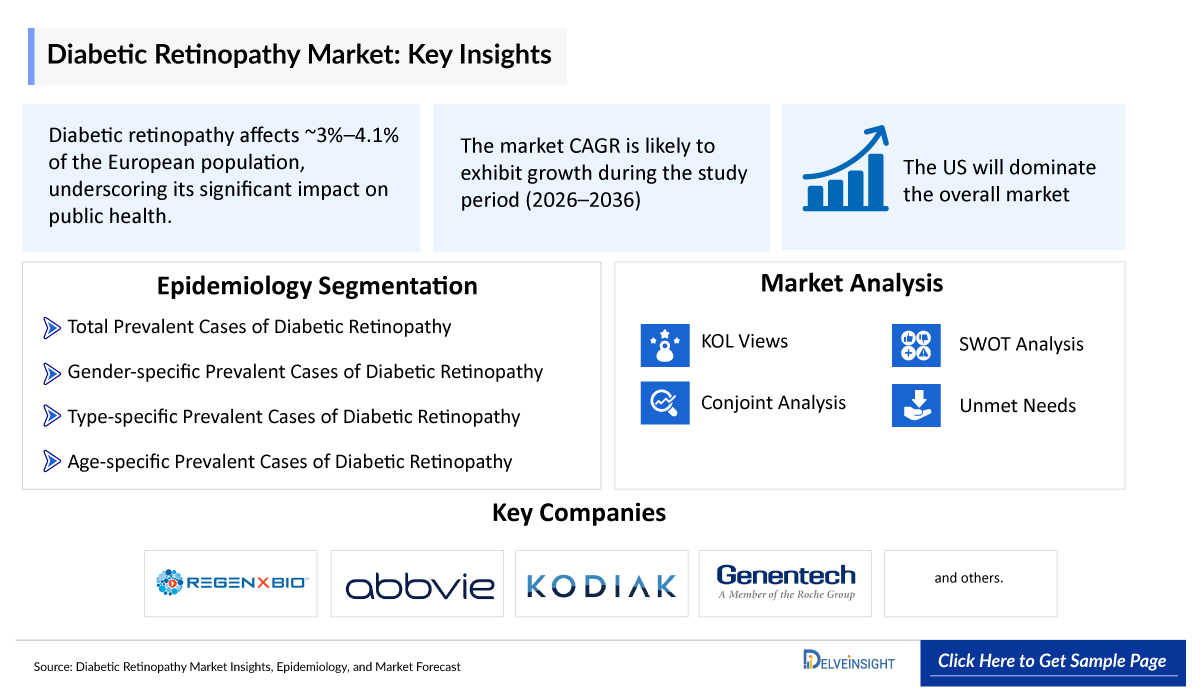
DelveInsight's ‘Diabetic Retinopathy Market Insights Epidemiology and Market Forecast 2036’ report delivers an in-depth understanding of diabetic retinopathy, historical and forecasted epidemiology, as well as the diabetic retinopathy market trends in the United States, EU4 (Germany, Spain, Italy, and France), the United Kingdom, and Japan.
The diabetic retinopathy market report delivers a comprehensive analysis of the current treatment landscape, including standards of care, clinical practices, and evolving therapeutic algorithms. It evaluates diabetic retinopathy patient burden trends, revenue & market share dynamics, peak patient share & therapy uptake analysis, and provides an in-depth market size assessment, and growth rate projections (Historical & Forecast 2022–2036) across global regions. The report highlights key unmet medical needs in diabetic retinopathy and maps the competitive and clinical landscape to uncover high‑value opportunities, providing a clear outlook on future market growth potential.
|
Study Period |
2022–2036 |
|
Historical Year |
2022–2025 |
|
Forecast Period |
2026–2036 |
|
Base Year |
2026 |
|
Geographies Covered |
|
|
Diabetic Retinopathy Market CAGR (Forecast period) |
XX% (2026–2036) |
|
Diabetic Retinopathy Epidemiology Segmentation Analysis |
Patient Burden Assessment
|
|
Diabetic Retinopathy Companies |
|
|
Diabetic Retinopathy Therapies |
|
|
Diabetic Retinopathy Market |
Segmented by
|
|
Analysis |
|
Key Factors Driving the Diabetic Retinopathy Market
Rising Prevalence of Diabetic Retinopathy
The prevalence of diabetic retinopathy is steadily increasing, driven by the global rise in diabetes, improved screening programs, and greater disease awareness. This expanding patient pool is expected to significantly drive market growth over the coming years.
Growing Opportunities in Targeted Therapies
The diabetic retinopathy landscape is evolving with increasing adoption of anti-VEGF biologics and the emergence of novel therapies, including longer-acting agents, gene therapies, and pathway-targeted treatments. These innovations aim to improve durability, reduce treatment burden, and deliver better visual outcomes, reshaping future disease management.
Diabetic Retinopathy Understanding and Treatment Algorithm
Diabetic Retinopathy Overview
Diabetic retinopathy is a diabetes-related microvascular disorder that results from chronic hyperglycemia, leading to progressive damage of retinal blood vessels and, in advanced stages, the formation of abnormal new vessels that can impair vision and cause blindness. It is one of the most common causes of severe vision loss among working-age adults, particularly in developed regions. The disease spectrum ranges from early non-proliferative changes such as microaneurysms, hard exudates, and diabetic macular edema to proliferative stages characterized by neovascularization. The risk and progression of diabetic retinopathy are strongly associated with poor glycemic control, hypertension, dyslipidemia, nephropathy, obesity, and other systemic factors. If left untreated, it can lead to irreversible retinal damage; however, early detection through regular eye examinations and timely intervention significantly improves visual outcomes. With the growing global burden of diabetes, the prevalence of diabetic retinopathy is expected to rise substantially, underscoring the importance of preventive care and disease management.
Diabetic Retinopathy Diagnosis
Diabetic retinopathy is assessed through clinical history, ocular examination, and imaging. Patients may present with decreased or fluctuating vision, floaters, or visual field defects, while poor glycemic and blood pressure control are key risk factors. Fundus examination typically reveals microaneurysms, hemorrhages, hard exudates, cotton-wool spots, macular edema, and, in advanced stages, neovascularization. The disease is classified into nonproliferative (mild to severe) and proliferative stages, with the latter associated with a higher risk of vision loss due to abnormal vessel growth and hemorrhage. Diagnostic tools such as fluorescein angiography help detect vascular leakage and ischemia, while optical coherence tomography evaluates retinal thickness and macular edema. HbA1c remains an essential marker for monitoring glycemic control and disease progression.
Further details are provided in the report.
Diabetic Retinopathy Treatment
Treatment of Diabetic retinopathy depends on disease stage and severity, with the primary goal of slowing progression and preventing vision loss. In early nonproliferative stages, active treatment may not be required, and management focuses on strict glycemic and blood pressure control with regular monitoring. In advanced stages, particularly proliferative diabetic retinopathy or when diabetic macular edema is present, intervention is necessary and includes intravitreal anti-VEGF injections such as ranibizumab, aflibercept, faricimab, and off-label bevacizumab to reduce neovascularization and fluid accumulation. Additional options include laser photocoagulation to control leakage and abnormal vessel growth, and vitrectomy surgery for complications like vitreous hemorrhage or retinal detachment. Although these treatments can effectively stabilize or slow disease progression, they are not curative, and ongoing monitoring with periodic eye examinations remains essential.
Further details related to country-based variations are provided in the report.
Diabetic Retinopathy Unmet Needs
The section “unmet needs of Diabetic Retinopathy” outlines the critical gaps between the current state of patient care, diagnosis, and the ideal & effective management of the disease. It highlights the obstacles experienced by patients, clinicians, and researchers and identifies potential solutions for future progress.
-
Limited disease-modifying therapies
-
High treatment burden and poor adherence
-
Suboptimal response in a subset of patients
-
Delayed diagnosis and screening gaps, and others…..
Comprehensive unmet needs insights in Diabetic retinopathy and their strategic implications are provided in the full report.
Diabetic Retinopathy Epidemiology
Key Findings from Diabetic Retinopathy Epidemiological Analysis and Forecast
- According to CDC data, the prevalence of diabetic retinopathy in the US rises with age, affecting 13% of individuals under 25 and increasing to 28.4% among those aged 65–79.
- Based on secondary analysis, among adults aged 40 and above, approximately 8.94 million are affected by diabetic retinopathy, with 1.71 million experiencing vision-threatening complications. These statistics highlight the urgent need for age-specific screening programs and early intervention strategies.
- Diabetic retinopathy affects approximately 3%–4.1% of the European population, underscoring its significant impact on public health. Prevalence of diabetic retinopathy in those over age 60 is highest in France, followed by Germany. This prevalence highlights the growing burden of diabetes-related complications in the region, emphasizing the need for widespread screening, early detection, and proactive management to mitigate vision loss among affected individuals.
- According to secondary analysis, at any given point, 15–30% of the diabetic population suffers from some form of diabetic retinopathy. Approximately half of the patients are unaware of their condition due to a lack of symptoms and mild non-proliferative disease that might go undetected. Although diabetic retinopathy, through diabetic macular edema and proliferative diabetic retinopathy, is the leading cause of vision loss among working-age populations in the US and many other countries, much of the causative ophthalmic pathology is treatable.
- According to the American Association of Ophthalmology, non-proliferative diabetic retinopathy is notably prevalent across Europe, with the UK exhibiting the highest rate at 48%, followed by Spain at 38.9%, while Germany reports a significantly lower prevalence of 10%. These variations highlight regional disparities, emphasizing the need for tailored preventive strategies and healthcare interventions to address diabetic eye complications effectively.
- Based on secondary research, diabetic retinopathy affects around 3 million individuals in Japan, ranking as the third leading cause of visual impairment. This substantial prevalence underscores the growing impact of diabetes-related eye diseases, highlighting the need for improved screening, early intervention, and comprehensive management strategies to reduce vision loss among affected populations
Numbers are subject to change with report updation, clinical information updates, etc....
Diabetic Retinopathy Drug Chapters & Competitive Analysis
The diabetic retinopathy drug chapter provides a detailed, market-focused review of approved therapies and the emerging pipeline across Phase I–III clinical trials. It covers the mechanism of action, clinical trial data, regulatory approvals, patents, collaborations, and strategic partnerships for each therapy, along with their advantages, limitations, and recent developments. This section offers critical insights into the diabetic retinopathy treatment landscape, supporting market assessment, competitive analysis, and growth forecasting for the diabetic retinopathy therapeutics market.
Approved Therapies for Diabetic Retinopathy
Ranibizumab (LUCENTIS): Genentech
LUCENTIS is a vascular endothelial growth factor (VEGF) inhibitor that blocks VEGF from inside the eye. It is administered by intravitreal injection into the eye once a month, typically every 28 days. In April 2017, Genentech announced that the US FDA approved LUCENTIS (ranibizumab injection) at a 0.3 mg dose for monthly administration to treat all forms of diabetic retinopathy.
Aflibercept (EYLEA): Ionis Pharmaceuticals and AstraZeneca
EYLEA was approved by the FDA for the treatment of diabetic retinopathy in 2019. This approval marked the first time a VEGF inhibitor was approved for all stages of diabetic retinopathy, including DME, to reduce the risk of blindness. EYLEA is the only VEGF inhibitor approved with two dosing options for DR, allowing doctors to customize treatment to their patients' needs. The recommended dose for EYLEA in diabetic retinopathy is 2 mg administered by intravitreal injection every 4 weeks for the first 5 injections, followed by once every 8 weeks thereafter.
Note: Detailed marketed therapies assessment of therapies will be provided in the final report.
Diabetic Retinopathy Pipeline Analysis
Tarcocimab tedromer (KSI-301): Kodiak Sciences
Tarcocimab tedromer is a novel anti-VEGF biologic built on a proprietary antibody biopolymer conjugate platform. Administered via intravitreal injection and is expected to inhibit VEGF for up to 6 months continuously. The unique properties of KSI-301 are intended to provide patients with long-term control of DME and improve visual results while reducing the burden of frequent anti-VEGF injections. In addition, KSI-301 is designed to prevent and reverse the progression of diabetic retinopathy with long-term efficacy and may reduce the risk of vision-threatening complications from diabetic retinopathy. The Phase III GLOW2 study is a critical, multi-center clinical trial employing a prospective, randomized, and double-masked design to assess the effectiveness and safety of tarcocimab tedromer in patients with diabetic retinopathy who have not previously undergone treatment.
ABBV-RGX-314: Regenxbio/AbbVie
ABBV-RGX-314 is being developed as a novel, one-time subretinal treatment that includes the NAV AAV8 vector containing a gene encoding a monoclonal antibody fragment. The expressed protein is designed to neutralize VEGF activity, modifying the pathway for the formation of new leaky blood vessels and retinal fluid accumulation. It is currently in Phase II of clinical development for the treatment of diabetic retinopathy. The company is currently enrolling patients in ALTITUDE (NCT04567550), a Phase II trial for the treatment of diabetic retinopathy using suprachoroidal delivery of ABBV-RGX-314.
Note: A detailed emerging therapies assessment will be provided in the final report
Diabetic Retinopathy Key Players, Market Leaders, and Emerging Companies
- Regenxbio
- AbbVie
- Kodiak Sciences
- Genetech
- Ionis Pharmaceuticals
- AstraZeneca, and others
Diabetic Retinopathy Drug Updates
- In March 2026, Kodiak Sciences announced positive topline results in the GLOW2 Phase III superiority study of ZENKUDA for the treatment of patients with diabetic retinopathy. ZENKUDA is an anti-VEGF intravitreal biologic built on Kodiak's proprietary antibody biopolymer conjugate platform.
- According to REGENXBIO’s Q4 2025 financial results and operational update, the company plans to report topline data, in collaboration with AbbVie, from the pivotal ATMOSPHERE trial and ASCENT trial evaluating sura-vec via subretinal delivery in Q4 2026, with global regulatory submissions anticipated in 2027.
Note: A detailed drug update will be provided in the final report....
Diabetic Retinopathy Market Outlook
Current treatments for diabetic retinopathy are predominantly focused on addressing macular edema, a common complication. Traditional therapies like vitrectomy, photocoagulation, and corticosteroids, historically utilized, lack the potential for vision enhancement and are associated with significant complication rates. However, in recent years, anti-VEGF drugs have emerged as a promising advancement in managing diabetic macular edema (DME). While these drugs have substantially improved outcomes for many DME patients, they may not be effective for all cases, particularly in those who have undergone multiple treatments.
Pharmacological treatments for diabetic retinopathy aim to reduce retinal damage and slow disease progression. Anti-VEGF therapy is the primary approach, preventing abnormal blood vessel growth and leakage. Corticosteroids like dexamethasone, fluocinolone acetonide, and triamcinolone acetonide reduce inflammation and macular swelling but may cause side effects like increased intraocular pressure and cataracts. Pan-retinal photocoagulation and surgical interventions address advanced cases. AVASTIN, often used off-label, is a widely reimbursed option. Emerging therapies, including neuroprotective agents, gene therapy, and novel drug delivery systems, aim to improve outcomes. Personalized medicine and ongoing research focus on optimizing long-term treatment efficacy and accessibility.
Non-pharmacological approaches to diabetic retinopathy emphasize prevention and management through lifestyle and medical interventions. Glycemic control and blood pressure regulation slow disease progression, while dietary modifications rich in antioxidants support retinal health. Regular exercise improves circulation, reducing diabetes complications. Laser therapy, such as pan-retinal photocoagulation, prevents vision loss in advanced cases. Vitrectomy removes hemorrhages and scar tissue. Telemedicine enhances early detection and monitoring. Natural remedies, including flavonoids and antioxidants, show promise in mitigating diabetic retinopathy. Patient education and routine eye screenings remain crucial for minimizing vision impairment. A multidisciplinary approach ensures effective management and improved outcomes for affected individuals.
Further details will be provided in the report….
Drug Class/Insights into Leading Emerging and Marketed Therapies in Diabetic Retinopathy (2022–2036 Forecast)
The diabetic retinopathy market comprises Recombinant fusion protein, alongside monoclonal antibodies, each addressing stabilization or clearance pathways driving disease progression.
- Recombinant fusion proteins: Aflibercept acts as a VEGF inhibitor by binding and neutralizing VEGF, thereby reducing abnormal blood vessel growth and vascular leakage in diabetic retinopathy, supporting its role as a key intravitreal disease-modifying therapy.
- Monoclonal antibodies: Agents such as LUCENTIS target VEGF, inhibiting abnormal angiogenesis and vascular leakage, thereby forming a cornerstone of treatment for diabetic retinopathy and diabetic macular edema.
Further details will be provided in the report….
Diabetic Retinopathy Drug Uptake
This section focuses on the uptake rate of potential drugs expected to be launched in the market during the forecast period (2026–2036). The analysis covers the diabetic retinopathy market's uptake by drugs, patient uptake by therapy, and sales of each drug.
Further detailed analysis of emerging therapies' drug uptake in the report…
Market Access and Reimbursement of Diabetic Retinopathy
-
The United States
|
The US Reimbursement for Diabetic Retinopathy Therapies | |
|
Drug |
Access Program |
|
LUCENTIS |
|
Reimbursement is a crucial factor that affects the drug’s access to the market. Often, the decision to reimburse comes down to the price of the drug relative to the benefit it produces in treated patients. To reduce the healthcare burden of these high-cost therapies, many payment models are being considered by payers and other industry insiders.
Further details are provided in the final report….
Diabetic Retinopathy Therapies Price Scenario & Trends
Pricing and analogue assessment of diabetic retinopathy therapies highlights evolving price dynamics structures. This section summarizes the cost of approved treatments, the closest and most appropriate analogue selection for emerging therapies, and understanding of how pricing influences market access, adherence, and long-term uptake.
Further details are provided in the final report….
Industry Experts and Physician Views for Diabetic Retinopathy
To keep up with diabetic retinopathy market trends, we take Key Opinion Leaders (KOLs) and Subject Matter Experts (SMEs) opinions working in the domain through primary research to fill the data gaps and validate our secondary research. Industry experts were contacted for insights on the diabetic retinopathy emerging therapies, evolving treatment landscape, patient adherence to conventional therapies, therapy switching trends, drug adoption and uptake, accessibility challenges, and epidemiology and real-world prescription patterns in diabetic retinopathy, including MD, PhD, Instructor, Postdoctoral Researcher, Professor, Researcher, and others.
DelveInsight’s analysts connected with 10+ KOLs to gather insights; however, interviews were conducted with 6+ KOLs in the 7MM. Centers such as the University of North Carolina at Chapel Hill, the Berlin Institute of Health at Charité, and the University of Nottingham, etc. were contacted. Their opinion helps understand and validate current and emerging diabetic retinopathy therapies, highlight unmet medical needs, provide epidemiological context, and support strategic decisions for market access, therapy adoption, and pipeline prioritization in diabetic retinopathy.
|
Region |
Key Opinion Leaders (KOLs) and Subject Matter Experts (SMEs) |
|
United States |
“Diabetic retinopathy care is transitioning from treating vision loss to earlier detection and proactive intervention. Wider screening, AI-based diagnostics, and earlier initiation of therapy are expected to reduce progression to vision-threatening stages.” |
Qualitative Analysis: SWOT and Conjoint Analysis
We perform qualitative and market Intelligence analysis using various approaches, such as SWOT analysis and conjoint analysis.
In the SWOT analysis of Diabetic retinopathy, strengths, weaknesses, opportunities, and threats in terms of disease diagnosis, patient awareness, patient burden, competitive landscape, cost-effectiveness, and geographical accessibility of therapies are provided.
Conjoint analysis analyzes emerging therapies based on relevant attributes such as safety, efficacy, frequency of administration, route of administration, and order of entry. Scoring is given based on these parameters to analyze the effectiveness of therapy.
The team of analysts analyzes promising emerging therapies based on relevant attributes such as safety, efficacy, frequency of administration, route of administration, and order of entry. In efficacy, the trial’s primary and secondary outcome measures are evaluated, whereas the therapies’ safety is evaluated, wherein the acceptability, tolerability, and adverse events are mainly observed. In addition, the scoring is also based on the route of administration, order of entry, probability of success, and the addressable patient pool for each therapy. According to these parameters, the final weightage score and the ranking of the emerging therapies are decided.
Scope of the Report
- The report covers a segment of key events, an executive summary, a descriptive overview of Diabetic retinopathy, explaining its causes, signs and symptoms, pathogenesis, and currently available treatments.
- Comprehensive insight has been provided into the epidemiology segments and forecasts, the future growth potential of the diagnosis rate, and disease progression along treatment guidelines.
- Additionally, an all-inclusive account of both the current and emerging treatments, along with the elaborate profiles of late-stage and prominent therapies, will have an impact on the current treatment landscape.
- A detailed review of the Diabetic retinopathy market, historical and forecasted market size, market share by therapies, detailed assumptions, and rationale behind our approach is included in the report, covering the 7MM drug outreach.
- The report provides an edge while developing business strategies by understanding trends through SWOT analysis and expert insights/KOL views, patient journey, and treatment preferences that help in shaping and driving the 7MM Diabetic retinopathy market.
Report Insights
- Diabetic Retinopathy Patient Population Forecast
- Diabetic Retinopathy Therapeutics Market Size
- Diabetic Retinopathy Pipeline Analysis
- Diabetic Retinopathy Market Size and Trends
- Diabetic Retinopathy Market Opportunity (Current and forecasted)
Report Key Strengths
- Epidemiology‑based (Epi‑based) Bottom‑up Forecasting
- Artificial Intelligence (AI)-enabled Market Research Report
- 11-year forecast
- Diabetic Retinopathy Market Outlook (North America, Europe, Asia-Pacific)
- Patient Burden Trends (by geography)
- Diabetic Retinopathy Treatment Addressable Market (TAM)
- Diabetic Retinopathy Competitive Landscape
- Diabetic Retinopathy Major Companies Insights
- Diabetic Retinopathy Price Trends and Analogue Assessment
- Diabetic Retinopathy Therapies Drug Adoption/Uptake
- Diabetic Retinopathy Therapies Peak Patient Share Analysis
Report Assessment
- Diabetic Retinopathy Current Treatment Practices
- Diabetic Retinopathy Unmet Needs
- Diabetic Retinopathy Clinical Development Analysis
- Diabetic Retinopathy Emerging Drugs Product Profiles
- Diabetic Retinopathy Market Attractiveness
- Diabetic Retinopathy Qualitative Analysis (SWOT and Conjoint Analysis)
FAQs
Market Insights
- What was the Diabetic retinopathy market size, the market size by therapies, market share (%) distribution in 2025, and what would it look like by 2036? What are the contributing factors for this growth?
- What are the anticipated pricing variations among different geographies for the emerging therapies in the future?
- What can be the future treatment paradigm of diabetic retinopathy?
- What are the disease risks, burdens, and unmet needs of diabetic retinopathy? What will be the growth opportunities across the 7MM concerning the patient population with diabetic retinopathy?
- Who is the major future competitor in the market, and how will the competitors affect their market share?
- What are the current options for the treatment of diabetic retinopathy? What are the current guidelines for treating diabetic retinopathy in the US, Europe, and Japan?
Reasons to Buy
- The report will help in developing business strategies by understanding the latest trends and changing treatment dynamics driving the diabetic retinopathy market.
- Bottom-up forecasting builds from the affected population to product forecasts, delivering a robust, data-driven approach ideal for new therapies and novel classes.
- Insights on patient burden/disease incidence, evolution in diagnosis, and factors contributing to the change in the epidemiology of the disease during the forecast years.
- Understand the existing market opportunities in varying geographies and the growth potential over the coming years.
- Identifying strong upcoming players in the market will help devise strategies to help get ahead of competitors.
- Detailed analysis and ranking of class-wise potential current and emerging therapies under the conjoint analysis section to provide visibility around leading classes.
- To understand KOLs’ perspectives on the accessibility, acceptability, and compliance-related challenges of existing treatment to overcome barriers in the future.
- Detailed insights into the unmet needs of the existing market so that the upcoming players can strengthen their development and launch strategy.
- This Artificial Intelligence (AI)-enabled report summarize and simplify complex datasets within the report into clear, actionable insights for stakeholders, investors, and healthcare providers, enabling faster, data-driven decisions.