
Lupus Nephritis Market Summary
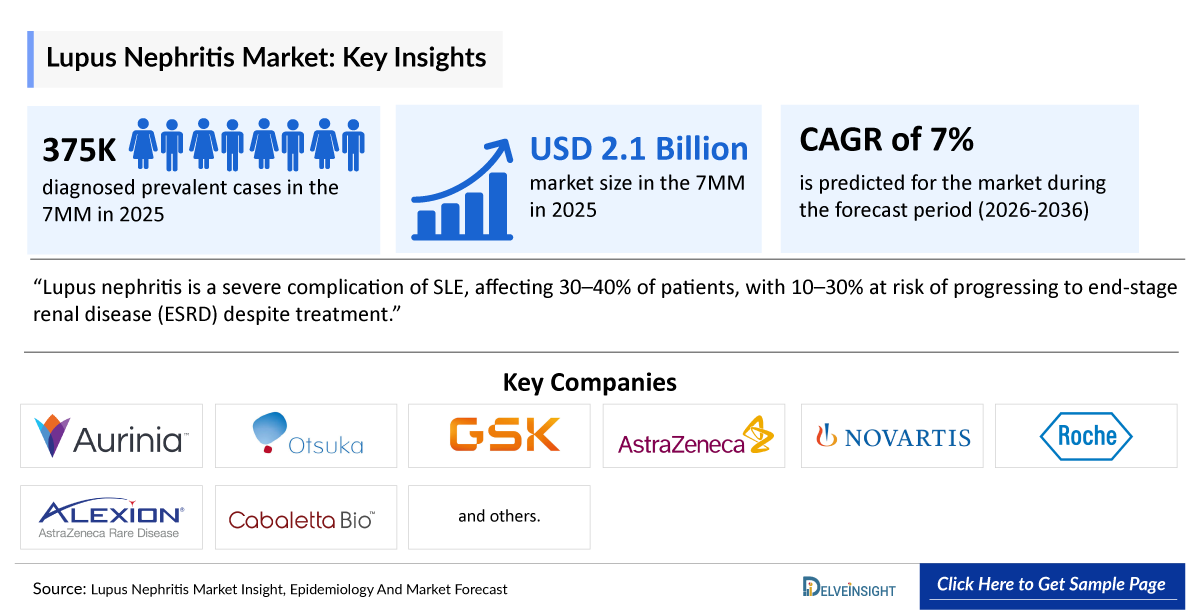
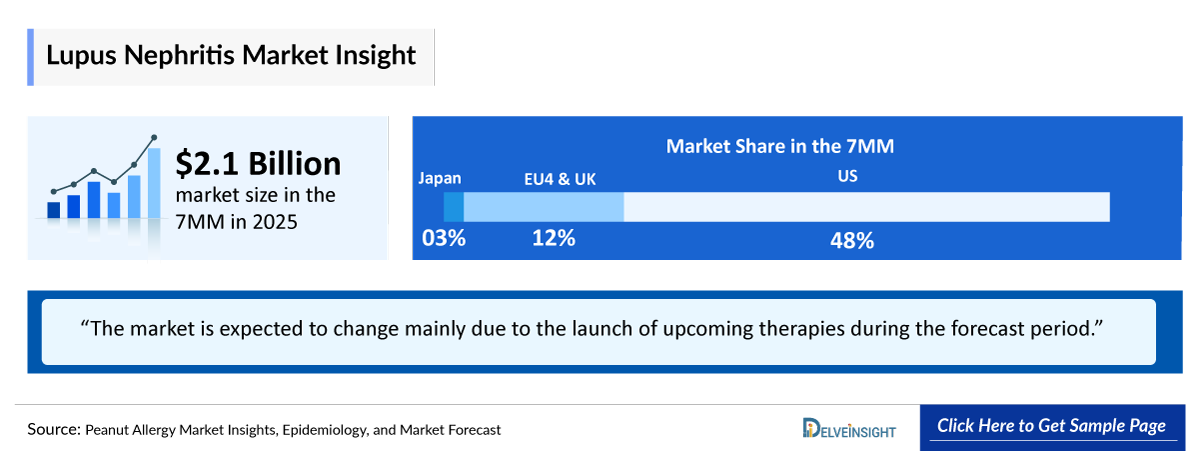
- According to DelveInsight’s analysis, the Lupus Nephritis Therapeutics Market Size was found to be ~USD 2,130 million in the leading markets (the United States, the EU4 (Germany, France, Italy, and Spain), the United Kingdom, and Japan) in 2025.
- The leading Lupus Nephritis Companies include GlaxoSmithKline, Aurinia Pharmaceuticals, Otsuka Pharmaceuticals, Roche, AstraZeneca, Novartis, MorphoSys, Idorsia Pharmaceuticals, Viatris, Autolus, Kyverna Therapeutics, Cabaletta Bio, and others.
Lupus Nephritis Market and Epidemiology Insights
- Lupus Nephritis is one of the most serious complications of systemic lupus erythematosus with the potential to progress to End-Stage Renal Disease. It affects approximately 40-60% of Systemic Lupus Erythematosus Patients, and among those, 10-30% may advance to ESRD despite therapy.
- the histological subtypes, Class IV remains the most prevalent and carries the worst prognosis, often associated with non-remission and high relapse rates. In contrast, Classes I and II are associated with milder disease and better outcomes, whereas Class V, though less common, poses its challenges due to frequent proteinuria and overlap with proliferative forms, reinforcing the need for timely diagnosis and personalized treatment strategies.
- Spain recorded the highest number of diagnosed Lupus Nephritis cases among the EU4 and the UK, suggesting a relatively greater concentration of diagnosed cases within its population.
- Currently, three FDA-approved therapies are available for Lupus Nephritis: Belimumab (BENLYSTA), approved in 2020 (with pediatric approval in 2022); voclosporin (LUPKYNIS), approved in 2021 as the first oral therapy for Lupus Nephritis; and obinutuzumab (GAZYVA/GAZYVARO), approved in 2025, further expanding biologic treatment options for patients with active disease.
- The current standard of care in treating Lupus Nephritis is limited to broad-spectrum immunosuppressants, which have significant concerns of short- and long-term toxicity. Robust research in the therapeutics of Lupus Nephritis has resulted in the development of many novel drugs targeting specific inflammatory response pathways.
- Big pharmaceutical companies are taking keen interest in the Lupus Nephritis Therapeutics Market. The current Lupus Nephritis Pipeline, led by classes like complement inhibitors (iptacopan), BAFF-R antagonists (ianalumab), monoclonal antibodies (anifrolumab), Sphingosine-1-phosphate 1 receptor modulator (cenerimod), CAR-Ts (resecabtagene autoleucel, rapcabtagene autoleucel, Obecabtagene autoleucel, C-CAR168, Mivocabtagene autoleucel), and others, is expected to reshape the treatment landscape by 2036. These advancements signal a promising shift toward more personalized and effective disease management.
Lupus Nephritis Market Size and Forecast in the 7MM
| 2025 Lupus Nephritis Market Size | ~USD 2,130 million |
| 2036 Projected Lupus Nephritis Market Size | ~USD 4,510 million |
| Lupus Nephritis Growth Rate (2026–2036) | 7% CAGR |
Key Factors Driving the Growth of the Lupus Nephritis Market
-
Rising Prevalence of Lupus Nephritis Across Key Geographies
The growing prevalence of systemic lupus erythematosus, coupled with improved survival rates and earlier recognition of renal involvement, is contributing to an increasing Lupus Nephritis patient population across major markets. This expanding disease burden is expected to drive demand for effective long-term treatment options and disease monitoring strategies. Increasing awareness of Lupus Nephritis among rheumatologists and nephrologists, coupled with improved monitoring of patients with SLE, is supporting earlier detection and intervention. Advances in biomarker research and greater adherence to clinical guidelines are expected to enhance patient identification and expand the treated population across major markets.
-
Increasing Awareness and Adoption of Approved Therapies Beyond Off-Label Corticosteroids
The introduction of targeted therapies such as belimumab, voclosporin, and obinutuzumab has expanded treatment options beyond traditional corticosteroid-based regimens. Growing physician confidence in these agents and increasing emphasis on steroid-sparing approaches are supporting broader adoption and improving standards of care.
-
Growing Investment and Clinical Interest in CAR-T Cell Therapies for Autoimmune Diseases
The success of CAR-T therapies in oncology has accelerated interest in their application to autoimmune diseases, including Lupus Nephritis. Early clinical evidence demonstrating deep B-cell depletion and potential long-term disease control has attracted substantial investment, positioning CAR-T therapy as a promising future disease-modifying approach.
DelveInsight’s “Lupus Nephritis Market Insights, Epidemiology, and Market Forecast – 2036” report delivers an in-depth understanding of the Lupus Nephritis, historical and forecasted epidemiology as well as the Lupus Nephritis market trends in the US, EU4 (Germany, France, Italy, and Spain), the United Kingdom, and Japan.
The Lupus Nephritis Treatment Market Report delivers a comprehensive analysis of the current treatment landscape, including standards of care, clinical practices, and evolving therapeutic algorithms. It evaluates, Lupus Nephritis patient burden trends, revenue & market share dynamics, peak patient share & therapy uptake analysis, and provides an in-depth market size assessment, and growth rate projections (Historical & Forecast 2022–2036) across global regions. The report highlights key unmet medical needs in Lupus Nephritis and maps the competitive and clinical landscape to uncover high-value opportunities, providing a clear outlook on future market growth potential.
Scope of the Lupus Nephritis Market Report | |
|
Study Period |
2022–2036 |
|
Historical Year |
2022–2025 |
|
Forecast Period |
2026–2036 |
|
Base Year |
2026 |
|
Geographies Covered |
|
|
Lupus Nephritis Market CAGR (Forecast period) | |
|
Lupus Nephritis Epidemiology Segmentation Analysis |
Patient Burden Assessment
|
|
Lupus Nephritis Companies |
|
|
Lupus Nephritis Therapies |
|
|
Lupus Nephritis Market |
Segmented by
|
|
Analysis |
|
Lupus Nephritis Disease Understanding
Lupus Nephritis Overview
Lupus Nephritis is one of the most serious organ manifestations of SLE, arising when autoimmune-mediated injury targets the kidneys and disrupts normal renal function. The disease exhibits a highly variable clinical course, ranging from asymptomatic urinary abnormalities to progressive renal impairment associated with substantial morbidity and risk of kidney failure. Common manifestations include proteinuria, hematuria, hypertension, edema, and declining kidney function, although disease severity can differ considerably among patients.
Lupus Nephritis is categorized into six histological classes (I–VI), reflecting distinct patterns of renal involvement that influence prognosis and management. Diagnosis requires a comprehensive assessment of clinical presentation, laboratory findings, and renal function, with urine and blood tests serving as key initial evaluations. Kidney biopsy remains the cornerstone of diagnosis, providing essential information on disease classification, activity, and chronicity, thereby guiding therapeutic decision-making and prognostic assessment. Early recognition and prompt evaluation of renal involvement are critical to minimizing irreversible kidney damage and improving long-term outcomes.
Current Lupus Nephritis Treatment Landscape
The management of Lupus Nephritis is guided by disease class, severity of renal involvement, and risk of disease progression, with the primary goals of controlling inflammation, preserving kidney function, and preventing progression to chronic kidney disease or ESRD. Diagnosis and ongoing monitoring rely on urine and blood tests, kidney imaging, and kidney biopsy, which remains essential for disease classification and treatment selection. While patients with milder Class I and II disease may require close monitoring, Classes III, IV, and V typically necessitate intensive treatment with corticosteroids and immunosuppressive agents.
Supportive therapies, including ACE inhibitors or angiotensin receptor blockers (ARBs) for proteinuria and hypertension, as well as lipid-lowering agents to mitigate cardiovascular risk, remain important components of care. In recent years, the treatment landscape has expanded beyond conventional immunosuppression with the approval of targeted therapies such as belimumab, voclosporin, and obinutuzumab, offering improved options for disease control and renal protection. Despite these advances, many patients continue to experience relapses, incomplete responses, or progressive kidney damage, underscoring the need for more effective and durable treatment approaches.
Further details related to diagnosis and treatment are provided in the report…
Lupus Nephritis Unmet Needs
The section “unmet needs of Lupus Nephritis” outlines the critical gaps between the current state of patient care, diagnosis, and the ideal & effective management of the disease. It highlights the obstacles experienced by patients, clinicians, and researchers and identifies potential solutions for future progress.
- Biomarker Gaps: Inadequate Tools for Precision Monitoring
- Poor Health-related Quality of Life (HRQoL)
- Limited Pediatric-specific data
- Inadequate Long-term Disease Control, and others…..,
Note: Comprehensive unmet needs insights in Lupus Nephritis and their strategic implications are provided in the full report.
Lupus Nephritis Epidemiology Insights
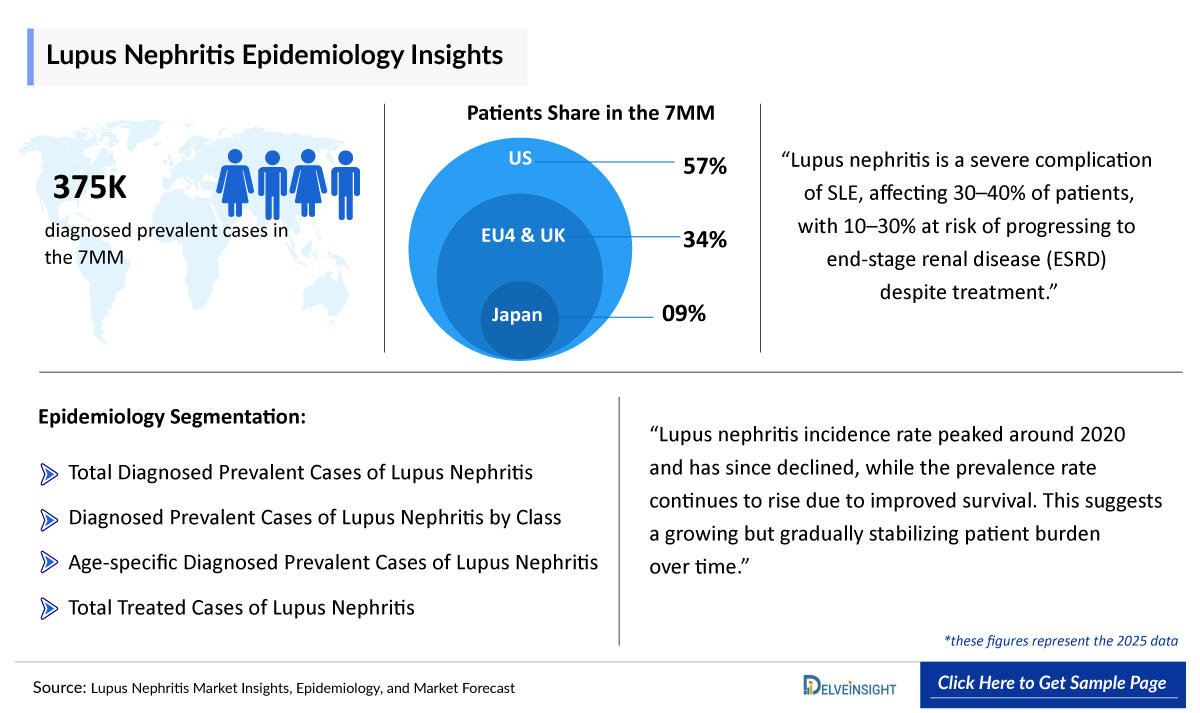
The disease epidemiology covered in the report provides historical as well as forecasted epidemiology segmented by Total Diagnosed Prevalent Cases, Age-specific Diagnosed Prevalent Cases, Diagnosed Prevalent Cases by Class, Total Treated Cases of Lupus Nephritis in the 7MM market covering the US, EU4 (Germany, France, Italy, and Spain), the United Kingdom, and Japan from 2022 to 2036. The epidemiology segment also provides the Lupus Nephritis epidemiology data and findings across the US, EU4 (Germany, France, Italy, and Spain) and the United Kingdom, and Japan.
Key Findings from Lupus Nephritis Epidemiological Analysis and Forecast
- The total Diagnosed Prevalent Cases of Lupus Nephritis in the US comprised nearly 211,800 cases in 2025 and are projected to increase during the forecast period.
- In 2025, Spain held the largest Lupus Nephritis drugs market share within the EU4 and the UK, accounting for approximately 34% of the combined market. This dominance reflects Spain’s notably higher disease prevalence rate compared not only to other EU4 and the UK but also surpassing rates observed in Japan and the United States.
- In 2025, the diagnosed prevalent cases of Lupus Nephritis in the US were distributed as approximately 7% in individuals aged <18 years and around 93% in those aged =18 years.
- In Japan, Class IV was the most prevalent form of Lupus Nephritis in 2025, with around 18,000 diagnosed cases, reflecting a consistently high disease burden. Class III followed as the second most common subtype, with around 6,800 reported cases.
Lupus Nephritis Epidemiology Segmentation in the 7MM
- Total Lupus Nephritis Diagnosed Prevalent Cases
- Lupus Nephritis Age-specific Diagnosed Prevalent Cases
- Lupus Nephritis Diagnosed Prevalent Cases by Class
- Total Lupus Nephritis Treated Cases
Lupus Nephritis Market Recent Breakthroughs and Developments
- As per Novartis’s 2026 interim financial report anticipates Phase III readouts by 2027, with regulatory submission of Ianalumab for Lupus Nephritis in 2028.
- In February 2026, as per company’s Q4 results Cenerimod global clinical development in Lupus Nephritis is ongoing, with the Phase III trial currently enrolling patients and the company targeting completion of enrollment in the first half of 2028.
- Cabaletta plans to leverage its FDA alignment in myositis during 3Q 2025 to finalize a registrational clinical design for SLE/LN, then expects to present the full Phase I/II data and begin enrollment in registrational cohorts by 1H 2026.
Lupus Nephritis Drug Analysis & Competitive Landscape
The Lupus Nephritis drug chapter provides a detailed, market-focused review of approved therapies and the emerging pipeline across Phase I/II–II clinical trials. It covers Lupus Nephritis mechanism of action, clinical trial data, regulatory approvals, patents, collaborations, strategic partnerships, upcoming key catalysts for each therapy, along with their advantages, limitations, and recent developments. This section offers critical insights into the Lupus Nephritis treatment landscape, supporting market assessment, competitive analysis, and growth forecasting for the Lupus Nephritis therapeutics market.
Lupus Nephritis Approved Therapies
-
Voclosporin (LUPKYNIS): Aurinia Pharmaceuticals/Otsuka Pharmaceuticals
Voclosporin is a novel, structurally modified calcineurin inhibitor with a dual mechanism of action, acting as an immunosuppressant through inhibition of T-cell activation and cytokine production and promoting podocyte stability in the kidney. The drug has improved near- and long-term outcomes in Lupus Nephritis when combined with a background immunosuppressive therapy regimen for treating adult patients with active Lupus Nephritis.
Voclosporin reduces cytokine activation by inhibiting calcineurin and blocks IL-2 expression and T-cell-mediated immune responses. Voclosporin was approved by the FDA in January 2021 for the treatment of active Lupus Nephritis alongside standard immunosuppressive therapy. It is the first oral medication specifically approved by the FDA for Lupus Nephritis.
-
Belimumab (BENLYSTA): GlaxoSmithKline
Is belimumab a human IgG1? monoclonal antibody that inhibits BLyS, thereby reducing the survival of autoreactive B cells and autoantibody production in lupus. It is indicated as an add-on therapy for patient =5 years with active SLE and Lupus Nephritis, helping to reduce disease activity and flares and enabling steroid sparing. It is administered as an intravenous infusion or subcutaneous injection and is not recommended for severe active CNS lupus. It is the first and only biologic approved for both the chronic autoimmune disease SLE and Lupus Nephritis.
Belimumab was approved for Lupus Nephritis in the US in 2020 for adults and in 2022 for pediatric patients, followed by approvals in the EU and Japan in 2021.
Lupus Nephritis Marketed Drugs Competitive Landscape | ||||||
|
Product |
Company |
Indication |
MoA |
Molecule Type |
RoA |
Approval Year |
|
Belimumab (BENLYSTA) |
GSK |
Lupus Nephritis |
BLyS-specific inhibitor |
Monoclonal antibody |
SC; IV |
US: 2020 EU: 2021 JP: 2021 |
|
Voclosporin (LUPKYNIS) |
Aurinia Pharmaceuticals/ Otsuka Pharmaceutical |
Lupus Nephritis |
Calcineurin-inhibitor immunosuppressant |
Small molecule |
Oral |
US: 2021 EU: 2022 JP: 2024 |
|
Obinutuzumab (GAZYVA/GAZYVARO) |
Genentech (Roche) |
Adults with active Lupus Nephritis |
Anti-CD20 |
Monoclonal antibody |
IV Infusion |
US: 2025 EU: 2025 |
Lupus Nephritis Pipeline Analysis
-
Anifrolumab (SAPHNELO): AstraZeneca
Anifrolumab, being developed by AstraZeneca, is an intravenously administered, fully human monoclonal antibody that binds to Subunit 1 of the Type I IFN receptor, blocking the activity of Type I IFN. Type I IFNs, such as IFN-alpha, IFN-beta, and IFN-kappa, are cytokines involved in regulating the inflammatory pathways. It induces rapid internalization of IFNAR1 from the surface of monocytes, thereby reducing heterodimerization with IFNAR2 and the setting up of the IFN signaling complex.
By antagonizing the binding of the different IFNs to the IFNAR1 receptor, anifrolumab blocks STAT1 phosphorylation and ISRE activity. Currently, the company is evaluating the drug in the Phase III IRIS (NCT05138133) trial to treat adult subjects with active proliferative Lupus Nephritis.
-
Ianalumab (VAY736): Novartis
Ianalumab is a novel fully human monoclonal antibody being investigated for its potential to treat various B cell-driven autoimmune diseases, including Lupus Nephritis and other indications such as SLE, Sjögren’s disease, Immune thrombocytopenia, warm autoimmune hemolytic anemia, and diffuse cutaneous systemic sclerosis. Its mechanism of action targets B cells in two ways, namely combining B cell depletion via antibody-dependent cellular toxicity (ADCC) and interruption of BAFF-R-mediated signals of B cell function and survival.
In clinical trials, ianalumab showed promising efficacy and a favorable safety profile in Sjögren’s disease, SLE, and ITP. Ianalumab originates from an early collaboration with MorphoSys, a company which Novartis later acquired in 2024.
Comparison of Lupus Nephritis Emerging Drugs Under Development | ||||||
|
Product |
Company |
Phase |
Indication |
Molecule Type |
RoA |
MoA |
|
Anifrolumab (SAPHNELO) |
AstraZeneca |
III |
Proliferative Lupus Nephritis |
Monoclonal antibody |
IV Infusion |
Type 1 IFN receptor antagonist |
|
Ianalumab (VAY736) |
Novartis/MorphoSys |
III |
Lupus Nephritis |
Monoclonal antibody |
SC |
BAFF-R inhibitor, ADCC mediated B-cell depletor |
|
Cenerimod |
Idorsia Pharmaceuticals/Viatris |
III |
Lupus Nephritis |
Small molecule |
Oral |
Sphingosine 1 phosphate receptor modulators |
|
Rapcabtagene autoleucel (YTB323) |
Novartis |
II |
SLE and Lupus Nephritis |
CD19-targeted |
IV Infusion |
Autologous CAR T-cell therapy |
|
Note: Launch insights are provisional and may change with future report updates or the occurrence of major key catalysts. | ||||||
 Lupus Nephritis Market Outlook
The Lupus Nephritis treatment landscape has evolved significantly in recent years with the introduction of targeted therapies alongside conventional immunosuppressive regimens. Treatment is generally divided into induction and maintenance phases, aimed at achieving disease remission, preserving kidney function, and preventing long-term renal damage.
Mycophenolate Mofetil (MMF), cyclophosphamide, and corticosteroids continue to form the backbone of therapy, while targeted agents such as belimumab, voclosporin, and the recently approved obinutuzumab have expanded treatment options for patients with active disease.
Current clinical practice increasingly favors combination approaches, particularly for Class III/IV and Class V Lupus Nephritis, reflecting a shift toward more intensive disease control and improved renal outcomes. Despite these advances, a substantial proportion of patients continue to experience relapses, incomplete responses, or progressive kidney impairment, highlighting the need for more effective and durable therapies.
Consequently, the Lupus Nephritis Pipeline remains highly active, with companies including Novartis, Roche, AstraZeneca, and others advancing novel B-cell, plasma cell, and cytokine-targeted therapies that have the potential to further transform disease management over the coming decade.
Overall, increasing awareness of Lupus Nephritis, earlier detection of renal involvement, and expanding use of targeted therapies are expected to drive steady market growth across the 7MM through 2036. While belimumab, voclosporin, and obinutuzumab are expected to remain key market drivers in the near term, emerging immunomodulatory therapies may further reshape the treatment landscape over the forecast period.
Addition of voclosporin and belimumab to American College of Rheumatology and KIDIGO 2024 guidelines updates reflect a growing preference for combination therapies in managing Lupus Nephritis to improve outcomes while potentially minimizing toxicity.
All CAR-T therapies, C-CAR168, resecabtagene autoleucel, and rapcabtagene autoleucel, obecabtagene autoleucel show promise for treating Lupus Nephritis, but it is too early to definitively say which is better. Clinical trials are ongoing to evaluate their efficacy and safety, and personalized approaches based on individual patient characteristics will likely be important. While early results looks promising, larger, longer-term clinical trials are needed to confirm efficacy and safety for all three therapies.
Further details will be provided in the report….
Lupus Nephritis Companies
- GlaxoSmithKline
- Aurinia Pharmaceuticals
- Otsuka Pharmaceuticals
- Roche
- AstraZeneca
- Novartis
- MorphoSys
- Idorsia Pharmaceuticals
- Viatris
- Autolus
- Kyverna Therapeutics
- Cabaletta Bio, and others
Lupus Nephritis Drug Class/Insights into Leading Emerging and Marketed Therapies (2022–2036 Forecast)
The Lupus Nephritis Therapeutics Market comprises biologic therapies, calcineurin inhibitors, and emerging precision immunology approaches, each targeting key immune pathways involved in autoantibody production, inflammation, and progressive kidney damage.
- Sphingosine-1-Phosphate (S1P) Receptor Modulators: S1P receptor modulators are emerging immunomodulatory therapies that regulate lymphocyte trafficking by preventing immune cells from exiting lymphoid tissues and migrating to sites of inflammation. By reducing the circulation of autoreactive T and B cells, these agents aim to suppress the immune-mediated kidney damage characteristic of Lupus Nephritis while potentially offering a more targeted approach than conventional immunosuppressive therapies. Their ability to modulate multiple immune pathways positions them as promising candidates for achieving sustained disease control and preserving long-term renal function.
- Dual APRIL/BAFF Antagonists: Dual APRIL/BAFF antagonists target two key cytokines—A Proliferation-Inducing Ligand (APRIL) and B-cell Activating Factor (BAFF)—that play central roles in B-cell maturation, survival, and autoantibody production. By simultaneously inhibiting both pathways, these therapies aim to achieve broader suppression of pathogenic B cells and plasma cells than BAFF inhibition alone, thereby reducing autoimmune activity and renal inflammation. In Lupus Nephritis, dual APRIL/BAFF blockade represents a promising disease-modifying strategy with the potential to improve remission rates, reduce disease flares, and provide more durable renal responses.
Further details will be provided in the report….
Lupus Nephritis Drugs Uptake
This section focuses on the anticipated uptake of Lupus Nephritis Emerging Therapies expected to enter the market during the (2026-2036) study period. The analysis covers drug adoption trends, patient uptake across therapeutic approaches, and projected sales performance. One of the most notable developments in this space is the advancement of the calcineurin inhibitor immunosuppressant voclosporin, and on the other hand, belimumab, a BLyS-specific inhibitor.
Belimumab, a BLyS-specific inhibitor, marked a milestone as the first biologic approved for children aged 5-17 and adults with Lupus Nephritis. On the other hand, voclosporin a next-generation calcineurin inhibitor established itself as the first oral therapy specifically indicated for active Lupus Nephritis. Voclosporin offers notable advantages over older agents like cyclosporine and tacrolimus, particularly in terms of safety, predictable pharmacokinetics, and long-term renal outcomes.
Further detailed analysis of emerging therapies' drug uptake in the report…
Lupus Nephritis Market Access and Reimbursement
The United States
The report further provides detailed insights on the country-wise accessibility and reimbursement scenarios, cost-effectiveness scenario of approved therapies, programs making accessibility easier and out-of-pocket costs more affordable, insights on patients insured under federal or state government prescription drug programs, etc.
US Reimbursement for Lupus Nephritis Therapies | |
|
Drug/Therapy |
Access Program |
|
Belimumab |
|
|
Voclosporin |
|
Lupus Nephritis Therapies Price Scenario & Trends
Pricing and analogue assessment of Lupus Nephritis therapies highlights evolving price dynamics structures. This section summarizes the cost of approved treatments, closest and most appropriate analogue selection for emerging therapies, and understanding of how pricing influences market access, adherence, and long-term uptake.
Pricing of Lupus Nephritis Approved Drugs
Belimumab is available in two formulations, SC and IV, and the average cost of both was considered for analysis. For the SC formulation, the dosing schedule is 400 mg weekly for the first month, followed by 200 mg weekly thereafter. In the United States, the unit price for a 200 mg SC dose was USD 1,153. The IV formulation is dosed at 10 mg/kg every two weeks for the first three doses, then every four weeks. The unit price for 400 mg IV was USD 2,161, and costs were calculated separately for pediatric and adult patients before averaging. All US cost data were originally based on 2023 prices and adjusted to reflect 2020 values.
Further details are provided in the final report….
Lupus Nephritis Industry Experts and Physician Views
To keep up with Lupus Nephritis Therapeutics Market Trends, we take Key Opinion Leaders (KOLs) and Subject Matter Experts (SMEs) opinions working in the domain through primary research to fill the data gaps and validate our secondary research. Industry experts were contacted for insights on Lupus Nephritis emerging therapies, evolving treatment landscape, patient adherence to conventional therapies, therapy switching trends, drug adoption and uptake, accessibility challenges, and epidemiology and real-world prescription patterns in Lupus Nephritis, including MD, PhD, Instructor, Postdoctoral Researcher, Professor, Researcher, and others.
DelveInsight’s analysts connected with 10+ KOLs to gather insights; however, interviews were conducted with 6+ KOLs in the 7MM. Centers such as the University of North Carolina at Chapel Hill, Berlin Institute of Health at Charité, and the University of Nottingham, etc. were contacted. Their opinions help understand and validate current and emerging Lupus Nephritis therapies, highlight unmet medical needs, provide epidemiological context, and support strategic decisions for market access, therapy adoption, and pipeline prioritization in Lupus Nephritis.
|
Region |
Key Opinion Leaders (KOLs) and Subject Matter Experts (SMEs) |
|
United States |
“It is perceived that BENLYSTA is safer than the new calcineurin inhibitor LUPKYNIS and rates BENLYSTA higher on risk- and cost-benefit performance metrics, saying the drug has the greatest overall benefit to Lupus Nephritis patients when assessing the two drugs head-to-head.” |
|
Germany |
“As a specialist in the field, I stress the value of routine screenings and the importance of early detection. Prostate-specific antigen (PSA) blood tests and digital rectal examination (DRE) help detect potential cases at an early stage. A healthy lifestyle that includes regular exercise, a balanced diet, and abstinence from tobacco and excessive alcohol is also important for prevention.” |
Lupus Nephritis Report Qualitative Analysis: SWOT and Conjoint Analysis
We perform qualitative Lupus Nephritis Therapeutics Market Intelligence analysis using various approaches, such as SWOT analysis and conjoint analysis. In the SWOT analysis of Lupus Nephritis, strengths, weaknesses, opportunities, and threats in terms of disease diagnosis, patient awareness, patient burden, competitive landscape, cost-effectiveness, and geographical accessibility of therapies are provided.
Conjoint analysis analyzes Lupus Nephritis Emerging Therapies based on relevant attributes such as safety, efficacy, frequency of administration, route of administration, and order of entry. Scoring is given based on these parameters to analyze the effectiveness of therapy.
The team of analysts analyzes promising Lupus Nephritis emerging therapies based on relevant attributes such as safety, efficacy, frequency of administration, route of administration, and order of entry. In efficacy, the trial’s primary and secondary outcome measures are evaluated, whereas the therapies’ safety is evaluated, wherein acceptability, tolerability, and adverse events are majorly observed. In addition, the scoring is also based on the route of administration, order of entry, probability of success, and the addressable patient pool for each therapy. According to these parameters, the final weightage score and the ranking of the emerging therapies are decided.
Scope of the Lupus Nephritis Market Report
- The Lupus Nephritis Therapeutics Market Report covers a segment of key events, an executive summary, and a descriptive overview, explaining its causes, signs and symptoms, pathogenesis, and currently available treatments.
- Comprehensive insight has been provided into the epidemiology segments and forecasts, the future growth potential of the diagnosis rate, and disease progression along Lupus Nephritis treatment guidelines.
- Additionally, an all-inclusive account of both the current and emerging treatments, along with the elaborative profiles of late-stage and prominent therapies, will have an impact on the current Lupus Nephritis treatment landscape.
- A detailed review of the Lupus Nephritis Therapeutics Market, historical and forecasted Lupus Nephritis Treatment Market Size, Lupus Nephritis Drugs Market Share by therapies, detailed assumptions, and rationale behind our approach is included in the report, covering the 7MM drug outreach.
- The Lupus Nephritis Therapeutics Market Report provides an edge while developing business strategies by understanding trends through SWOT analysis and expert insights/KOL views, patient journey, and treatment preferences that help in shaping and driving the 7MM Lupus Nephritis Drugs Market.
Lupus Nephritis Market Report Insights
- Lupus Nephritis Patient Population Forecast
- Lupus Nephritis Therapeutics Market Size
- Lupus Nephritis Pipeline Drugs Analysis
- Lupus Nephritis Market Size and Trends
- Lupus Nephritis Market Opportunity (Current and forecasted)
Lupus Nephritis Market Report Key Strengths
- Epidemiology-based (Epi-based) Bottom-up Forecasting
- Artificial Intelligence (AI)-enabled Market Research Report
- 11-year forecast
- Lupus Nephritis Market Outlook (North America, Europe, Asia-Pacific)
- Patient Burden Trends (by geography)
- Lupus Nephritis Treatment Addressable Market (TAM)
- Lupus Nephritis Competitive Landscape
- Lupus Nephritis Major Companies Insights
- Lupus Nephritis Price Trends and Analogue Assessment
- Lupus Nephritis Therapies Drug Adoption/Uptake
- Lupus Nephritis Therapies Peak Patient Share Analysis
Lupus Nephritis Market Report Assessment
- Current Lupus Nephritis Treatment Practices
- Lupus Nephritis Unmet Needs
- Lupus Nephritis Clinical Development Analysis
- Lupus Nephritis Emerging Drugs Product Profiles
- Lupus Nephritis Therapeutics Market Attractiveness
- Lupus Nephritis Qualitative Analysis (SWOT and Conjoint Analysis)
Key Questions Answered in the Lupus Nephritis Therapeutics Market Report
Lupus Nephritis Treatment Market Insights
- What was the Lupus Nephritis Treatment Market Size, the Lupus Nephritis Market Size by therapies, Lupus Nephritis Drugs Market Share (%) distribution in 2025, and what would it look like by 2036? What are the contributing factors for this growth?
- What are the anticipated pricing variations among different geographies for the emerging therapies in the future?
- What can be the future treatment paradigm of Lupus Nephritis?
- What are the disease risks, burdens, and unmet needs of Lupus Nephritis?
- What will be the growth opportunities across the 7MM concerning the patient population with Lupus Nephritis?
- Who is the major future competitor in the market, and how will the competitors affect their market share?
- What are the current options for the treatment of Lupus Nephritis?
- What are the current guidelines for treating Lupus Nephritis in the US, Europe, and Japan?
Reasons to Buy the Lupus Nephritis Market Report
- The Lupus Nephritis Therapeutics Market Report will help in developing business strategies by understanding the latest trends and changing treatment dynamics driving the Lupus Nephritis Drugs Market.
- Bottom-up forecasting builds from the affected population to product forecasts, delivering a robust, data-driven approach ideal for new therapies and novel classes.
- Insights on patient burden/disease, Lupus Nephritis Incidence, evolution in diagnosis, and factors contributing to the change in the epidemiology of the disease during the forecast years.
- Understand the existing Lupus Nephritis Drugs Market opportunities in varying geographies and the growth potential over the coming years.
- Identifying strong upcoming players in the Lupus Nephritis Drugs Market will help devise strategies to help get ahead of competitors.
- Detailed analysis and ranking of class-wise potential current and Lupus Nephritis Emerging Therapies under the conjoint analysis section to provide visibility around leading classes.
- To understand KOLs’ perspectives on the accessibility, acceptability, and compliance-related challenges of existing treatment to overcome barriers in the future.
- Detailed insights on the unmet needs of the existing Lupus Nephritis Drugs Market so that the upcoming players can strengthen their development and launch strategy.
- This Artificial Intelligence (AI) enabled report summarizes and simplifies complex datasets within the report into clear, actionable insights for stakeholders, investors, and healthcare providers, enabling faster, data-driven decisions.
Stay updated with us for Recent Articles