

Menopause Market
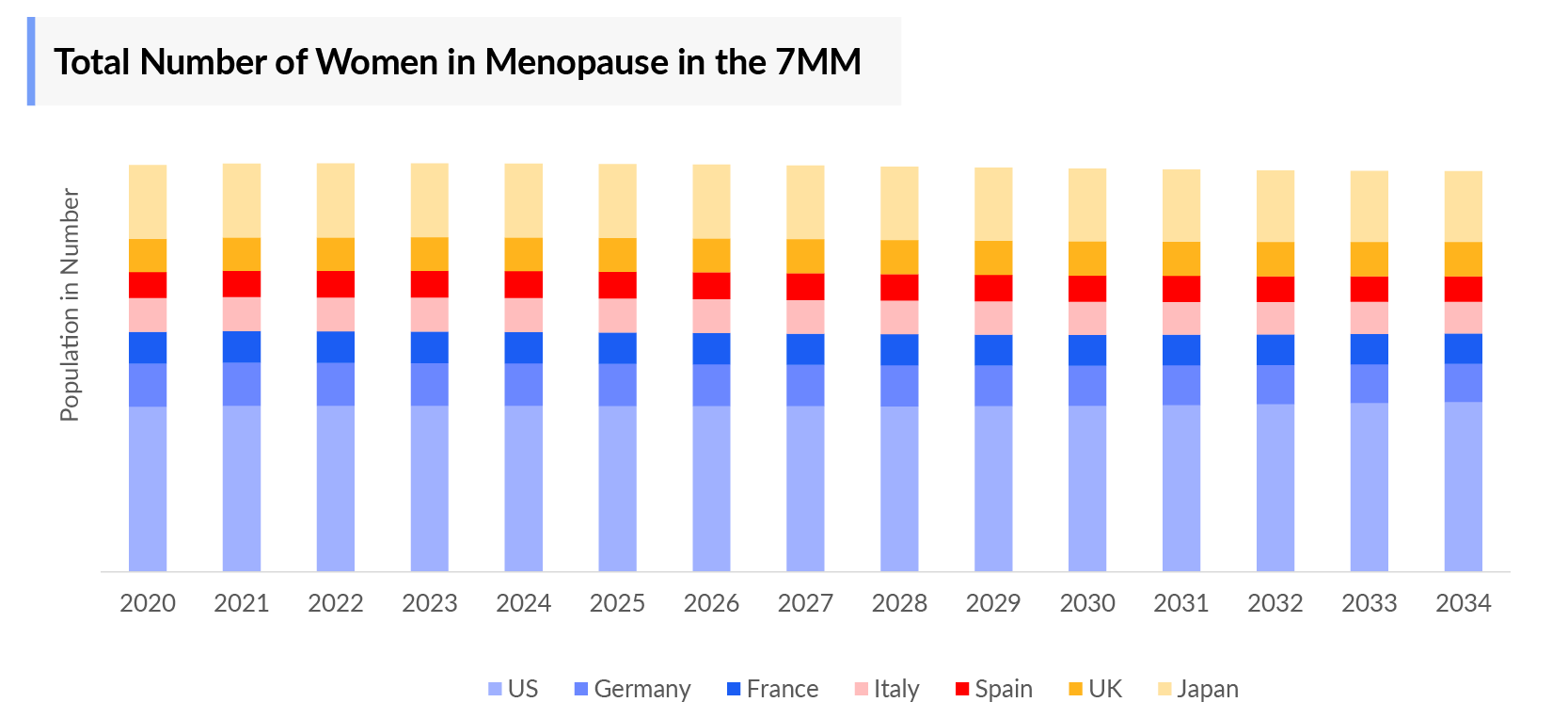
- The Menopause market size is projected to witness consistent growth throughout the forecast period (2024–2034) at a compound annual growth rate (CAGR) of 1.2%. The total number of women in menopause were estimated to be around 100 million in 2023 in the 7MM.
- DelveInsight’s analysis reveals that the United States had the highest number of women in menopause in 2023, nearly 40,720 thousand cases, surpassing other countries in the 7MM.
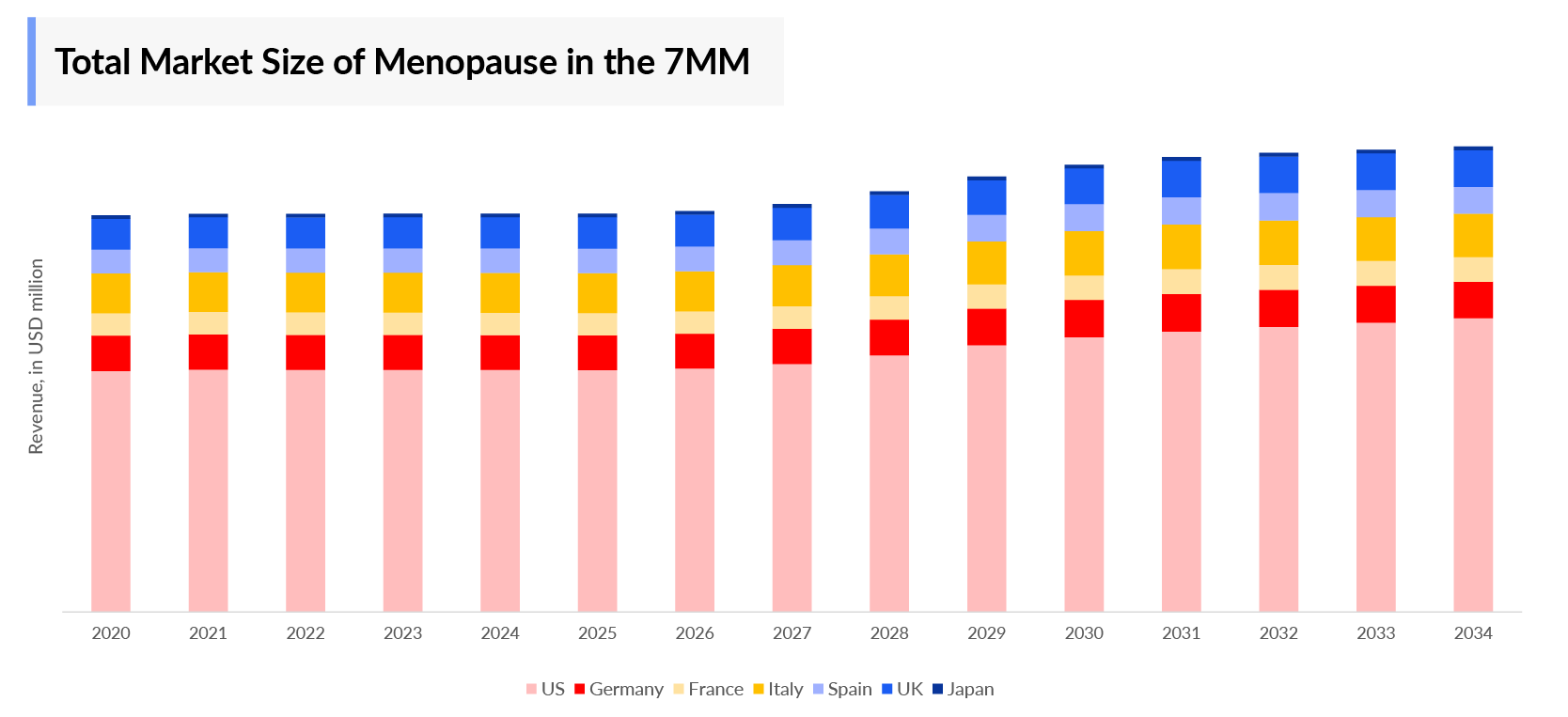
- In the 7MM, the Menopause market size was estimated to be nearly USD 10,970 million in 2023, with hormonal therapies generating nearly two-third of the Menopause market share.
- The menopause market is driven by the rising awareness of women’s health, increasing demand for personalized treatments, and advancements in hormone therapy. However, barriers such as the stigma surrounding menopause, high costs of innovative therapies, and potential side effects limit growth. Despite these challenges, the Menopause market is poised for steady expansion, fueled by an aging population and ongoing research into safer, more effective treatment options like NOE-115, FP-101, and others.
- In May 2024, Noema Pharma initiated dosing in a Phase IIa study (NOE-PPM-201) of NOE-115, a groundbreaking investigational therapy targeting vasomotor symptoms and other menopause-related conditions. This open-label trial will assess the safety and efficacy of NOE-115, a monoamine modulator, in 30 women with moderate to severe vasomotor symptoms. Conducted at six US centers, the study aims to explore its potential in alleviating both VMS and additional menopausal symptoms.
Request for sample report @ Menopause Treatment Market
DelveInsight’s “Menopause Market Insights, Epidemiology and Market Forecast – 2034” report delivers an in-depth understanding of the Menopause, historical and forecasted epidemiology and the Menopause market trends in the United States, EU4 (Germany, France, Italy, and Spain) and the United Kingdom, and Japan.
The Menopause treatment market report provides current treatment practices, emerging drugs, market share of individual therapies, and current and forecasted 7MM, Menopause market size from 2020 to 2034. The report also covers current Menopause treatment practices/algorithms and unmet medical needs to curate the best of the opportunities and assesses the underlying potential of the market.
|
Study Period |
2020 to 2034 |
|
Forecast Period |
2024-2034 |
|
Geographies Covered |
|
|
Menopause Market |
|
|
Menopauses Market CAGR | |
|
Menopause Companies |
Viramal Limited, Simbec Research, Estetra, Mithra Pharmaceuticals, Bayer, Nerre Therapeutics Ltd., Mitsubishi Tanabe Pharma America Inc., MenoGeniX, QUE Oncology, Fervent Pharmaceuticals, and others. |
|
Menopause Epidemiology Segmentation |
|
Menopause Treatment Market
Menopause Overview
Menopause is a natural biological process that marks the end of a woman’s reproductive years. It is defined as the permanent cessation of menstruation, typically occurring between 45 and 55, with an average age of around 51. Menopause is diagnosed when a woman has gone through 12 consecutive months without a menstrual period. This transition is characterized by the cessation of menstruation and a decline in hormone levels, particularly estrogen and progesterone. Common Menopause symptoms include hot flashes, night sweats, mood swings, and sleep disturbances, collectively known as vasomotor symptoms. Additionally, women may experience vaginal dryness, cognitive changes, and increased risk of osteoporosis and cardiovascular disease. Menopause is a significant life stage, impacting physical and emotional well-being, and often requires management through lifestyle changes, hormone therapy, or other treatments to alleviate symptoms and improve quality of life.
Menopause Diagnosis
The diagnosis of menopause is primarily clinical, based on a woman's age, menstrual history, and symptoms such as hot flashes, night sweats, and irregular periods. Menopause is typically confirmed when a woman has gone 12 consecutive months without menstruation. In certain cases, healthcare providers may order blood tests to measure levels of follicle-stimulating hormone (FSH) and estradiol, which often change during menopause. Elevated FSH and low estradiol levels can support the diagnosis. Additionally, thyroid function tests may be conducted to rule out other causes of similar symptoms. Accurate diagnosis is essential for appropriate management and treatment of menopausal symptoms.
Further details related to country-based variations are provided in the report...
Menopause Treatment
The treatment for menopause aims to alleviate the symptoms and improve the quality of life for women experiencing the hormonal changes associated with this stage of life. The treatment options can vary depending on the severity of symptoms and individual preferences. The goal of treatment during menopause is to make the transition more comfortable and reduce any associated symptoms. Several treatments are available to meet those two goals, including hormone therapy, medications, and natural remedies.
Hormone replacement therapy (HRT) or menopausal hormone therapy (MHT) is a common treatment for reducing menopause symptoms. Generally, this involves taking estrogen, progestin, or a combination of the two hormones. This can be an oral pill, injection, gel, patch, or vaginal ring. At present, almost 100 different combinations of estrogen-only, progestin, and combination hormone therapies are available.
Although Hormonal Therapy effectively treats vasomotor symptoms, it increases the risk of breast cancer, coronary artery disease, stroke, and others. Therefore, many women are ineligible for HT and its associated risks, reducing their usage.
Non-hormonal therapies such as selective serotonin reuptake inhibitors (SSRIs) and selective norepinephrine reuptake inhibitors (SNRIs) commonly prescribed for depression, gabapentin utilized for neuropathic pain and sleep issues, as well as various herbal supplements, offer a range of benefits for women seeking relief during menopause without relying on hormone-based treatments. Non-hormonal therapies avoid the potential side effects of hormonal treatments, such as increased risk of blood clots or breast cancer. Additionally, these therapies can be suitable for women who have undergone certain medical procedures or have a history of certain conditions where hormone use is not recommended.
Menopause Epidemiology
As the Menopause market is derived using the patient-based model, the Menopause epidemiology chapter in the report provides historical as well as forecasted epidemiology segmented by Total Number of Women in Menopause, Stage-specific Distribution of Women in Menopause, Age-specific Distribution of Women in Menopause, Number of Women in Menopause with Vasomotor Symptoms, and Number of Women in Menopause with Moderate-to-severe Vasomotor Symptoms in the 7MM covering the United States, EU4 countries (Germany, France, Italy, and Spain), the United Kingdom, and Japan, from 2020 to 2034.
- The number of women in menopause in the US in 2023 accounted for nearly 41% of total number of cases for Menopause in the 7MM. During the study period, these numbers are expected to rise at a significant CAGR.
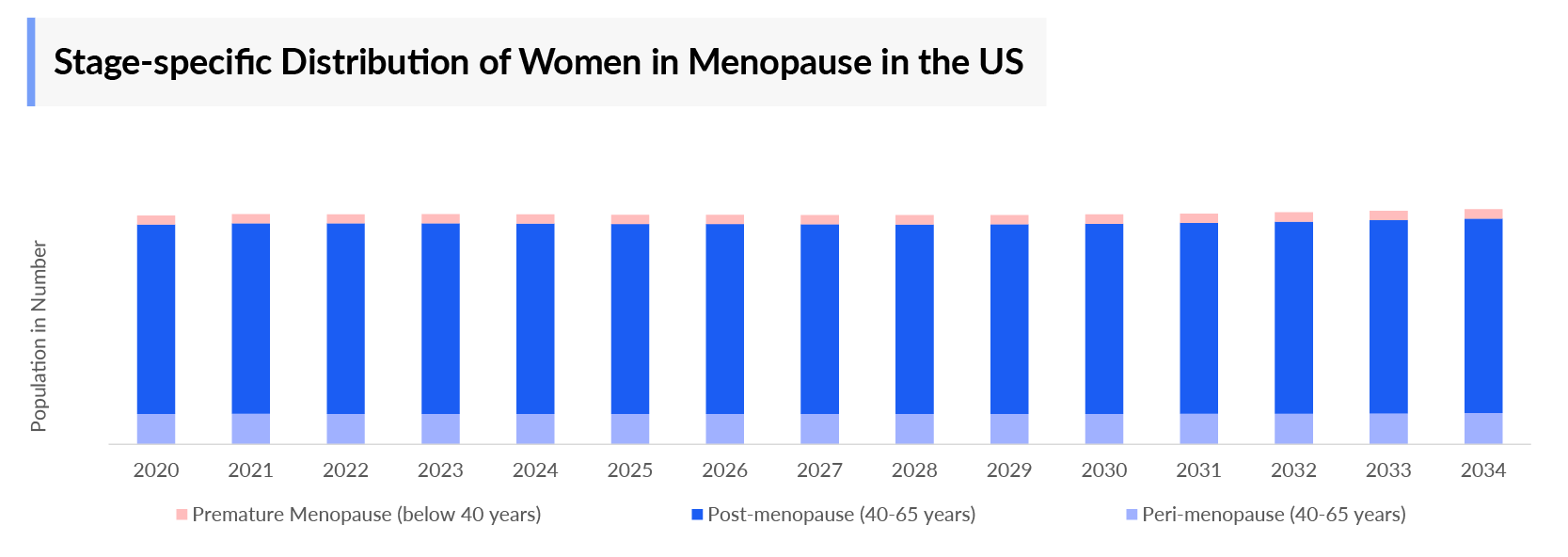
- The stage-specific distribution of women in menopause typically includes three stages: Peri-menopause (40–65 years), Post-menopause (40–65 years), Premature Menopause (below 40 years). DelveInsight estimated that among the different stages of menopause, women in post-menopause stage (40–65 years) were highest in number (73,395 thousand cases) in 2023 in the 7MM.
- For the age-specific analysis, number of cases of menopause were distributed across various age groups, such as <40 years, 40–50 years, 51–60 years, and 61–65 years, in the 7MM. As per the analysis, the highest number of cases were estimated in age-group 51–60 years and the lowest in <40 years with 26,735 thousand and 1,340 thousand cases, respectively, in 2023, in the EU4 and the UK.
- Japan accounted for 18% of the number of women in menopause in the 7MM in 2023, with 18,096 thousand cases.
- In 2023, 64,650 thousand women in menopause experienced hot flashes, making it the most common symptom during this stage of life. While, 54,250 thousand women had night sweats in the 7MM.
- In the EU4 and the UK, around 40% of all menopause cases in the US exhibited moderate-to-severe vasomotor symptoms in 2023.
Recent Developments in Menopause Clinical Trials
- In March 2025, Dr. Reddy’s Laboratories Ltd. and Alvotech announced that the FDA has accepted a 351(k) Biologic License Application (BLA) submission for AVT03, a proposed biosimilar of Prolia® (denosumab) and Xgeva® (denosumab), developed by Alvotech.
Menopause Drug Chapters
The drug chapter segment of the Menopause drugs market report encloses a detailed analysis of Menopause marketed drugs and late-stage (Phase III and Phase II) pipeline drugs. It also understands the Menopause clinical trial details, expressive pharmacological action, agreements and collaborations, approval and patent details, advantages and disadvantages of each included drug, and the latest news and press releases.
Marketed Menopause Drugs
DUAVEE/DUAVIVE (bazedoxifene acetate/conjugated estrogens): Pfizer/Ligand Pharmaceuticals
DUAVEE (bazedoxifene acetate/conjugated estrogens) was the first and only therapy to pair conjugated estrogens (CE) with an estrogen agonist/antagonist, also known as a selective estrogen receptor modulator (SERM). DUAVEE, approved by the FDA in 2013 and the EMA in 2014, provides the benefits of estrogen while minimizing the potential risks by including bazedoxifene, which helps protect against endometrial hyperplasia. With its convenient once-daily dosing, DUAVEE offers a convenient and reliable solution for managing menopausal symptoms, allowing women to regain control of their lives and embrace this new phase with confidence and comfort.
VEOZAH (fezolinetant): Astellas Pharma
VEOZAH is a neurokinin 3 (NK3) receptor antagonist indicated for treating moderate-to-severe VMS due to menopause. VEOZAH offers a safe and non-hormonal option, addressing the challenges and discomfort associated with menopause and providing optimal support for women experiencing menopause. In May 2023, VEOZAH was approved by the US FDA for treatment of vasomotor symptoms due to menopause.
Further detail in the report...
Emerging Menopause Drugs
NOE-115: Noema Pharma AG
NOE-115 is a broad-spectrum monoamine modulator in mid-stage clinical development as a non-hormonal treatment for moderate to severe Vasomotor Symptoms (VMS) associated with menopause, administered orally once daily. NOE-115 has been safe and well-tolerated to date in studies in healthy volunteers. NOE-115 has the potential to benefit VMS during menopause as well as associated clinical challenges including weight gain, daytime fatigue, and cognitive symptoms.

FP-101: Fervent Pharmaceuticals
FP-101 is a non-hormonal/non-herbal/non-antidepressant product for the treatment of vasomotor symptoms associated with menopause and hot flashes. Fervent’s FP-101 was shown to be potentially effective in treating vasomotor symptoms.
|
Drug |
MoA |
RoA |
Company |
Phase |
|
NOE-115 |
Monoamine modulator |
Oral |
Noema Pharma AG |
II |
|
FP-101 |
XX |
Oral |
Fervent Pharmaceuticals |
II |
|
Drug XX |
XX |
XXX |
XX |
II |
Note: Detailed emerging therapies assessment will be provided in the final report of Menopause...
Menopause Market Outlook
Hot flashes are the most bothersome and prevalent menopause-related symptom, affecting up to 85% of menopausal women with different severity, frequency, and duration. Hot flashes associated with menopause are treated using two main categories of drugs: hormonal therapies and non-hormonal therapies.
- The Menopause treatment market is expected to experience positive growth with the approval of potential Menopause drugs like NOE-115, FP-101, and others.
- The total Menopause market size in the EU4 and the UK was around USD 4,200 million in 2023, with Italy accounting for the highest Menopause market size at approximately USD 1,100 million. On the other hand, France accounted for the lowest Menopause market size, at USD 615 million in 2023.
- In 2023, hormonal therapy covered around 63% of the total 7MM. By 2034, its market is expected to decrease due to the emergence of non-hormonal emerging therapies.
- Among the 7MM, the US captured the highest Menopause market in 2023, covering a total of 61% Menopause market.
- Japan accounted for 1% of the Menopause market among the 7MM, with a Menopause market size of USD 96 million in 2023. The Japanese Menopause market is projected to grow at a compound annual growth rate (CAGR) of 0.6%.
Menopause Drugs Uptake
This section focuses on the sales uptake of potential Menopause drugs that have recently been launched or are anticipated to be launched in the Menopause market between 2020 and 2034. It estimates the market penetration of Menopause drugs for a given country, examining their impact within and across classes and segments. It also touches upon the financial and regulatory decisions contributing to the probability of success (PoS) of the drugs in the Menopause market.
Further detailed analysis of emerging therapies drug uptake in the report...
Menopause Pipeline Development Activities
The Menopause treatment market report provides insights into different Menopause clinical trials within Phase III, Phase II, and Phase I stage. It also analyzes key Menopause companies involved in developing targeted therapeutics.
Menopause Clinical Trials Activities
The Menopause drugs market report covers information on collaborations, acquisitions and mergers, licensing, and patent details for Menopause emerging therapies.
KOL Views on Menopause
To keep up with current Menopause market trends, we take KOLs and SMEs’ opinions working in the domain through primary research to fill the data gaps and validate the secondary research. Industry Experts were contacted for insights on Menopause evolving treatment landscape, patient reliance on conventional therapies, patient’s therapy switching acceptability, and drug uptake along with challenges related to accessibility, including KOL from Department of Obstetrics and Gynecology, Yale School of Medicine; Department of Epidemiology, University of North Carolina at Chapel Hil; Italian Association for Applied Sexology and Psychology (AISPA), Milan; Department of Public Health, Gifu University School of Medicine, Japan; and others.
Delveinsight’s analysts connected with 50+ KOLs to gather insights; however, interviews were conducted with 15+ KOLs in the 7MM. Their opinion helps to understand and validate current and emerging Menopause therapies and treatment patterns or Menopause market trends. This will support the clients in potential upcoming novel treatments by identifying the overall scenario of the market and the unmet needs.
Qualitative Analysis
We perform Qualitative and market Intelligence analysis using various approaches, such as SWOT and Conjoint Analysis. In the SWOT analysis, strengths, weaknesses, opportunities, and threats in terms of disease diagnosis, patient awareness, patient burden, competitive landscape, cost-effectiveness, and geographical accessibility of therapies are provided. These pointers are based on the Analyst’s discretion and assessment of the patient burden, cost analysis, and existing and evolving treatment landscape.
Conjoint Analysis analyzes multiple approved and emerging therapies based on relevant attributes such as safety, efficacy, frequency of administration, route of administration, and order of entry. Scoring is given based on these parameters to analyze the effectiveness of therapy.
Further, the therapies’ safety is evaluated wherein the acceptability, tolerability, and adverse events are majorly observed, and it sets a clear understanding of the side effects posed by the drug in the trials. In addition, the scoring is also based on the route of administration, order of entry and designation, probability of success, and the addressable patient pool for each therapy. According to these parameters, the final weightage score and the ranking of the emerging therapies are decided.
Menopause Market Access and Reimbursement
The high cost of therapies for the treatment is a major factor restraining the growth of the global Menopause drugs market. Because of the high cost, the economic burden is increasing, leading the patient to escape from proper treatment.
The Menopause therapeutics market report further provides detailed insights on the country-wise accessibility and reimbursement scenarios, cost-effectiveness scenario of approved therapies, programs making accessibility easier and out-of-pocket costs more affordable, insights on patients insured under federal or state government prescription drug programs, etc.
Scope of the Menopause Market Report
- The Menopause treatment market report covers a segment of key events, an executive summary, descriptive overview of Menopause, explaining its causes, signs and symptoms, pathogenesis, and currently available therapies.
- Comprehensive insight has been provided into the epidemiology segments and forecasts, the future growth potential of diagnosis rate, disease progression, and treatment guidelines.
- Additionally, an all-inclusive account of the current and emerging therapies, along with the elaborative profiles of late-stage and prominent therapies, will impact the current treatment landscape.
- A detailed review of the Menopause market, historical and forecasted market size, market share by therapies, detailed assumptions, and rationale behind the approach is included in the report covering the 7MM drug outreach.
- The Menopause treatment market report provides an edge while developing business strategies, by understanding trends, through SWOT analysis and expert insights/KOL views, patient journey, and treatment preference that help shape and drive the 7MM Menopause market.
Menopause Market Report Insights
- Menopause Patient Population
- Menopause Therapeutic Approaches
- Menopause Pipeline Analysis
- Menopause Market Size
- Menopause Market Trends
- Existing and Future Menopause Market Opportunity
Menopause Market Report Key Strengths
- 11 Years Forecast
- The 7MM Coverage
- Menopause Epidemiology Segmentation
- Key Cross Competition
- Conjoint Analysis
- Menopause Drugs Uptake
- Key Menopause Market Forecast Assumptions
Menopause Market Report Assessment
- Current Menopause Treatment Practices
- Menopause Unmet Needs
- Menopause Pipeline Product Profiles
- Menopause Market Attractiveness
- Qualitative Analysis (SWOT and Conjoint Analysis)
- Menopause Market Drivers
- Menopause Market Barriers
Key Questions Answered In The Menopause Market Report
Menopause Market Insights
- What was the Menopause market share (%) distribution in 2020 and how it would look like in 2034?
- What would be the Menopause market size as well as market size by therapies across the 7MM during the forecast period (2024–2034)?
- What are the key findings pertaining to the market across the 7MM and which country will have the largest Menopause market size during the forecast period (2024–2034)?
- At what CAGR, the Menopause treatment market is expected to grow at the 7MM level during the forecast period (2024–2034)?
- What would be the Menopause market outlook across the 7MM during the forecast period (2024–2034)?
- What would be the Menopause market growth till 2034 and what will be the resultant Menopause market size in the year 2034?
- How would the market drivers, barriers, and future opportunities affect the Menopause market dynamics and subsequent analysis of the associated trends?
Menopause Epidemiology Insights
- What is the disease risk, burden, and unmet needs of Menopause?
- What is the historical Menopause patient population in the United States, EU4 (Germany, France, Italy, Spain) and the UK, and Japan?
- What would be the forecasted patient population of Menopause at the 7MM level?
- What will be the growth opportunities across the 7MM with respect to the patient population pertaining to Menopause?
- Out of the above-mentioned countries, which country would have the highest prevalent population of Menopause during the forecast period (2024–2034)?
- At what CAGR the population is expected to grow across the 7MM during the forecast period (2024–2034)?
Current Menopause Treatment Scenario, Marketed Drugs, and Emerging Therapies
- What are the current options for the treatment of Menopause along with the approved therapy?
- What are the current treatment guidelines for the treatment of Menopause in the US, EU4 and the UK, And Japan?
- What are the Menopause marketed drugs and their MOA, regulatory milestones, product development activities, advantages, disadvantages, safety, and efficacy, etc.?
- How many Menopause companies are developing therapies for the treatment of Menopause?
- How many emerging Menopause therapies are in the mid-stage and late stages of development for the treatment of Menopause?
- What are the key collaborations (Industry–Industry, Industry-Academia), Mergers and acquisitions, licensing activities related to the Menopause therapies?
- What are the recent therapies, targets, mechanisms of action and technologies developed to overcome the limitation of existing therapies?
- What are the clinical studies going on for Menopause and their status?
- What are the key designations that have been granted for the emerging therapies for Menopause?
- What are the 7MM historical and forecasted Menopause drugs market?
Reasons to Buy Menopause Market Forecast Report
- The Menopause treatment market report will help in developing business strategies by understanding the latest trends and changing treatment dynamics driving the Menopause Market.
- Insights on patient burden/disease incidence, evolution in diagnosis, and factors contributing to the change in the epidemiology of the disease during the forecast years.
- To understand the existing market opportunity in varying geographies and the growth potential over the coming years.
- Distribution of historical and current patient share based on real-world prescription data along with reported sales of approved products in the US, EU4 (Germany, France, Italy, and Spain), the United Kingdom, and Japan.
- Identification of strong upcoming Menopause in the Menopause market will help in devising strategies that will help in getting ahead of competitors.
- Detailed analysis and potential of current and emerging therapies under the conjoint analysis section to provide visibility around leading emerging Menopause drugs.
- Highlights of Access and Reimbursement policies of approved therapies, barriers to accessibility of off-label expensive therapies, and patient assistance programs.
- To understand the perspective of Key Opinion Leaders around the accessibility, acceptability, and compliance-related challenges of existing treatment to overcome barriers in future.
- Detailed insights on the unmet need of the existing Menopause market so that the upcoming Menopause companies can strengthen their development and launch strategy.
Frequently Asked Questions
What is the forecast period covered in the report?
The Menopause Epidemiology and Market Insight report for the 7MM covers the forecast period from 2024 to 2034, providing a projection of market dynamics and trends during this timeframe.
Who are the key players in the Menopause market?
The Menopause market is quite robust. The major Menopause companies are Astellas Pharma Inc, Pfizer, Fervent Pharmaceuticals, Noema Pharma, and others which are currently developing drugs for the treatment of Menopause.
How is the market size estimated in the forecast report?
The Menopause market size is estimated through data analysis, statistical modeling, and expert opinions. It may consider factors such as prevalent cases, treatment costs, revenue generated, and market trends.
What is the key driver of the Menopause market?
The increase in diagnosed prevalent cases of Menopause and the launch of emerging therapies are attributed to be the key drivers for increasing Menopause market.
What is the expected impact of emerging therapies or advancements in Menopause treatment on the market?
Introducing new therapies, advancements in diagnostic techniques, and innovations in treatment approaches can significantly impact the Menopause treatment market. Market forecast reports may provide analysis and predictions regarding the potential impact of these developments.
Does the report provide insights into the competitive landscape of the market?
The Menopause market forecast report may include information on the competitive landscape, profiling key market players, their product offerings, partnerships, and strategies, and helping stakeholders understand the competitive dynamics of the Menopause market.