
Postherpetic Neuralgia Market Summary
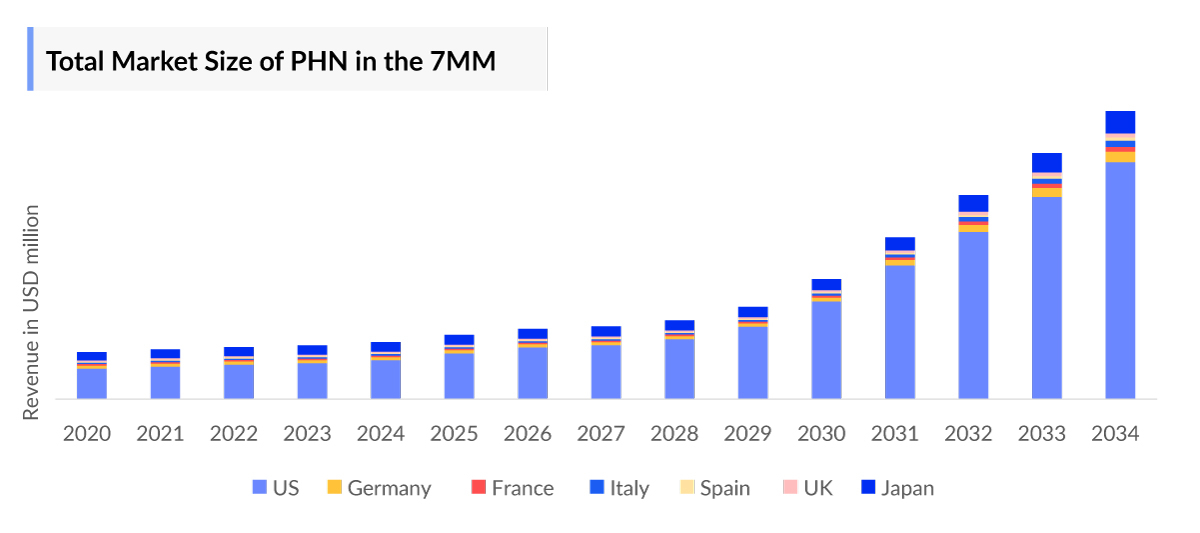
- The Postherpetic Neuralgia Treatment Market Size in the 7MM is approximately USD 100 million in 2023 and is projected to increase during the forecast period (2024–2034).
- Among EU4 and the UK, Germany accounted for the maximum Postherpetic Neuralgia Treatment Market Size in 2023, while Spain occupies the bottom of the ladder.
- The Postherpetic Neuralgia Treatment Market is expected to change in the coming years, driven by the increasing incidence of shingles and the aging population. One of the major trends in the market is the increasing use of non-opioid pain medications. The opioid epidemic in the United States has led to a greater focus on non-opioid pain management options, which is likely to continue.
- In the 7MM, United States accounted for the largest Postherpetic Neuralgia Treatment Market Size in 2023, with approximately 70% of the total market size.
Postherpetic Neuralgia Market Insight and Trends
- Postherpetic Neuralgia occurs in a subset of the population suffering from an episode of acute herpes zoster. The Herpes Zoster Incidence increases with age, with most cases occurring in patients over 50.
- FDA-approved options encompass analgesics, anticonvulsants, and topical remedies such as 5% lidocaine and 8% capsaicin patches. Off-label alternatives frequently employed for severe and stubborn PHN involve tricyclic antidepressants, opioids, and interventional approaches like nerve ablation and injection procedures.
- Approximately 40–50% of Postherpetic Neuralgia Patients do not respond to any treatment, and other patients experience limited efficacy.
- Topical therapies, such as the lidocaine patch or the capsaicin patch, can reduce pain in PHN without significant systemic effects, a characteristic that may be beneficial in the elderly population.
- FDA-approved ZTlido, a proprietary 1.8% lidocaine topical system developed by Scilex Holding in 2018. It demonstrated superior qualities compared to the US reference product, Lidoderm 5%, such as enhanced bioavailability, skin adhesion, and efficiency in drug delivery.
- ZTlido may face competition from generic lidocaine patches manufactured by different Postherpetic Neuralgia Companies such as Mylan, Teva Pharmaceutical, and others, as well as with LIDODERM.
- The Postherpetic Neuralgia Pipeline in the 7MM is relatively limited, focusing on drugs being approved for neuropathic pain based on clinical trials involving postherpetic neuralgia and diabetic peripheral neuropathic pain. Key Postherpetic Neuralgia Companies such as Lexicon Pharmaceuticals (LX9211) and Merz Therapeutics (Incobotulinum toxin A).
Request for Unlocking the Sample Page of the "Postherpetic Neuralgia Treatment Market"
Key Factors Driving Postherpetic Neuralgia (PHN) Market
Expanding Polymyositis Patient Pool
Polymyositis is a rare idiopathic inflammatory myopathy, with the highest prevalence reported in the United States among the 7MM. In 2023, nearly 37K cases were identified in the US alone, including ~14K males and ~22K females. With improved disease recognition and growing awareness among clinicians, these numbers are expected to increase gradually through 2034.
Current Treatment Landscape and Challenges
The present treatment paradigm for polymyositis largely revolves around glucocorticoids, immunosuppressive agents, TNF inhibitors such as rituximab, intravenous immunoglobulin (IVIG), and Acthar Gel. While these therapies provide symptomatic relief and disease control, they are associated with limitations including high treatment costs, adverse effects, and incomplete efficacy. Reimbursement hurdles further complicate access to newer options. As a result, significant unmet needs remain for safer, more effective, and affordable long-term management solutions.
Pipeline Innovation and Emerging Therapies
The polymyositis market is projected to evolve as novel therapies advance through clinical development. The European Medicines Agency (EMA) recently granted PRIME designation to dazukibart for treating polymyositis, underscoring the urgency of innovation in this rare condition. Emerging therapies such as anifrolumab (SAPHNELO), PF-06823859, and enpatoran (M5049) are also under investigation and hold promise for reshaping the treatment landscape. With their potential to improve efficacy and safety outcomes, these agents are expected to expand therapeutic options over the coming decade.
Market Outlook for Polymyositis
In 2023, the polymyositis market across the 7MM was valued at approximately USD 114 million, with growth primarily driven by the US. Market expansion is expected with the anticipated launch of novel agents, offering new hope for patients who do not respond adequately to current standards of care. While barriers such as high treatment costs and access constraints persist, ongoing research and pipeline innovation are likely to transform management strategies and strengthen long-term market potential through 2034.
Postherpetic Neuralgia Treatment Market Report Summary
- The Postherpetic Neuralgia treatment market report offers extensive knowledge regarding the epidemiology segments and predictions, presenting a deep understanding of the potential future growth in diagnosis rates, disease progression, and treatment guidelines. It provides comprehensive insights into these aspects, enabling a thorough assessment of the subject matter.
- Additionally, an all-inclusive account of the current management techniques and emerging therapies and the elaborative profiles of mid-stage (Phase II) and prominent therapies that would impact the current treatment landscape and result in an overall Postherpetic Neuralgia treatment market shift has been provided in the report.
- The Postherpetic Neuralgia treatment market report also encompasses a comprehensive analysis of the postherpetic neuralgia market, providing an in-depth examination of its historical and projected market size (2020–2034). It also includes the market share of therapies, detailed assumptions, and the underlying rationale for our methodology. The report also includes drug outreach coverage in the 7MM region.
- The Postherpetic Neuralgia treatment market report includes qualitative insights that provide an edge while developing business strategies, by understanding trends, through SWOT analysis and expert insights/KOL views, including experts from various hospitals and prominent universities, patient journey, and treatment preferences that help shape and drive the 7MM postherpetic neuralgia drugs market.
Postherpetic Neuralgia Treatment Market: Understanding and Algorithm
Postherpetic neuralgia is a common complication of shingles caused by varicella-zoster virus (VZV) reactivation, which resides latently in the body after a primary varicella infection. The shingles outbreak causes damage to the sensory nerves, which leads to abnormal signals being sent to the brain, resulting in pain. Postherpetic neuralgia is a neuropathic pain syndrome characterized by pain that persists for more than 90 days after the outbreak of herpes zoster. Common symptoms experienced by patients with postherpetic neuralgia include burning, stabbing, shooting, aching, throbbing, itching, or electric shocks on the affected area. Risk factors for postherpetic neuralgia are increasing age and immunosuppression. People who have acute pain and severe rash during shingles also have a higher risk of developing postherpetic neuralgia.
Postherpetic Neuralgia Diagnosis
The Postherpetic Neuralgia Diagnosis is clinical. A history of herpes zoster and the nature of the pain are critical parameters of a postherpetic neuralgia diagnosis. Thus, obtaining a detailed medical history, including symptoms and vaccination history, is very important. Pain intensity and quality should be assessed using an appropriate pain scale based on the patient’s ability to communicate – a numerical rating scale (usually an 11-point scale: from 0, no pain, to 10, severe pain), a visual analog scale, or verbal descriptor scale (e.g., McGill Pain Questionnaire). Postherpetic neuralgia diagnosis does not rely on laboratory evaluations. However, laboratory tests and some targeted imaging may provide a degree of utility. Viral culture or immunofluorescent staining may be used to distinguish herpes simplex from herpes zoster.
Postherpetic Neuralgia Treatment
The Postherpetic Neuralgia Treatment should be directed at pain control and minimizing treatment-related adverse events. Pain relief is challenging and should include drugs, interventionist procedures, and non-pharmacological adjuvant therapy. Guidelines recommend treatment of postherpetic neuralgia with calcium channel a2-d ligands (gabapentin and pregabalin), tricyclic antidepressants (amitriptyline, nortriptyline, or desipramine), or topical lidocaine patches as first-line drugs; opioids and topical capsaicin patch or cream as second-line treatment options or combination therapies with different mechanisms of action. Some patients with postherpetic neuralgia may have persistent pain despite pharmacological, topical, psychological, and physical therapies. Paravertebral and sympathetic nerve blocks may manage these cases of refractory postherpetic neuralgia.
Postherpetic Neuralgia Epidemiology
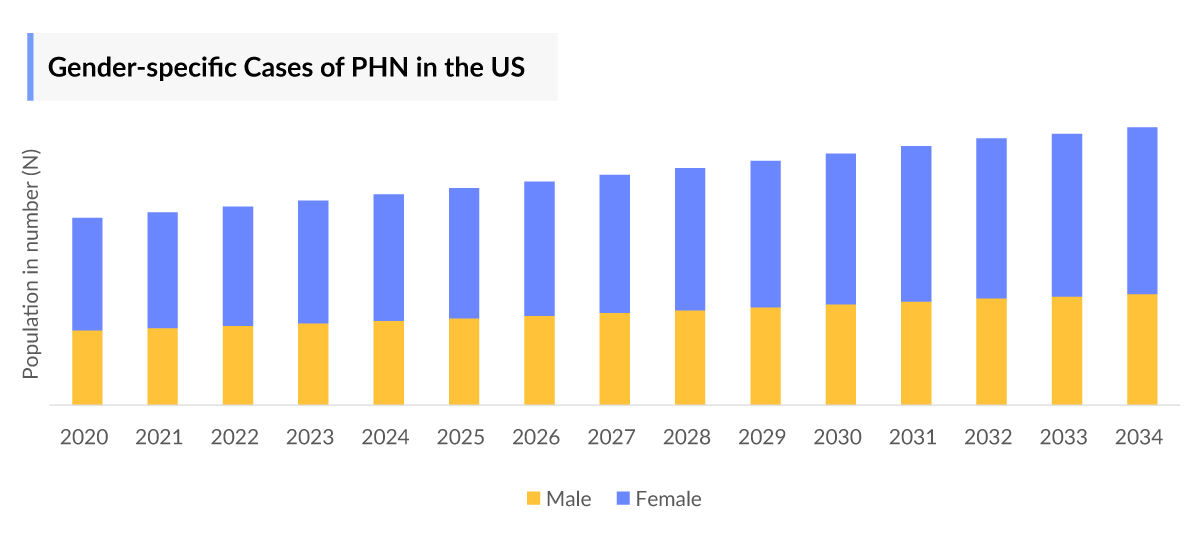
As the market is derived using a patient-based model, the postherpetic neuralgia epidemiology chapter in the report provides historical as well as forecasted epidemiology segmented by total Postherpetic Neuralgia Incident cases, total Postherpetic Neuralgia incident cases, Postherpetic Neuralgia gender-specific cases, Postherpetic Neuralgia age-specific cases, and total Postherpetic Neuralgia treated cases in the 7MM covering the United States, EU4 (Germany, France, Italy, and Spain), the United Kingdom, and Japan from 2020 to 2034.
Key Findings from Postherpetic Neuralgia Epidemiological Analyses and Forecast
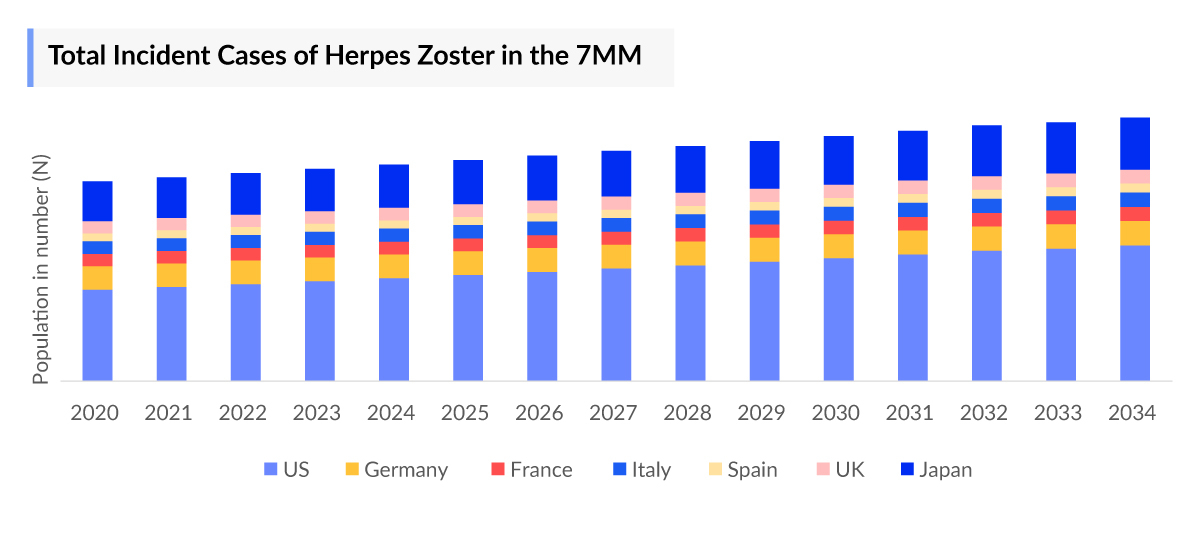
- The Postherpetic Neuralgia Incident Cases of in the 7MM comprised approximately 4 million cases in 2023 and are projected to increase during the forecast period due to aging population and widespread use of immunosuppressive therapies.
- The total Postherpetic Neuralgia incident cases in the 7MM were approximately 600,000 in 2023. These cases are expected to increase by 2034.
- Among the 7MM, the United States accounted for the highest number of incident cases of PHN, i.e., ~300,000 cases in 2023.
- According to estimates, Postherpetic Neuralgia is slightly more common in females than males, accounting for ~60% of the total cases, while males accounted for ~40% of the total population share.
- Among EU4 and the UK, Germany accounted for the largest number of Postherpetic Neuralgia cases, followed by France, whereas Spain accounted for the lowest number of cases in 2023.
Postherpetic Neuralgia Drugs Analysis
Postherpetic Neuralgia Marketed Drugs
-
ZTLIDO (topical lidocaine system): Scilex Pharmaceuticals
ZTLIDO is a topical lidocaine system (1.8%) approved for relieving pain associated with postherpetic neuralgia. ZTLIDO is designed as a lighter, thinner product with improved adhesion relative to lidoderm (lidocaine patch 5%) while providing a bioequivalent delivery of lidocaine in an efficient drug delivery system. Lidocaine is a local amide anesthetic; it blocks sodium ion channels required for initiating and conducting neuronal impulses. The drug received FDA approval in February 2018 for relieving pain associated with postherpetic neuralgia.
-
TARLIGE (mirogabalin besilate): Daiichi Sankyo
TARLIGE is an analgesic proprietarily discovered by Daiichi Sankyo that works by inhibiting the excessive release of pain-related neurotransmitters in the presynaptic nerve terminal. Mirogabalin exerts an analgesic effect by suppressing calcium current through binding to the a2d subunit, which plays an auxiliary role in the function of voltage-gated calcium channels in the nervous system. Generally, for adults, the initial dose of mirogabalin is 5 mg orally twice daily, and then the dose is gradually increased by 5 mg at intervals of 1 week or longer to 15 mg orally twice daily. The drug was approved for marketing in Japan in January 2019 based on the results of Phase III clinical trials conducted in Asia, including Japan, in patients with diabetic peripheral neuropathic pain (DPNP) and postherpetic neuralgia for peripheral neuropathic pain (PNP).
Postherpetic Neuralgia Emerging Drugs
-
LX9211: Lexicon Pharmaceuticals
LX9211 is a potent, orally delivered, selective small molecule inhibitor of adaptor-associated kinase 1 (AAK1). It was discovered using Lexicon’s unique approach to gene science. Preclinical studies of LX9211 demonstrated that mice lacking AAK1 exhibited increased resistance to induced neuropathic pain. LX9211 was identified in a neuroscience drug discovery alliance with Bristol-Myers Squibb, from which Lexicon holds exclusive development and commercialization rights. The company has completed a Phase II clinical trial (NCT04662281; RELIEF-PHN1) of LX9211 in adults associated with postherpetic neuralgia and has shown clear evidence of an effect. Topline results were announced in December 2022.

-
IncobotulinumtoxinA (NT 201): Merz Therapeutics
IncobotulinumtoxinA, marketed as XEOMIN, is approved in over 75 countries worldwide to treat patients with upper and lower limb spasticity, cervical dystonia, blepharospasm, glabellar lines, and sialorrhea. The drug effectively treats peripheral cholinergic nerve endings by weakening the contraction of voluntary muscles. It also relieves muscle tone by inhibiting the release of a neurotransmitter called acetylcholine. It is free from complex proteins and has a low risk of neutralizing antibody formation.
Currently, the company is conducting a Phase II (NCT06091020) PaiNT trial to investigate the efficacy and safety of subcutaneous NT 201 injections compared with placebo injections in decreasing pain intensity in adults with moderate to severe chronic peripheral neuropathic pain due to postherpetic neuralgia or peripheral nerve injury.
|
Phase |
Molecule type |
|
II |
Small molecule |
|
II |
Neurotoxic protein |
Postherpetic Neuralgia Market Insights
FDA-approved treatments for postherpetic neuralgia (PHN) include analgesics, anticonvulsants, and topical solutions. Antiiconvulsants such as Gabapentin, Pregabalin are commonly used to treat neuropathic pain that work by stabilizing electrical activity in the nerves and reducing abnormal signalling. Tricyclic Antidepressants like Amitriptyline, Nortriptyline modulate pain signals in the central nervous system. Opioids (e.g., oxycodone, morphine), strong pain relievers may be prescribed for severe postherpetic neuralgia pain.
However, due to the risk of dependence and other side effects, they are typically used cautiously and for short durations. Topical therapies, such as the lidocaine patch or the capsaicin patch, can reduce pain in PHN without significant systemic effects, a characteristic that may be beneficial in the elderly population. The lidocaine medicated plaster represents a simple and safe therapy that can be used since the onset of the first Postherpetic Neuralgia symptoms.
Postherpetic Neuralgia Market Outlook
Postherpetic neuralgia is associated with significant loss of function and reduced quality of life, particularly in the elderly, and is highly resistant to treatment. Since postherpetic neuralgia is often resistant to pharmacologic treatments, a multimodal analgesic treatment strategy is often used to balance the efficacy and tolerability of the medication regimen, the side effects of which can be limiting and compromise the quality of life and patient compliance. Postherpetic neuralgia has no cure, and patients rely on palliative treatments to reduce pain duration and severity.
The Postherpetic Neuralgia Treatment Market has undergone significant changes in recent years, driven by advances in the understanding of neuropathic pain and the development of new treatment options. Previously, the treatment options were limited and were based mainly on oral medications such as NSAIDs, opioids, tricyclic antidepressants, and anticonvulsants. These medications had limited efficacy in treating postherpetic neuralgia and were associated with significant side effects. In recent years, there has been a shift toward using topical medications to treat postherpetic neuralgia. Current treatment of postherpetic neuralgia most often consists of oral gabapentin and prescription lidocaine patches (first-line), and refractory cases may be prescribed opioids to address persistent pain.
The first-line use of opioids in treating neuropathic pain (including postherpetic neuralgia) remains controversial. The CDC in the United States advises healthcare professionals to limit opioid prescriptions strictly to cancer-related conditions and a select few other severe health issues. Regarding topical lidocaine therapy for postherpetic neuralgia, a patch version has been approved in the United States, Europe, and Australia, and its use is recommended in the treatment guidelines of the International Association for the Study of Pain. ZTlido, a proprietary 1.8% lidocaine topical system developed by Scilex Holding, gained FDA approval in 2018. In Japan, topical lidocaine therapy for postherpetic neuralgia has not been approved, but lidocaine topical preparations containing gels are being prepared as in-hospital preparations for postherpetic neuralgia.
The Postherpetic Neuralgia Therapeutics Market is expected to change in the coming years, driven by the increasing incidence of shingles and the aging population. One of the major trends in the market is the increasing use of non-opioid pain medications. The emerging pipeline for postherpetic neuralgia in the 7MM is relatively limited, focusing on drugs being approved for neuropathic pain based on clinical trials involving postherpetic neuralgia and diabetic peripheral neuropathic pain.
Detailed market assessment will be provided in the final report
Key Findings from the Postherpetic Neuralgia Market Forecast
- As per DelveInsight’s estimates, the potential Postherpetic Neuralgia Drugs that can mark a significant change in the forecast period include ZTLIDO (lidocaine topical system), TARLIGE (mirogabalin besilate), LX9211, and others.
- Current Postherpetic Neuralgia Drugs Market is largely dominated by low-cost generics, and OTC products.
- The Postherpetic Neuralgia Treatment Market Size in the 7MM is approximately USD 100 million in 2023 and is projected to increase during the forecast period (2024–2034).
- Among EU4 and the UK, Germany accounted for the maximum Postherpetic Neuralgia Treatment Market Size in 2023, while Spain occupies the bottom of the ladder.
- The current pipeline for postherpetic neuralgia in the seven major markets is relatively limited, consisting of a few drugs. Among these, LX9211 is anticipated to achieve the most significant market share during the forecast period.
Postherpetic Neuralgia Drugs Uptake
This section focuses on the uptake rate of potential Postherpetic Neuralgia drugs expected to be launched in the market during 2020–2034. A fast acceptance can be seen with ZTlido, being designed as a lighter, thinner product with superior adhesion relative to LIDODERM (lidocaine patch 5%) while providing a bioequivalent delivery of lidocaine in an efficient drug delivery system. The product lowers doses while raising efficacy with expected increase in sales in the coming years.
Further detailed analysis of therapies drug uptake will be provided in the final report …
Postherpetic Neuralgia Clinical Trial Analysis
The Postherpetic Neuralgia Therapeutics Market Report provides insights into different therapeutic candidates in Phase III and Phase II. It also analyzes key Postherpetic Neuralgia Companies involved in developing targeted therapeutics.
Postherpetic Neuralgia Pipeline Development Activities
The Postherpetic Neuralgia Therapeutics Market Report covers information on collaborations, acquisitions and mergers, licensing, and patent details for postherpetic neuralgia emerging therapy.
Latest KOL Views on Postherpetic Neuralgia
To keep up with current market trends, we take KOLs and SMEs’ opinions working in the domain through primary research to fill the data gaps and validate our secondary research. Industry experts contacted for insights on postherpetic neuralgia evolving treatment landscape, patient reliance on conventional therapies, patient’s therapy switching acceptability, and drug uptake, along with challenges related to accessibility, include Medical/scientific writers; Neurologist; Dermatologists; and Professors; MD, FACS, Chair of the Department of The Pain Relief Foundation, Universities, and others.
Delveinsight’s analysts connected with 30+ KOLs to gather insights; however, interviews were conducted with 10+ KOLs in the 7MM. Centers such as the Pain Relief Foundation, Nihon University School of Medicine, the Royal Marsden Hospital, Keck Hospital of USC, etc. were contacted. Their opinion helps understand and validate current and emerging therapy treatment patterns or postherpetic neuralgia market trends. This will support the clients in potential upcoming novel treatments by identifying the overall scenario of the market and the unmet needs.
Postherpetic Neuralgia Qualitative Analysis
We perform Qualitative and market Intelligence analysis using various approaches, such as SWOT analysis and Analyst views. In the SWOT analysis, strengths, weaknesses, opportunities, and threats in terms of disease diagnosis, patient awareness, patient burden, competitive landscape, cost-effectiveness, and geographical accessibility of therapies are provided. These pointers are based on the Analyst’s discretion and assessment of the patient burden, cost analysis, and existing and evolving Postherpetic Neuralgia Treatment Market Landscape.
The analyst analyzes multiple emerging therapies based on relevant attributes such as safety, efficacy, frequency of administration, route of administration, and order of entry. In efficacy, the trial’s primary and secondary outcome measures are evaluated. Further, the therapies’ safety is evaluated wherein the acceptability, tolerability, and adverse events are majorly observed, and it sets a clear understanding of the side effects posed by the drug in the trials.
Postherpetic Neuralgia Therapeutics Market Access and Reimbursement
Reimbursement is a crucial factor affecting the drug’s market access. Often, the decision to reimburse comes down to the price of the drug relative to the benefit it produces in treated patients. To reduce the healthcare burden of these high-cost therapies, payers and other industry insiders are considering many payment models. Currently, ZTlido is covered for more than 200 million lives in the United States, with ongoing efforts to expand coverage.
As of January 2023, the company has successfully secured coverage for ZTlido with major entities such as CVS Caremark/Aetna Commercial, Cigna HealthCare (commercial and Medicare plans), Express Scripts (commercial and most Medicare plans), United Healthcare Commercial, Optum Rx Select Commercial, Anthem BCBS, BCBS Louisiana and Kansas, Lifetime/Excellus BCBS, MedImpact, CareFirst, Elixir Commercial, and Medicaid in California, Florida, Idaho, and North Dakota.
The Postherpetic Neuralgia Therapeutics Market Report further provides detailed insights on the country-wise accessibility and reimbursement scenarios, cost-effectiveness scenario of approved therapies, programs making accessibility easier and out-of-pocket costs more affordable, insights on patients insured under federal or state government prescription drug programs, etc.
Postherpetic Neuralgia Therapeutics Market Report Scope
- The Postherpetic Neuralgia Therapeutics Market Report covers a segment of key events, an executive summary, descriptive overview of postherpetic neuralgia, explaining its causes, signs and symptoms, pathogenesis, and currently available therapies.
- Comprehensive insight into the epidemiology segments and forecasts, disease progression, and treatment guidelines has been provided.
- Additionally, an all-inclusive account of the current and emerging therapies and the elaborative profiles of late-stage and prominent therapies will impact the current Postherpetic Neuralgia Treatment Market Landscape.
- A detailed review of the postherpetic neuralgia therapeutics market, historical and forecasted Postherpetic Neuralgia treatment market size, Postherpetic Neuralgia drugs market share by therapies, detailed assumptions, and rationale behind our approach is included in the report, covering the 7MM drug outreach.
- The Postherpetic Neuralgia Therapeutics Market Report provides an edge while developing business strategies by understanding trends through SWOT analysis and expert insights/KOL views, patient journey, and treatment preferences that help shape and drive the 7MM postherpetic neuralgia drugs market.
Postherpetic Neuralgia Therapeutics Market Report Insights
- Patient-based Postherpetic Neuralgia Market Forecasting
- Therapeutic Approaches
- Postherpetic Neuralgia Pipeline Drugs Analysis
- Postherpetic Neuralgia Market Size and Trends
- Existing and future Postherpetic Neuralgia Drugs Market Opportunity
Postherpetic Neuralgia Market Report Key Strengths
- 11 -Year Postherpetic Neuralgia Market Forecast
- The 7MM Coverage
- Postherpetic Neuralgia Epidemiology Segmentation
- Key Cross Competition
- Drugs Uptake and Key Postherpetic Neuralgia Market Forecast Assumptions
Postherpetic Neuralgia Market Report Assessment
- Current Postherpetic Neuralgia Treatment Market Practices
- Postherpetic Neuralgia Unmet Needs
- Postherpetic Neuralgia Pipeline Drugs Profiles
- Postherpetic Neuralgia Drugs Market Attractiveness
- Qualitative Analysis (SWOT and Conjoint Analysis)
FAQs in the Postherpetic Neuralgia Market Report
- What was the postherpetic neuralgia market size, the Postherpetic Neuralgia treatment market size by therapies, and Postherpetic Neuralgia drugs market share (%) distribution in 2020, and what would it look like by 2034? What are the contributing factors for this growth?
- Which class is going to be the largest contributor by 2034?
- When is LX9211 expected to be launched?
- What are the pricing variations among different geographies for approved and off-label therapies?
- How would the market drivers, barriers, and future opportunities affect the market dynamics and subsequent analysis of the associated trends?
- Who are the generic competitors of ZTlido?
- What are the disease risks, burdens, and Postherpetic Neuralgia Unmet Needs? What will be the growth opportunities across the 7MM concerning the patient population of postherpetic neuralgia?
- What is the historical and forecasted postherpetic neuralgia patient pool in the United States, EU4 (Germany, France, Italy, and Spain), the United Kingdom, and Japan?
- What are the current options for the treatment of postherpetic neuralgia? What are the current guidelines for treating postherpetic neuralgia in the US and Europe?
- What are the recent novel therapies, targets, mechanisms of action, and technologies being developed to overcome the limitations of existing therapies?
- What key designations have been granted for the emerging therapies for postherpetic neuralgia?
- Patient acceptability in terms of preferred treatment options as per real-world scenarios?
Reasons to Buy the Postherpetic Neuralgia Market Report
- The Postherpetic Neuralgia Therapeutics Market Report will help develop business strategies by understanding the latest trends and changing treatment dynamics driving the postherpetic neuralgia drugs market.
- Insights on patient burden/disease Postherpetic Neuralgia Incidence, evolution in diagnosis, and factors contributing to the change in the epidemiology of the disease during the forecast years.
- Understand the existing Postherpetic Neuralgia drugs market opportunities in varying geographies and the growth potential over the coming years.
- Distribution of historical and current patient share based on real-world prescription data along with reported sales of approved products in the US, EU4 (Germany, France, Italy, and Spain), the United Kingdom, and Japan.
- Identifying strong upcoming players in the Postherpetic Neuralgia Drugs Market will help devise strategies to help get ahead of competitors.
- Detailed analysis and ranking of class-wise potential current and emerging therapies under the Analyst view section to provide visibility around leading classes.
- Highlights of Access and Reimbursement policies of current therapies, barriers to accessibility of expensive off-label therapies, and patient assistance programs.
- To understand Key Opinion Leaders’ perspectives around the accessibility, acceptability, and compliance-related challenges of existing treatment to overcome barriers in the future.
- Detailed insights on the unmet needs of the existing Postherpetic Neuralgia Drugs Market so that the upcoming players can strengthen their development and launch strategy.
Stay Updated with us for Recent Articles