
Severe Asthma Pipeline Insight
DelveInsight’s, “Severe Asthma - Pipeline Insight, 2025” report provides comprehensive insights about 25+ companies and 30+ pipeline drugs in Severe Asthma pipeline landscape. It covers the pipeline drug profiles, including clinical and nonclinical stage products. It also covers the therapeutics assessment by product type, stage, route of administration, and molecule type. It further highlights the inactive pipeline products in this space.
Geography Covered
- Global coverage
Severe Asthma: Understanding
Severe Asthma: Overview
Asthma is a chronic condition of the lungs that involves inflammation and hyperactivity of the airways. With many symptoms and presentations, asthma can be triggered by breathing allergens from the environment such as pollen, dust, animal dander, mold, or other irritants. Severe asthma is defined as someone diagnosed with asthma requiring medium or high-dose inhaled corticosteroids combined with other longer-acting medications. Asthma is also considered severe when it is uncontrolled despite proper use of these medications. Individuals who suffer from severe uncontrolled asthma experience symptoms throughout most days and every night. These patients often require the frequent use of inhaled medications or even daily oral steroids to provide rescue from their asthma symptoms. Severe asthma may impact daily activities, resulting in missing work or school, and can directly affect a patient’s quality of life. Severe asthma presents with persistent and debilitating symptoms, including recurrent and severe episodes of wheezing, shortness of breath, chest tightness, and coughing, often worsening at night or in the early morning hours. Patients may experience frequent exacerbations despite optimal management, leading to significant limitations in daily activities and a higher risk of hospitalizations. Additionally, severe asthma can manifest as symptoms that are poorly controlled with standard medications.
Severe asthma is characterized by persistent airflow obstruction, chronic airway inflammation, and airway remodeling. The pathophysiology involves increased activation and infiltration of inflammatory cells like eosinophils and mast cells in the airways. This leads to airway hyper responsiveness, mucus hypersecretion, and structural changes like airway smooth muscle hypertrophy and sub epithelial fibrosis. These changes can worsen over time and result in irreversible airflow limitation if not properly managed with appropriate medications like inhaled corticosteroids and bronchodilators.
Patients with severe asthma often demonstrate significant reduction of their lung function when tested by spirometry or a pulmonary function test (PFT). The best option when choosing a physician to manage severe asthma is to contact an allergy / immunology specialist. An allergist / immunologist has the relevant knowledge, training, and skills necessary to properly diagnose and manage asthma. If severe asthma is suspected, differential diagnoses that may mimic asthma should first be ruled out. This requires a detailed clinical history. Computed tomography (CT) of the chest may also be useful, as it can rule out many differential diagnoses (including malformations, dysplasias, tumors, bronchiolitis, bronchiectasis, pulmonary embolism, alveolitis, and various interstitial lung diseases). Allergy testing (skin prick test and/or measurement of allergen-specific IgE antibodies) are part of standard assessment.
Patients with severe asthma often demonstrate significant reduction of their lung function when tested by spirometry or a pulmonary function test (PFT). The best option when choosing a physician to manage severe asthma is to contact an allergy / immunology specialist. An allergist / immunologist has the relevant knowledge, training, and skills necessary to properly diagnose and manage asthma. If severe asthma is suspected, differential diagnoses that may mimic asthma should first be ruled out.
"Severe Asthma- Pipeline Insight, 2025" report by DelveInsight outlays comprehensive insights of present scenario and growth prospects across the indication. A detailed picture of the Severe Asthma pipeline landscape is provided which includes the disease overview and Severe Asthma treatment guidelines. The assessment part of the report embraces, in depth Severe Asthma commercial assessment and clinical assessment of the pipeline products under development. In the report, detailed description of the drug is given which includes mechanism of action of the drug, clinical studies, NDA approvals (if any), and product development activities comprising the technology, Severe Asthma collaborations, licensing, mergers and acquisition, funding, designations and other product related details.
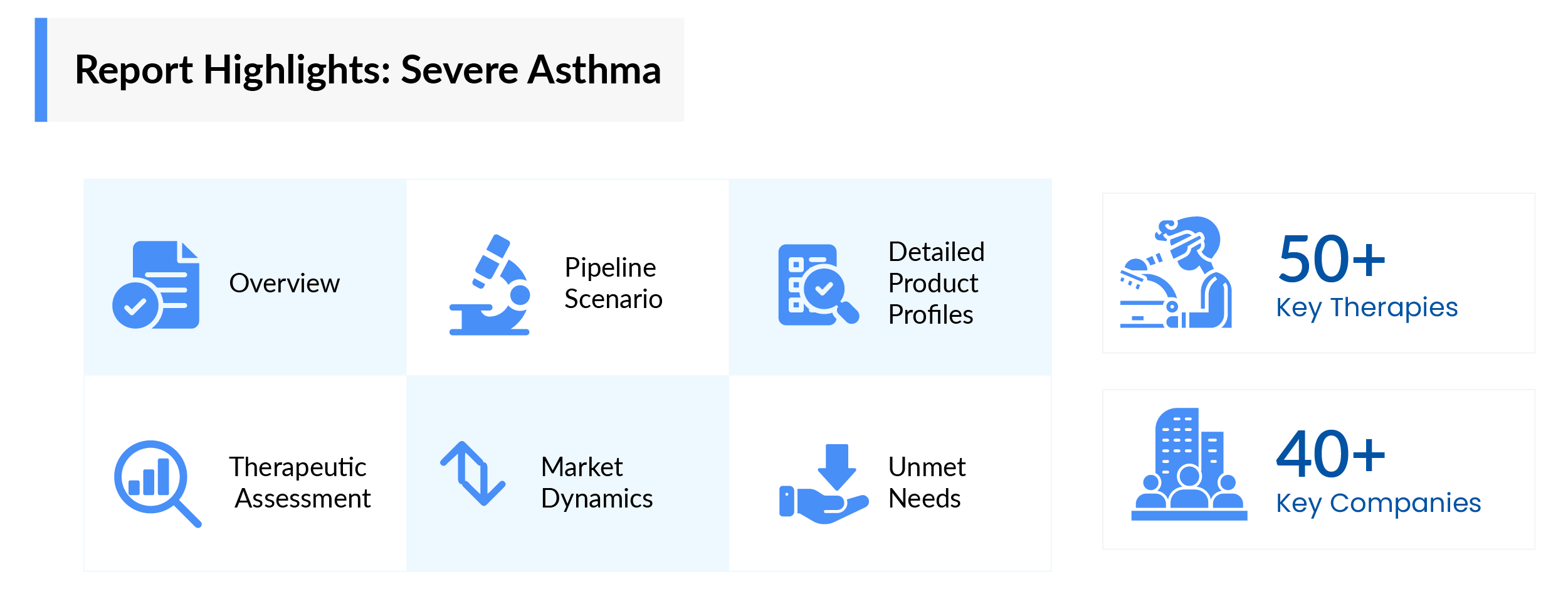
Report Highlights
- The companies and academics are working to assess challenges and seek opportunities that could influence Severe Asthma R&D. The therapies under development are focused on novel approaches to treat/improve Severe Asthma.
Severe Asthma Emerging Drugs Chapters
This segment of the Severe Asthma report encloses its detailed analysis of various drugs in different stages of clinical development, including Phase III, II, I, Preclinical and Discovery. It also helps to understand clinical trial details, expressive pharmacological action, agreements and collaborations, and the latest news and press releases.
Severe Asthma Emerging Drugs
- Dexpramipexole: Areteia Therapeutics
Dexpramipexole inhibits the maturation and release of eosinophils in bone marrow, based on evidence from cell cultures and human biopsies, thereby lowering peripheral blood eosinophil levels. Most recently in a Phase II study (EXHALE-1) in patients with moderate-to-severe eosinophilic asthma, treatment with dexpramipexole resulted in a significant, dose-dependent reduction in blood absolute eosinophil count at all doses tested (dexpramipexole doses of 37.5 mg, 75 mg, or 150 mg twice daily) compared to placebo. Dexpramipexole was well tolerated in the trial, with adverse events balanced across treatment and placebo groups, no serious adverse events, and no adverse events leading to discontinuation. Currently the drug is in Phase III stage of clinical trial evaluation for the treatment of Severe Eosinophilic Asthma.
- BSI-045B: Biosion
BSI-045B is Biosion's high-affinity, humanized monoclonal antibody (mAb) that targets thymic stromal lymphopoietin (TSLP), a cytokine that is involved in the pathogenesis of atopic dermatitis (AD), asthma, and other eosinophilic and Th2 immune-related diseases. It is designed to block TSLP's interaction with its receptor complex, disrupting signal transduction and preventing immune cells from releasing proinflammatory cytokines. Currently, the drug is in Phase III stage of clinical trial evaluation for the treatment of Severe Eosinophilic Asthma.
- FB704A: Oneness Biotech
FB704A is an innovative monoclonal antibody developed by Oneness Biotech Co., Ltd., targeting interleukin-6 (IL-6) to treat severe neutrophilic asthma and other immune-related diseases. This drug functions by neutralizing IL-6 and inhibiting both classical and trans-signaling pathways, which are crucial in inflammatory responses associated with various conditions, including severe asthma, rheumatoid arthritis, systemic sclerosis, and chronic kidney disease-induced cardiovascular complications. Currently the drug is in Phase II stage of its clinical trial for the treatment of severe asthma.
- BAT-2606: Bio-Thera Solutions
BAT2606, is a proposed biosimilar developed by Bio-Thera Solutions, targeting the reference product Nucala (mepolizumab). Mepolizumab is an interleukin-5 (IL-5) antagonist monoclonal antibody used primarily for treating severe asthma and other eosinophilic disorders. Currently the drug is in Phase I stage of its clinical trial for the treatment of severe asthma.
Further product details are provided in the report……..
Severe Asthma: Therapeutic Assessment
This segment of the report provides insights about the different Severe Asthma drugs segregated based on following parameters that define the scope of the report, such as:
Major Players in Severe Asthma
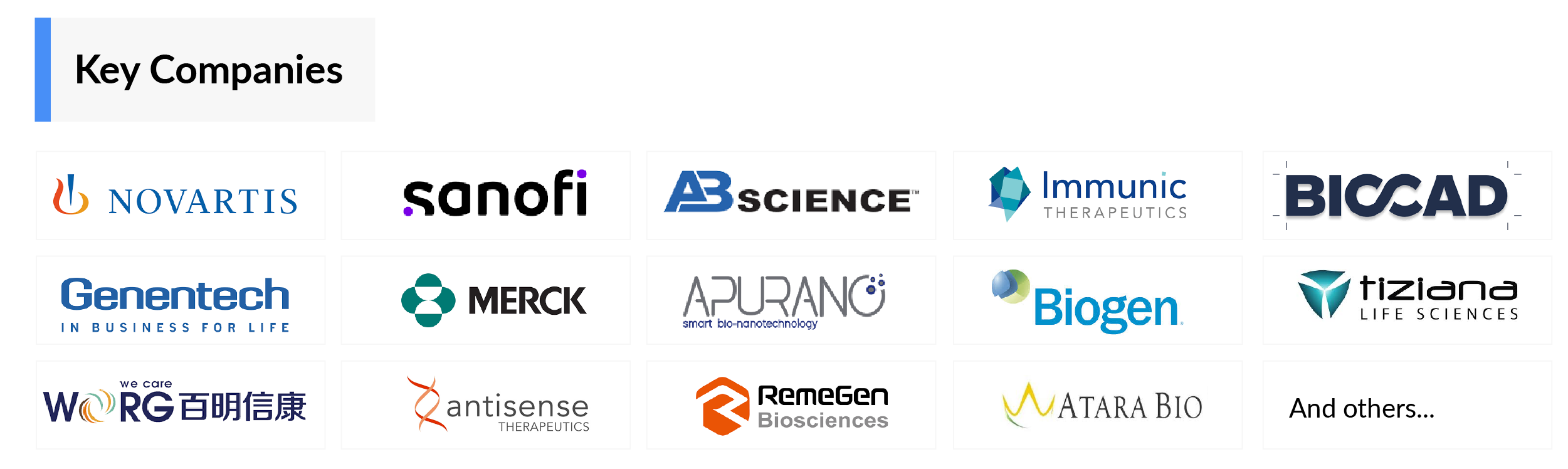
There are approx. 40+ key companies which are developing the therapies for Severe Asthma. The companies which have their Severe Asthma drug candidates in the most advanced stage, i.e. Phase III include, Areteia Therapeutics and Biosion.
Phases
DelveInsight’s report covers around 30+ products under different phases of clinical development like
- Late stage products (Phase III)
- Mid-stage products (Phase II)
- Early-stage product (Phase I) along with the details of
- Pre-clinical and Discovery stage candidates
- Discontinued & Inactive candidates
Route of Administration
Severe Asthma pipeline report provides the therapeutic assessment of the pipeline drugs by the Route of Administration. Products have been categorized under various ROAs such as
- Oral
- Intravenous
- Subcutaneous
- Parenteral
- Topical
Molecule Type
Products have been categorized under various Molecule types such as
- Recombinant fusion proteins
- Small molecule
- Monoclonal antibody
- Peptide
- Polymer
- Gene therapy
Product Type
Drugs have been categorized under various product types like Mono, Combination and Mono/Combination.
Severe Asthma: Pipeline Development Activities
The report provides insights into different therapeutic candidates in Phase III, II, I, preclinical and discovery stage. It also analyses Severe Asthma therapeutic drugs key players involved in developing key drugs.
Pipeline Development Activities
The report covers the detailed information of collaborations, acquisition and merger, licensing along with a thorough therapeutic assessment of emerging Severe Asthma drugs.
Severe Asthma Report Insights
- Severe Asthma Pipeline Analysis
- Therapeutic Assessment
- Unmet Needs
- Impact of Drugs
Severe Asthma Report Assessment
- Pipeline Product Profiles
- Therapeutic Assessment
- Pipeline Assessment
- Inactive drugs assessment
- Unmet Needs
Key Questions
Current Treatment Scenario and Emerging Therapies:
- How many companies are developing Severe Asthma drugs?
- How many Severe Asthma drugs are developed by each company?
- How many emerging drugs are in mid-stage, and late-stage of development for the treatment of Severe Asthma?
- What are the key collaborations (Industry–Industry, Industry–Academia), Mergers and acquisitions, licensing activities related to the Severe Asthma therapeutics?
- What are the recent trends, drug types and novel technologies developed to overcome the limitation of existing therapies?
- What are the clinical studies going on for Severe Asthma and their status?
- What are the key designations that have been granted to the emerging drugs?